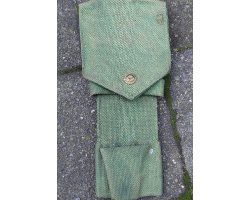
Frog, Cutter, Wire, Folding. (Mk I)
British Frog, Cutter, Wire, Folding (Mk I), developed during the First World War to carry folding wire cutters and remaining in service until the 1990s.
United Kingdom


British Frog, Cutter, Wire, Folding (Mk I), developed during the First World War to carry folding wire cutters and remaining in service until the 1990s.
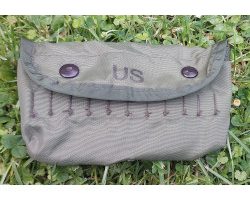
Developed for the U.S. Army M-24 Sniper Weapon System, this ammunition pouch carried twenty loose rounds of 7.62×51mm NATO ammunition in elastic loops, reflecting the transition from the magazine-fed M-21 sniper rifle to the bolt-action M-24.
Read More »

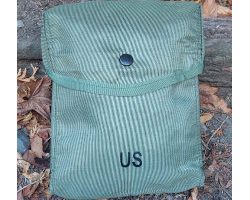
Developed for the M-249 Squad Automatic Weapon, the Case, Small Arms Ammunition, 200 RD Magazine was introduced in 1983 to carry the 200-round hard-pack magazine on the ALICE equipment system. Although designed as a dedicated ammunition pouch, its practical size saw it widely adopted as a general-purpose utility pouch by U.S. soldiers.
Read More »
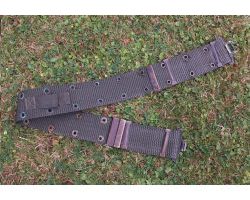
The Singapore Belt, Individual Equipment was a component of the SAF nylon individual equipment system used from the early 1980s into the early 1990s. Fabricated from woven nylon webbing with double rows of metal grommets, the belt was designed to support suspenders and equipment fitted with M-10 wire hangers.

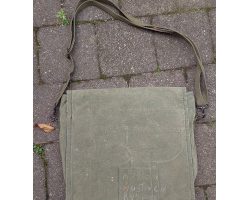
The exact role of this bag has yet to be determined, however there is a high probability it was used as a TEWT (Tactical Exercise Without Troops) bag by junior officer cadets or officers during navigation and battlefield movement exercises.

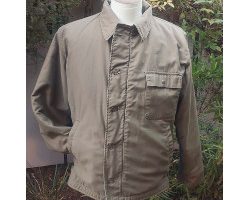
The Jacket, Cold Weather (A2) was a U.S. Navy permeable cold weather jacket developed during the Cold War period for use in temperate and intermediate cold weather conditions aboard ships, aircraft carriers.
Read More »
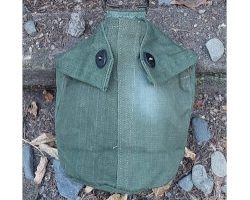
The Pattern 44 Carrier, Water Bottle was a British military water bottle carrier influenced by the U.S. canteen cover design and developed for tropical operations, later seeing widespread Commonwealth and international use.
Read More »
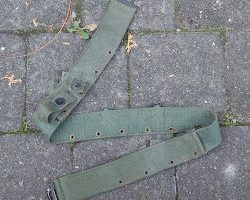
The Pattern 44 web belt marked a significant departure from the earlier Pattern 37 design, introducing a lighter, three-section construction better suited to tropical and jungle environments. Designed to improve comfort and adjustability during extended operations, it incorporated features such as grommets for attaching equipment and multiple suspension points for increased stability. Despite these improvements, some soldiers later adopted field-made alternatives using RAF cargo straps recovered from parachute resupply pallets during operations in Borneo.

The most that can be ascertained at present is that these pouches are likely commercial variants of the Malaysian Army M-1970 Pouches, Ammunition, produced locally in Malaysia during the late 1970s.


With Hallmark producing the Onward Field Pack for the New Zealand Army during the mid-1980s, the company also developed a commercial version that incorporated many of the pack’s key design ideas while avoiding a design that could be visually identified as the military Onward Field Pack. This resulted in the CCFS-75 pack, more commonly known in New Zealand as the “commercial Onward pack”.
