
Jacket, Cold Weather (A2)
General Information
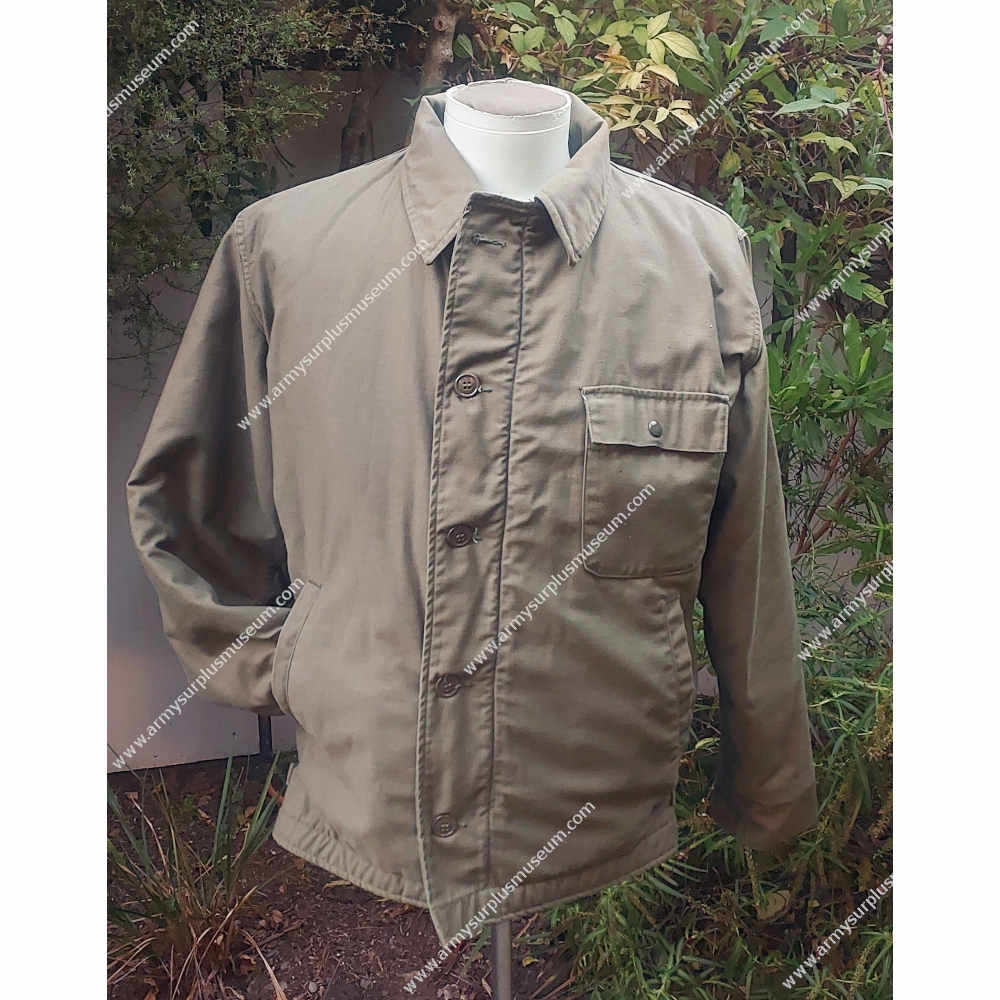
Name: Jacket, Cold Weather, (Permeable).
Country of Origin: The United States.
Date of Production: 1982.
Manufacturer: Vanderbilt Shirt Company.
NATO Stock Number (NSN): 8415-00-753-5613.
Mil Spec: MIL-J-21708
Contract Number: DLA100-82-C-0584.
Colour: Olive drab (OD).
Uniform Family: A-2 Intermediate Cold Weather Clothing System.
Size: Large (42-44).
Number Of Pockets: Three.
Volume Capacity: 3L.
Weight: 1.5kg.
Windproof: yes.
Waterproof: Water repellent..
History
The Jacket, Cold Weather was developed as a permeable cold weather jacket for use by the U.S. Navy during the Cold War period. The jacket was manufactured in two types: Type I for men, available in five sizes, and Type II for women, available in three sizes. In addition to this, the jacket was produced in two classes. Class 1 was manufactured in blue fire-retardant material for shipboard and flight deck use and was designated Jacket, Cold Weather, Flame Resistant, Class 1, while Class 2 was fabricated from OG-107 nylon and cotton blended fabric and was simply designated Jacket, Cold Weather, Class 2.
The jacket formed part of a larger cold weather clothing assembly that also included matching trousers and a cap. This association led to the jacket commonly being referred to as the “A-2 Cold Weather Jacket.” The jacket was widely used by U.S. Navy personnel operating in cold weather environments and is frequently seen in photographs aboard aircraft carriers and other naval vessels, particularly when worn by deck personnel.
The jacket emerged during the post-war period as the U.S. Navy refined and modernized its earlier WWII-era cold weather clothing systems, gradually replacing older garments such as the N-1 Winter Jacket. Intended for use in temperatures of 20°F (-7°C) and above, the jacket was designed primarily for temperate and intermediate cold weather conditions rather than extreme Arctic environments. The jacket was commonly worn in conjunction with additional layered garments depending on operational requirements.
As a permeable jacket, the design allowed greater breathability and flexibility during active work compared to fully impermeable garments. This made the jacket popular with deck personnel and other sailors working in physically demanding conditions. However, the jacket could absorb significant amounts of water during prolonged exposure to rain or heavy seas. In situations involving man overboard incidents, this could become dangerous, as the waterlogged garment increased weight and accelerated fatigue and exhaustion while attempting to remain afloat.
Due to these concerns, the U.S. Navy later investigated replacement garments incorporating buoyant foam liners designed to improve emergency flotation characteristics. Research and evaluation programs relating to buoyant insulated cold weather jackets were conducted during the late Cold War period as the Navy continued refining its cold weather survival systems.
Description
The Jacket, Cold Weather is fabricated from two different outer shell materials depending on class. Class 1 jackets are manufactured from 100% aramid plain-weave water-repellent cloth dyed blue, while Class 2 jackets are fabricated from 50% cotton and 50% nylon sateen blended cloth dyed OG-107 olive drab and treated with a fluorocarbon water-repellent finish.
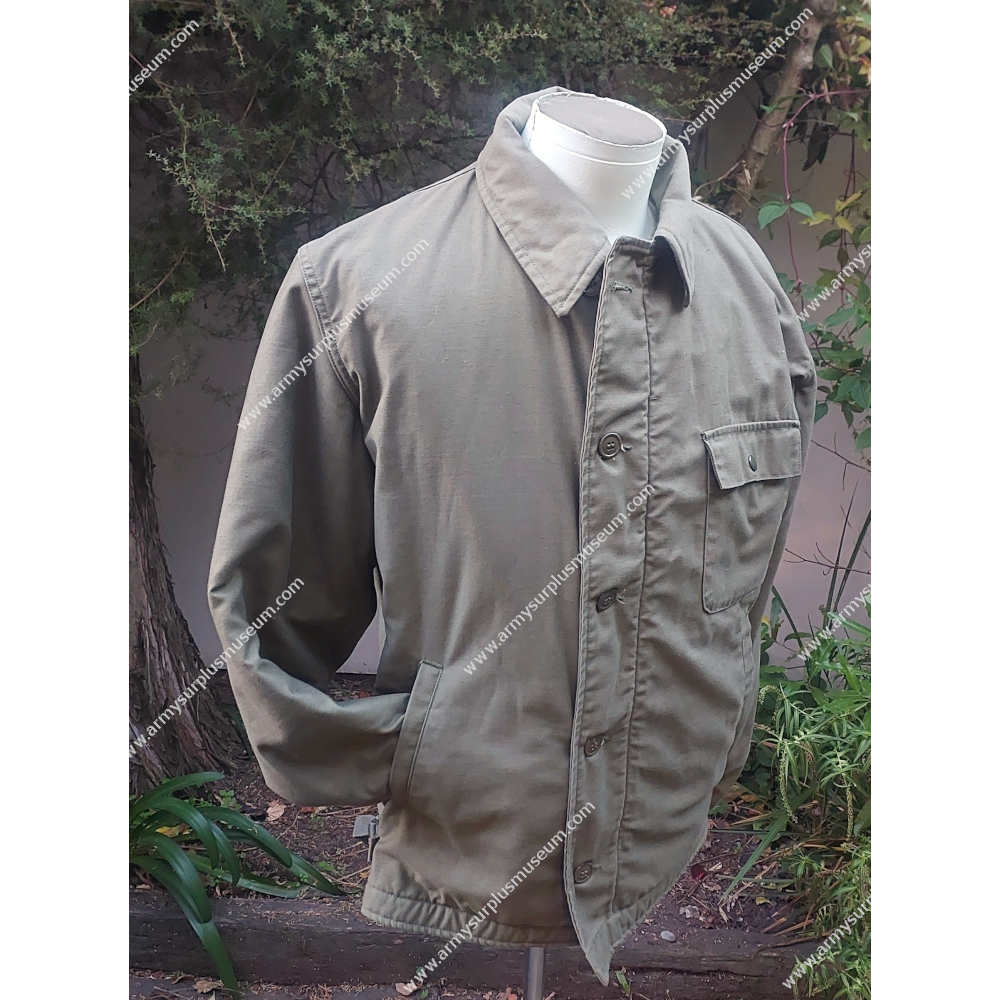
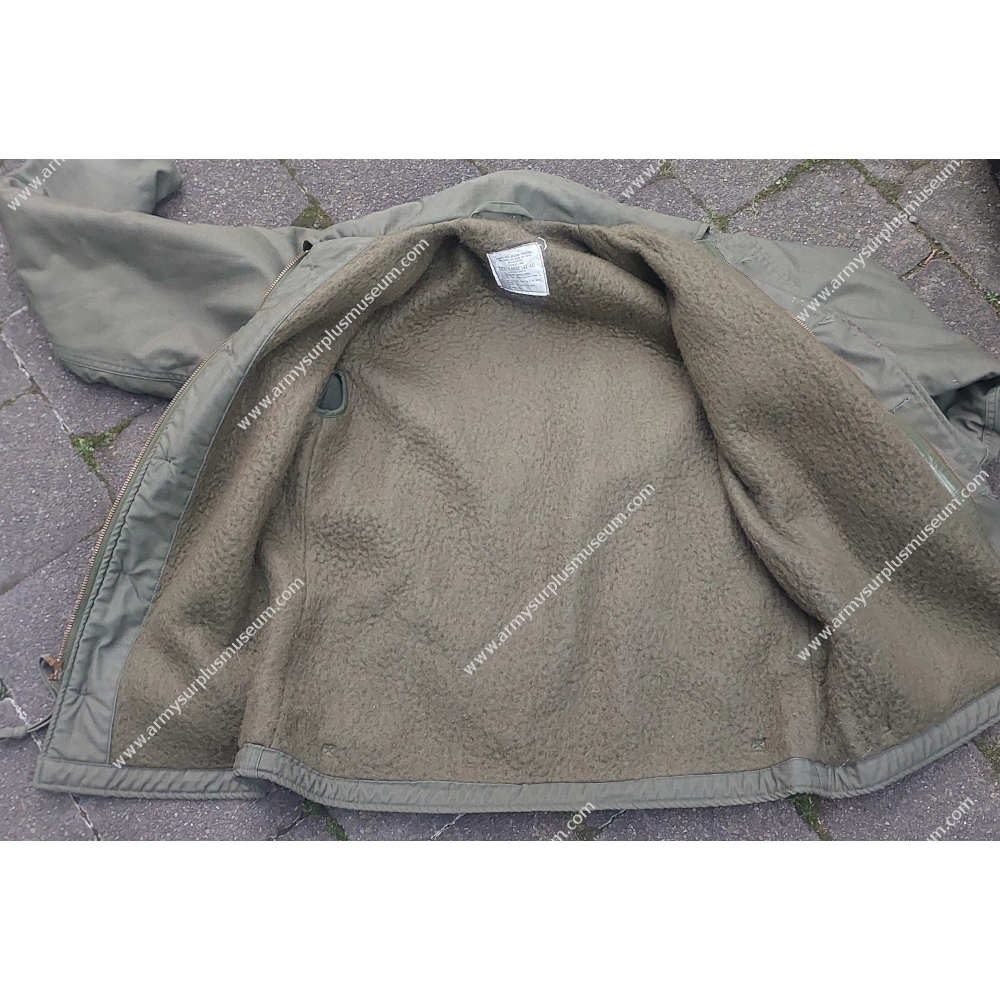
The front closure consists of a full-length metal zip fitted with a webbing pull-tab to aid operation while gloves are worn. Covering the zip is a fold-over storm flap designed to reduce wind entry. On the Class 1 jacket, the storm flap is secured with hook-and-loop fasteners, while the Class 2 utilizes button closure points. The collar is able to be worn folded up or down, with the Class 1 additionally incorporating a throat tab for increased weather protection.
The jacket has two internally mounted hand-warmer pockets with slash-entry openings positioned at the hips. Located on the upper left chest is a small flat utility pocket with flap closure. On the Class 1 jacket this flap is secured with hook-and-loop fastening, while the Class 2 uses a metal press-stud closure.
The interior of the jacket is fully lined depending on class type. Class 1 jackets utilize a flame-resistant knitted pile lining fabricated from 65% rayon and 35% wool, while the Class 2 jacket utilizes a shade 107 olive drab knitted nylon fleece lining. When new or after long-term storage, washing the jacket several times can help fluff the fleece lining, improving loft and increasing warmth retention.
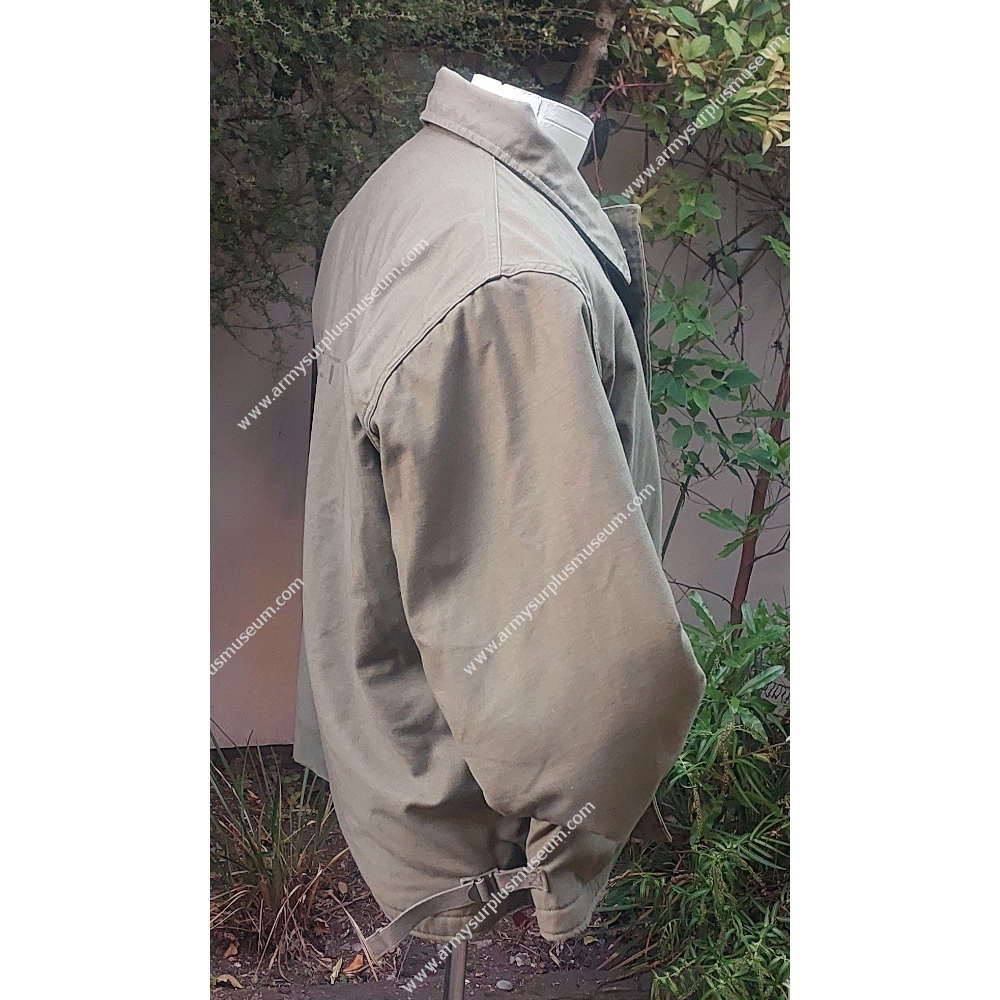
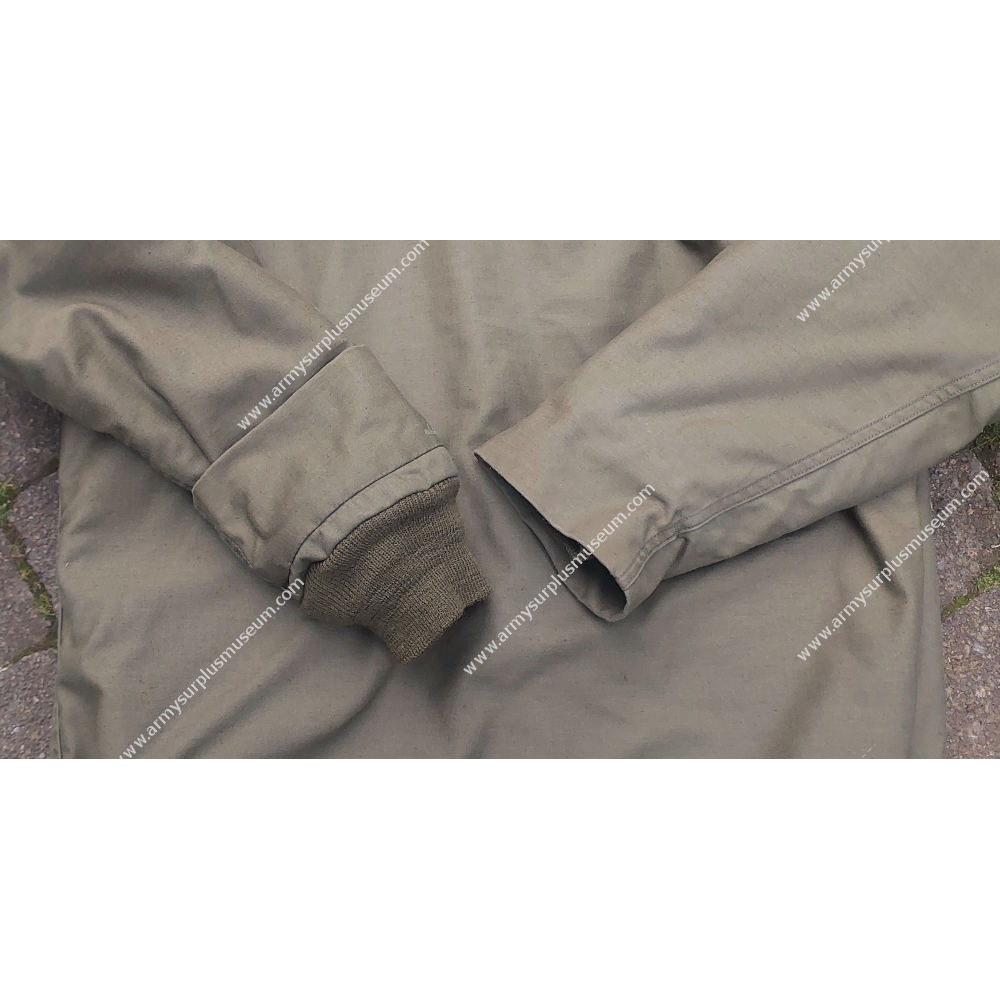
The sleeves incorporate internal knitted cuffs recessed several inches into the sleeve ends to reduce wind entry and improve heat retention. The Class 1 jacket utilizes knitted aramid cuffs, while the Class 2 incorporates wool knitted cuffs.
Located at each side of the lower edge of the jacket is an adjustable webbing retention strap fitted with a metal buckle. These straps allow the sides of the jacket to be drawn in to reduce heat loss and limit cold air entering the lower portion of the garment during wear.
Examples
Example One
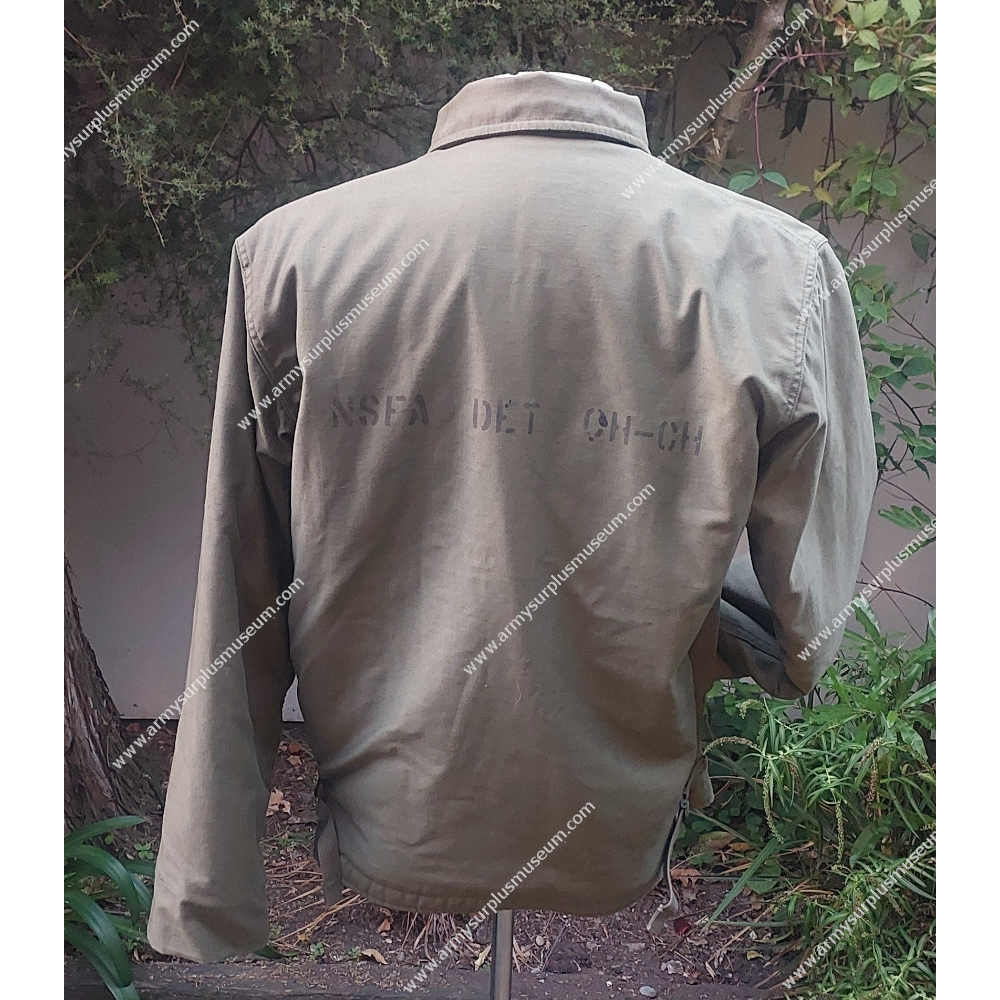
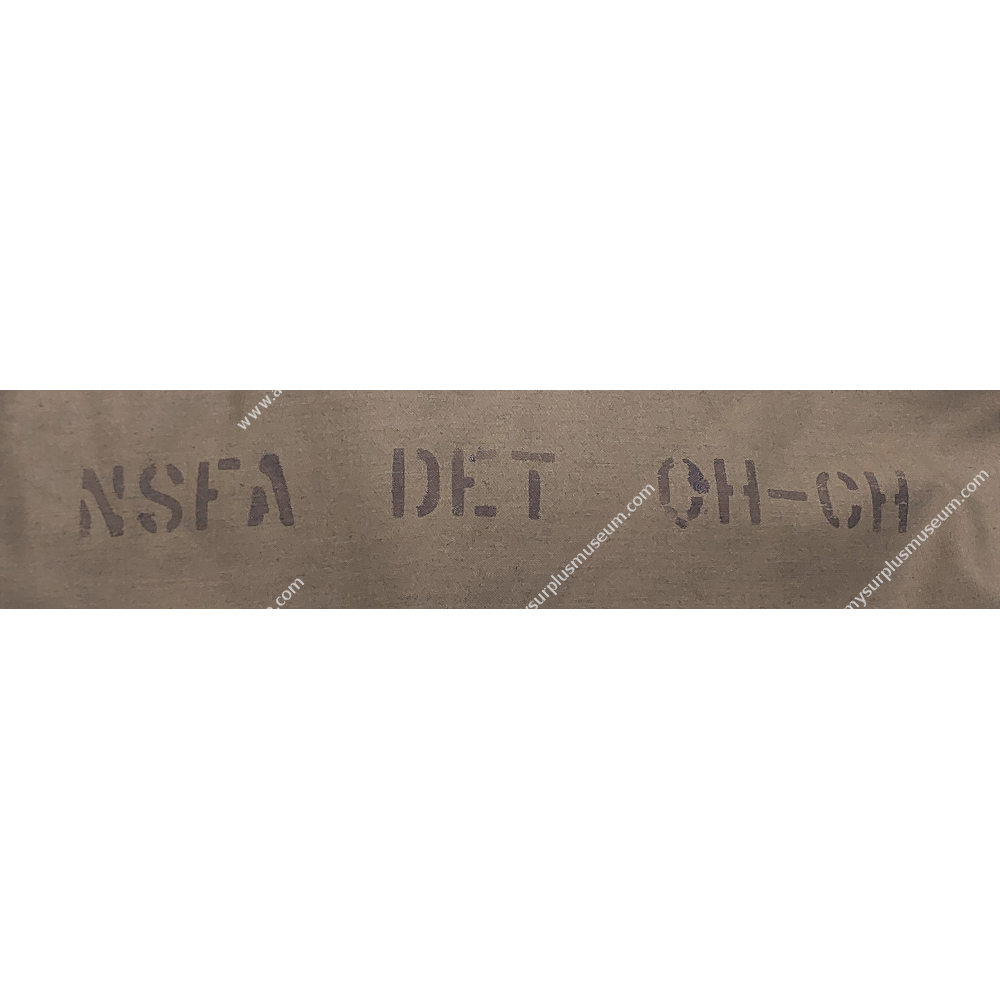
As well as being worn aboard U.S. Navy ships, this jacket also found its way to far-off places. In the case of this example, its association with Operation Deep Freeze is indicated by the stencil applied to the rear panel reading “NSFA DET CH-CH,” believed to refer to Naval Support Force Antarctica – Detachment Christchurch (New Zealand).
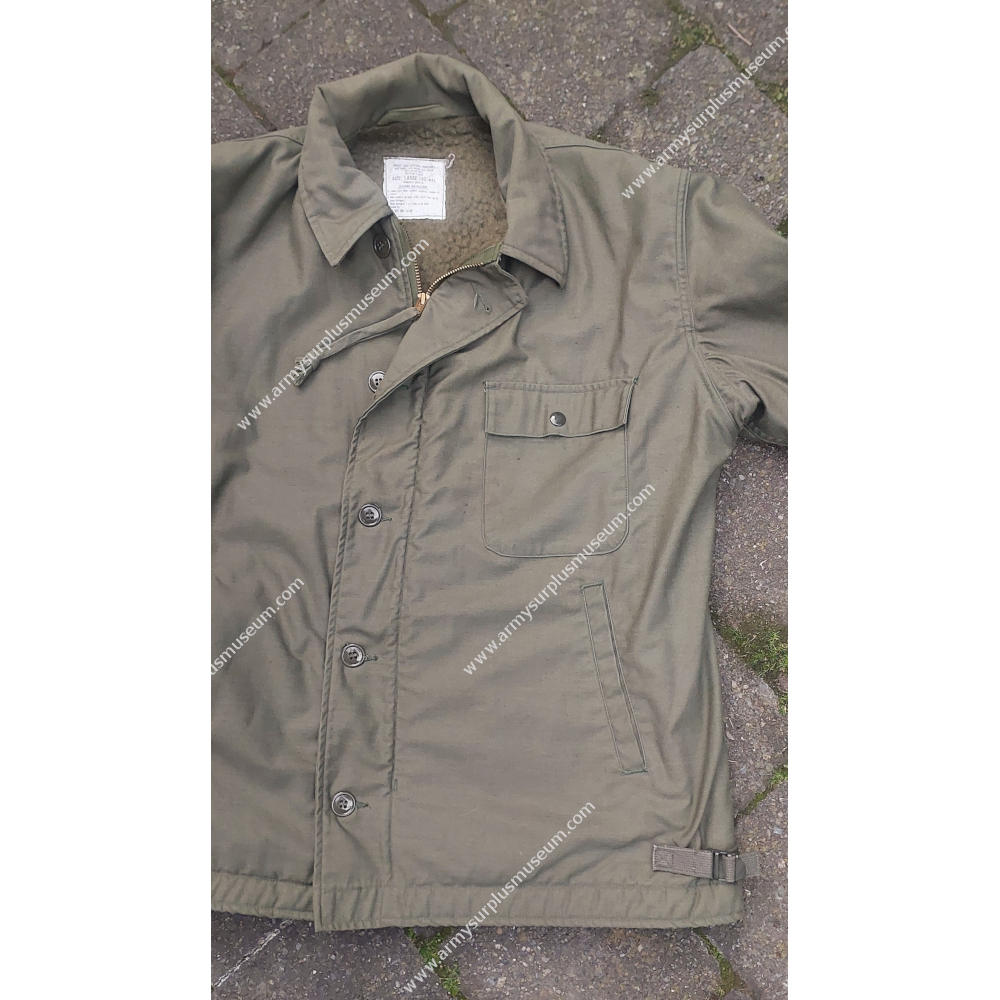
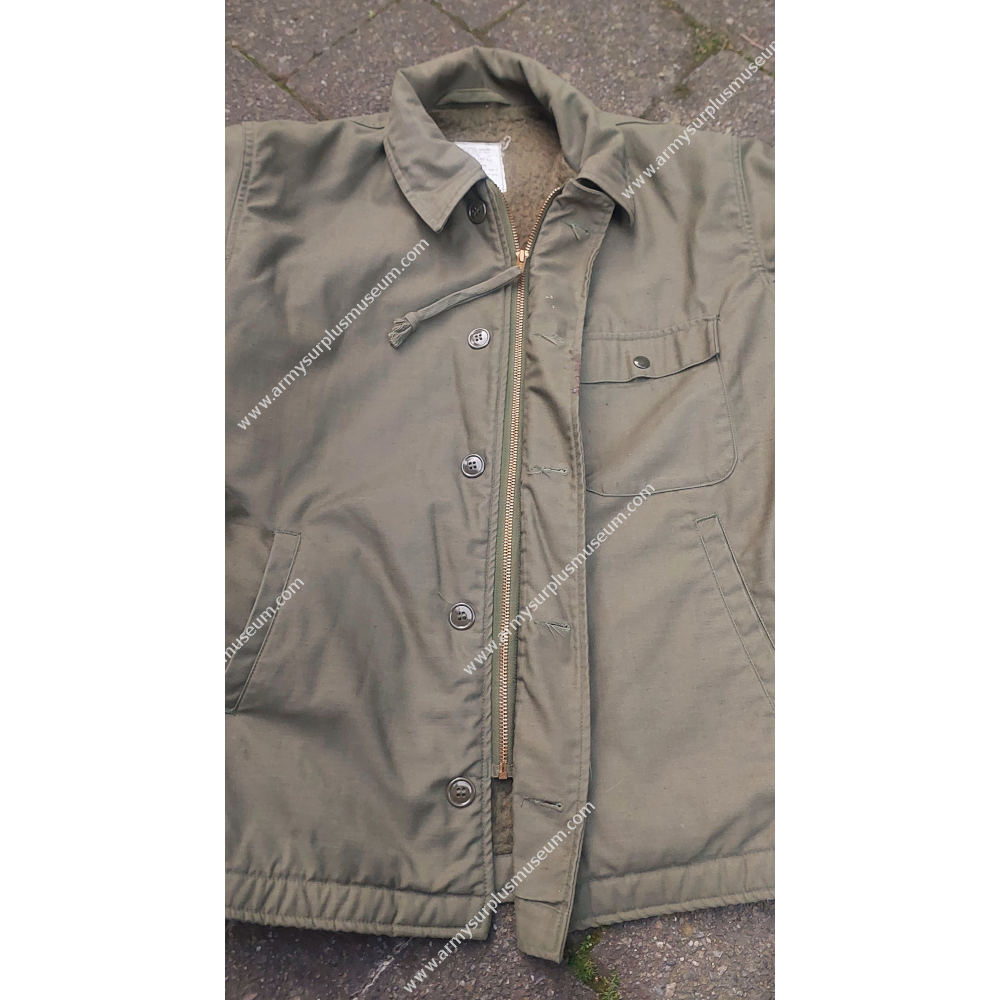
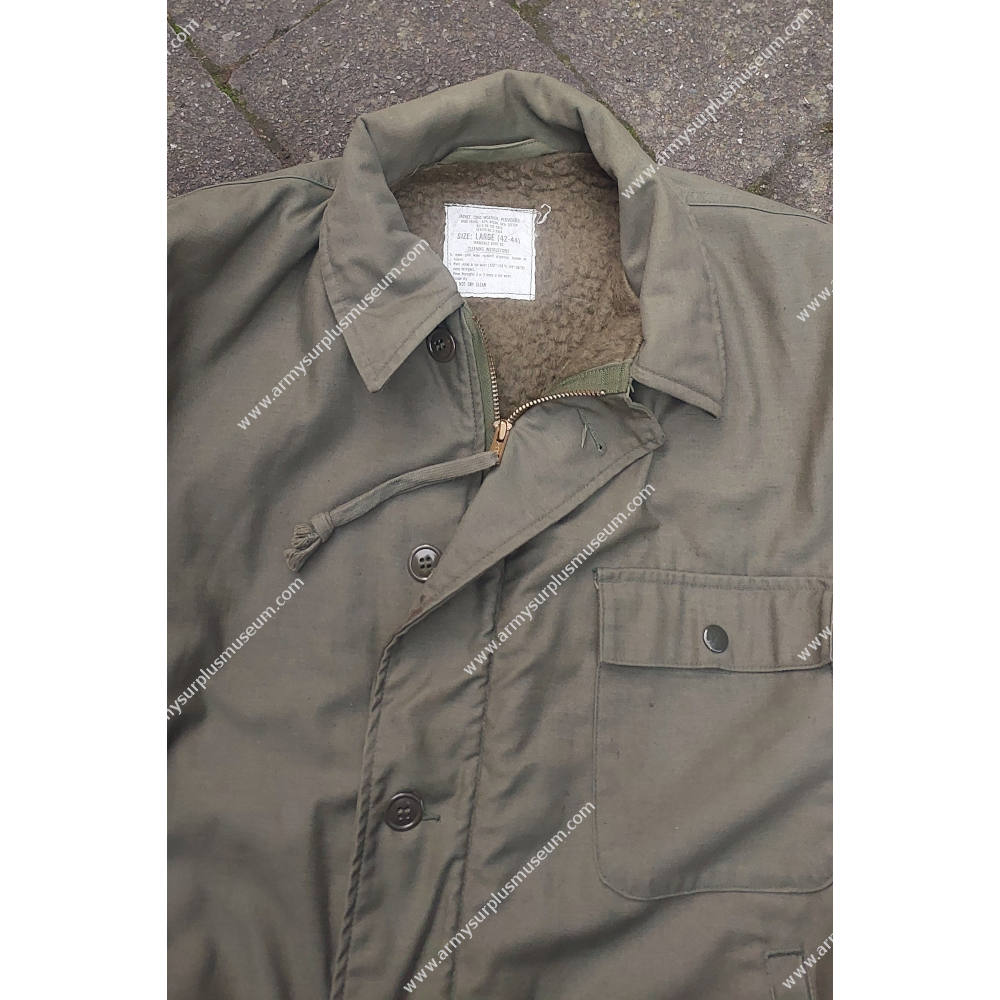
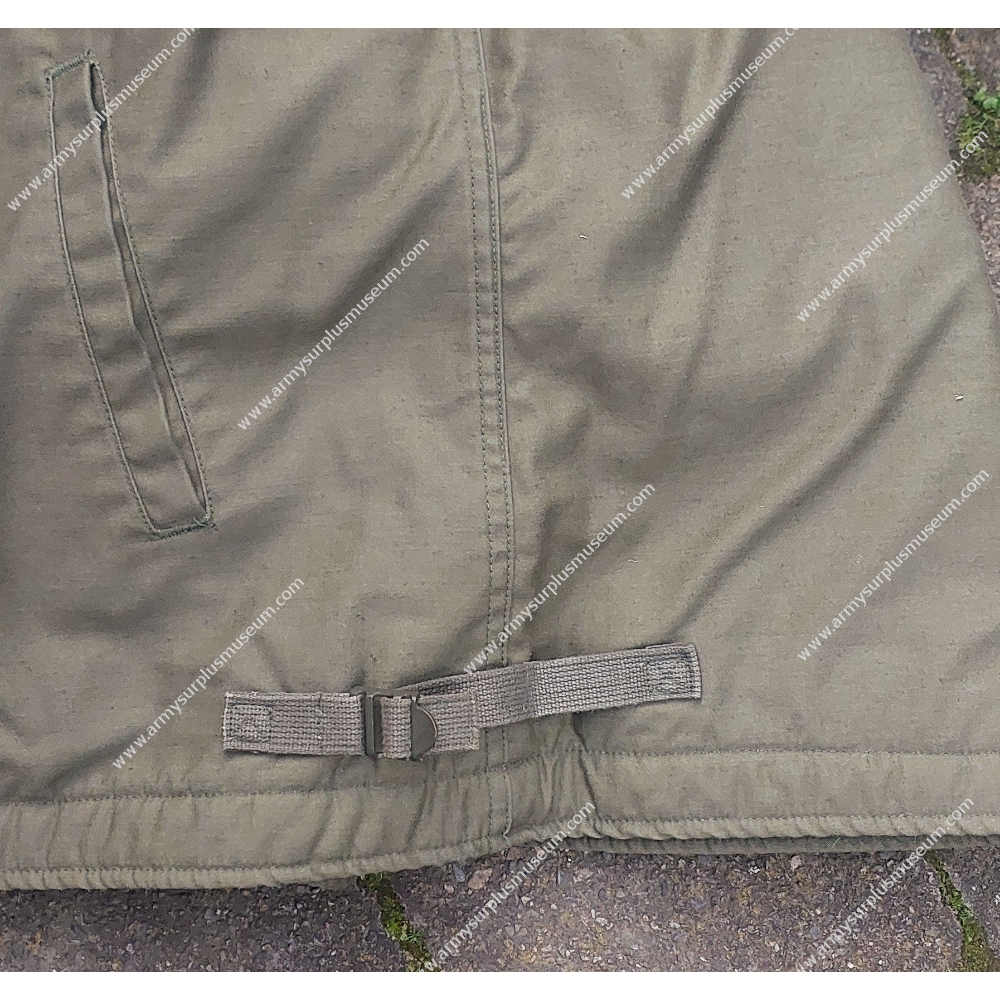
Object Number: 8720-840-46101.
