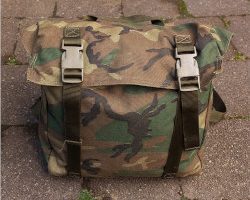
Pack, Nylon, Woodland
A small New Zealand-made woodland camouflage pack of simple box-shaped construction, featuring padded shoulder straps, an internal plastic frame board and a Brushstroke camouflage snow collar.
New Zealand


A small New Zealand-made woodland camouflage pack of simple box-shaped construction, featuring padded shoulder straps, an internal plastic frame board and a Brushstroke camouflage snow collar.
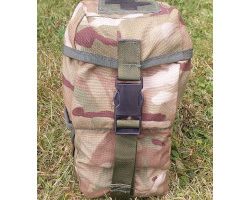
British Army MTP First Aider Trauma Pouch used to carry medical equipment for Team Medics or as a mass-casualty triage pack. The pouch formed part of the wider PLCE family of specialist equipment.
Read More »

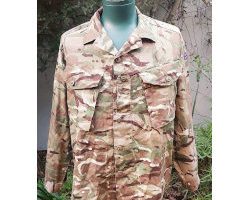
British Army Shirt, Barrack, MTP, introduced to provide a smarter barrack uniform while retaining limited field capability where combat body armour was not required.
Read More »
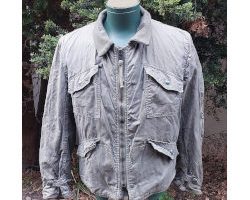
Introduced around 1965, the CWU-7/P was a USAF intermediate cold-weather jacket designed to provide thermal protection for ground personnel in cold-weather environments.

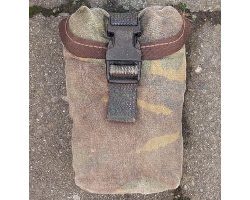
A privately purchased New Zealand field dressing pouch manufactured in Temperate DPM camouflage during the mid-1990s to early 2000s. Designed to carry the bulkier issue field dressing, it provided a practical alternative to the standard Compass/Field Dressing Pouch and could be attached to webbing equipment or ammunition pouches.
Read More »
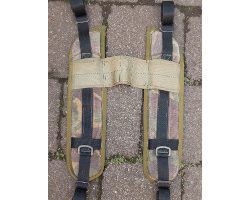
A commercially manufactured New Zealand DPM suspender set based on the US Tactical Load-Bearing Vest shoulder strap design. Privately purchased by soldiers from the mid-1990s to the early 2000s, it provided a more comfortable alternative to the US-style Y suspenders issued by the New Zealand Army.
Read More »

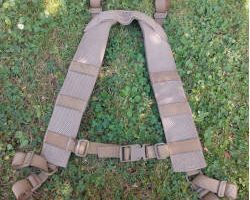
Australian M-1988 ICLCE H-Type khaki web suspenders, developed from the final M-1956 (Aust) design and used to support the ammunition pouches and field pack.
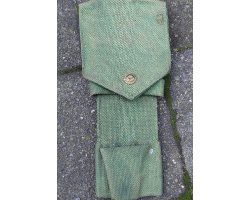
British Frog, Cutter, Wire, Folding (Mk I), developed during the First World War to carry folding wire cutters and remaining in service until the 1990s.
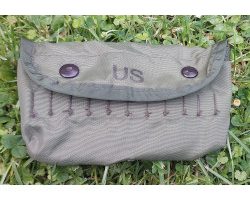
Developed for the U.S. Army M-24 Sniper Weapon System, this ammunition pouch carried twenty loose rounds of 7.62×51mm NATO ammunition in elastic loops, reflecting the transition from the magazine-fed M-21 sniper rifle to the bolt-action M-24.
Read More »
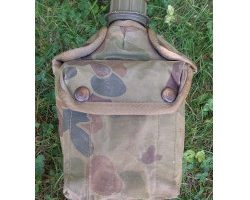
Developed for the Australian M-1988 Individual Combat Load Carrying Equipment (ICLCE), the Cover, Water Bottle evolved from the final M-1956 design. Later examples incorporated a front pouch to carry a Hexi Cooker and fuel tablets, combining water, cup and cooking equipment into a single pouch.
