
Pouch, Ration, Escape
General Information
Name: Pouch, Ration, Escape.
Country of Origin: The United Kingdom.
Date of Production: c 1984.
Manufacturer: Yet to be identified.
NATO Stock Number (NSN): 8465-99-130-0249.
Contract Number: Yet to be identified.
Colour: Olive Drab (O.D).
Equipment Family: SAS Web Equipment.
Number Of compartments: one.
Volume Capacity: 2.5L.
Weight: 200g.
Dimensions (cm): 19cm (H) × 14.5cm (W) × 5.5cm (D).
Waterproof: Yes, but depends on the condition of the fabric.
Similar Objects
History
During the Malayan Campaign of the early 1960s, Special Air Service (SAS) patrols operated deep in the jungle for weeks or even months at a time. They required low-mounted utility pouches to carry Escape and Evasion (E&E) equipment—pouches that could ride beneath the bergen’s A-frame and hold enough survival gear to allow a trooper to operate without a full field pack until reaching friendly lines or extraction.
With no official issue pouch meeting these needs, the SAS turned to the Pattern-44 Haversack. Each haversack featured a sewn-on side pouch large enough to hold one half of a mess tin. By cutting these side pouches away from the haversack body, folding the open tops over, and stitching them down, the SAS produced two compact utility pouches that could be mounted low on the web belt.
The original dimensions of the side pouches made them ideal for the conversion—deep enough to store compact survival gear while remaining narrow enough to sit comfortably behind the hips without restricting movement.
This setup allowed the A-frame bergen to sit above the web set without interference. The resulting modification—an improvised early form of the Pouch, Ration, Escape—carried the essential survival and evasion equipment each trooper needed to live off the land and evade capture until recovery.
When Britain adopted the Pattern-58 Web Equipment in the late 1960s, the SAS again found it inadequate for their style of long-range operations. They developed their own modular systems, which could be worn independently or combined with selected Pattern-58 components—because, as they saw it, you’re the one carrying it. These new setups drew heavily on the ad hoc and unofficial ideas that troopers already trusted in the field.
The Pouch, Ration, Escape soon became popular beyond the SAS, finding use with other specialist units and even regular infantry who purchased them privately. The pouch was also issued to Australian and New Zealand SAS personnel during the Vietnam War. It remained in limited service long after the introduction of the Pattern-90 Web Equipment in 1990, valued for its practicality and rugged design by those who knew it best.
Description
The pouch is fabricated from lightweight dark olive drab woven cotton webbing cloth impregnated with an anti-rotting agent. The body interior is lined with olive green nylon laminated with dark olive green butynol rubber, providing additional waterproofing and structure.
The straps and belt loops are made from olive drab woven cotton webbing, also treated with an anti-rotting compound. The lid, formed as a direct extension of the back face, closes at the front by means of a 19 mm webbing pull-tab fitted with an alloy link and staple.
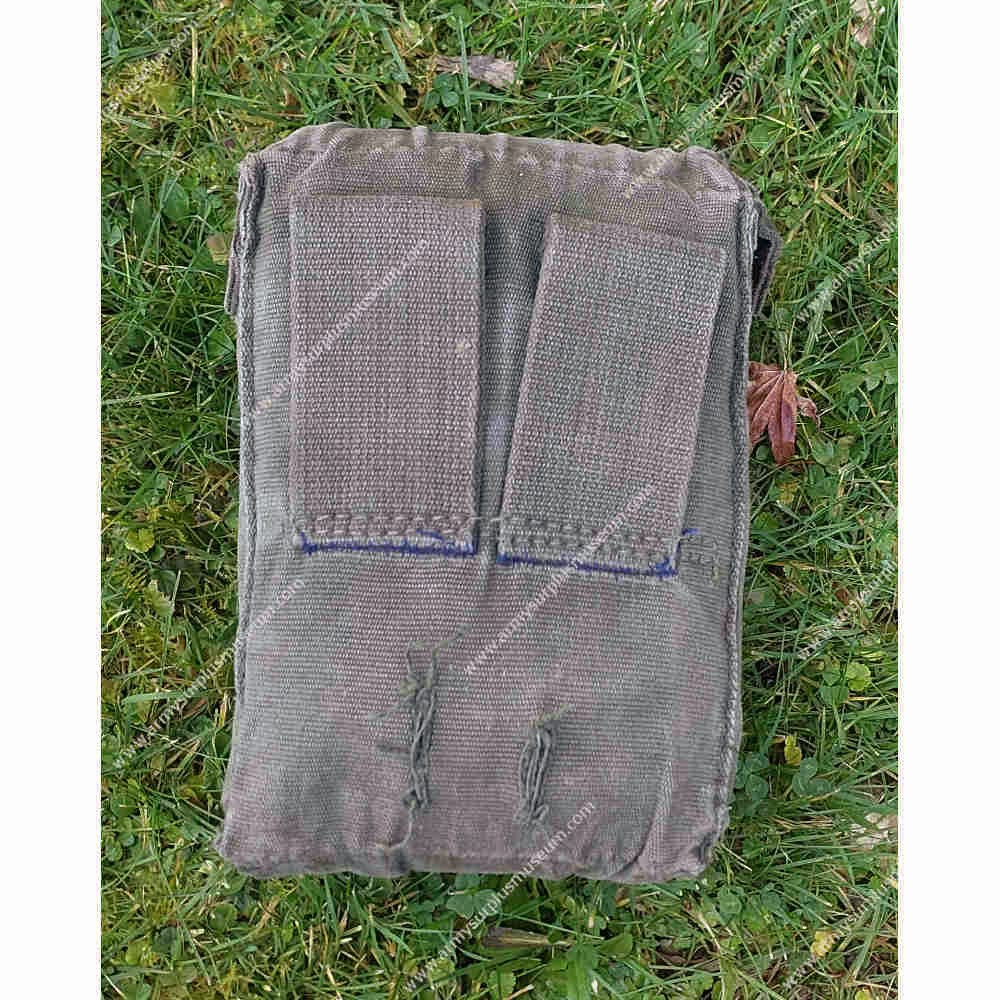
The rear face incorporates two 50 mm webbing belt loops, each featuring upper and lower secondary loops to allow the pouch to be carried in either high or low positions on a web belt. The underside of the lid carries an additional layer of lightweight cotton webbing for reinforcement, and the lining is stitched around the lip to seal the butynol-coated nylon in place.
Examples
Example One (Modified)
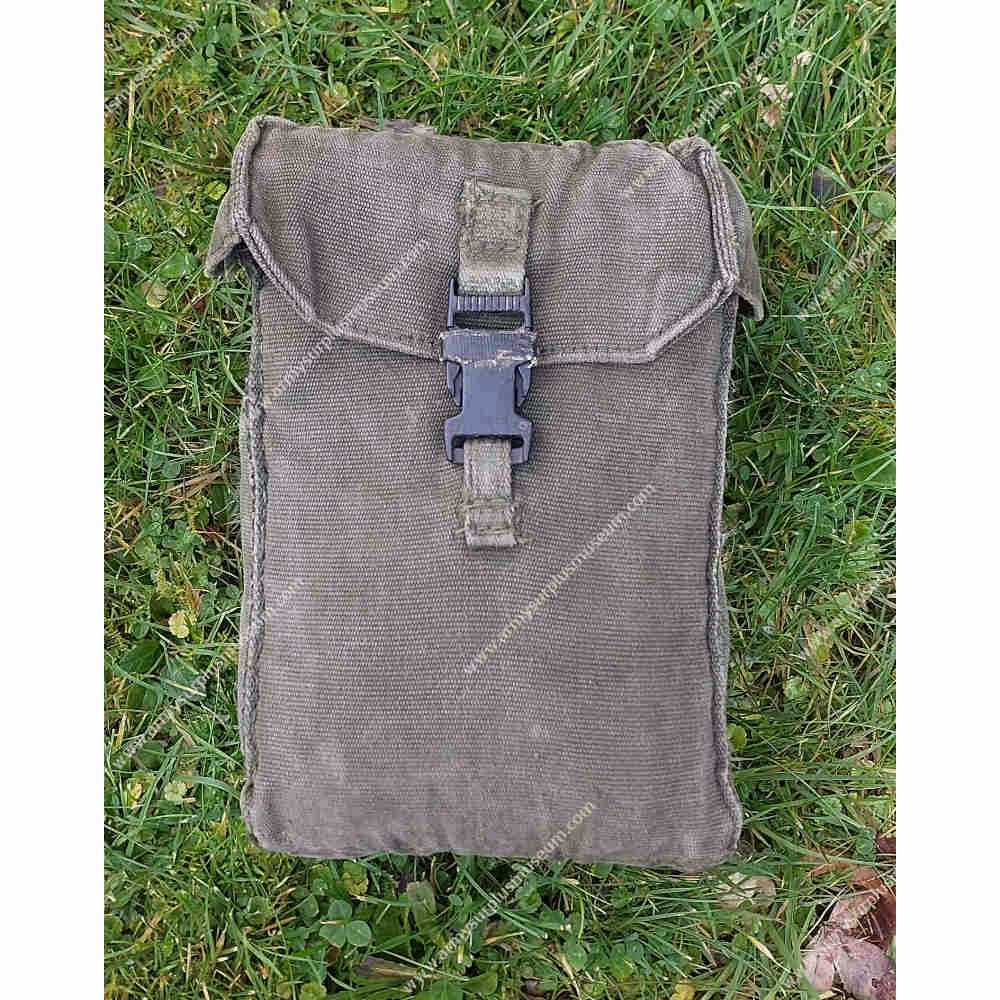
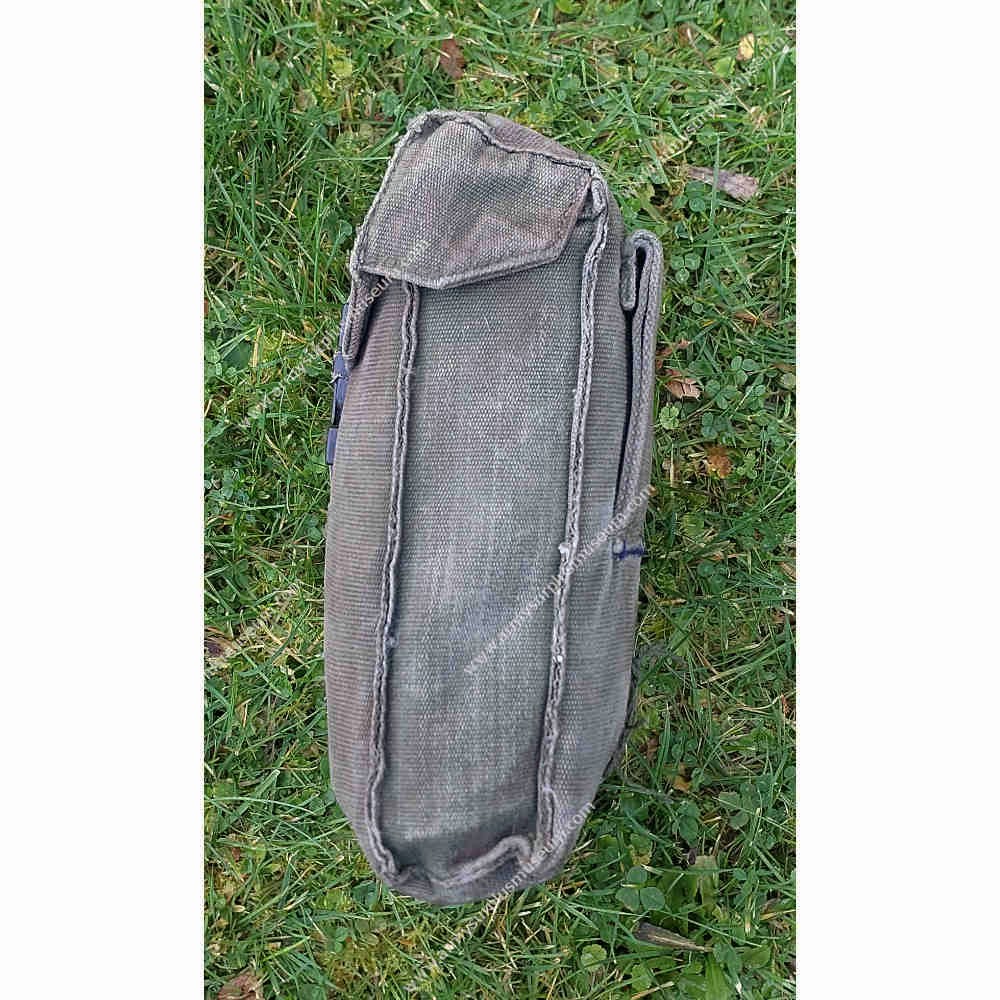
Example One was modified during its service life, with the original webbing pull-tab removed and replaced by a 19 mm plastic side-release buckle. The rear web loops were folded over and sewn down, converting them into a single set of belt loops for standard attachment.
The bottom of the pouch was carefully cut to create a channel for a bungee cord to be threaded through—used to prevent the web pouches from jumping around when running. Notably, the individual who carried out the modification avoided damaging the internal butynol lining, indicating a deliberate and considered act rather than accidental tearing.
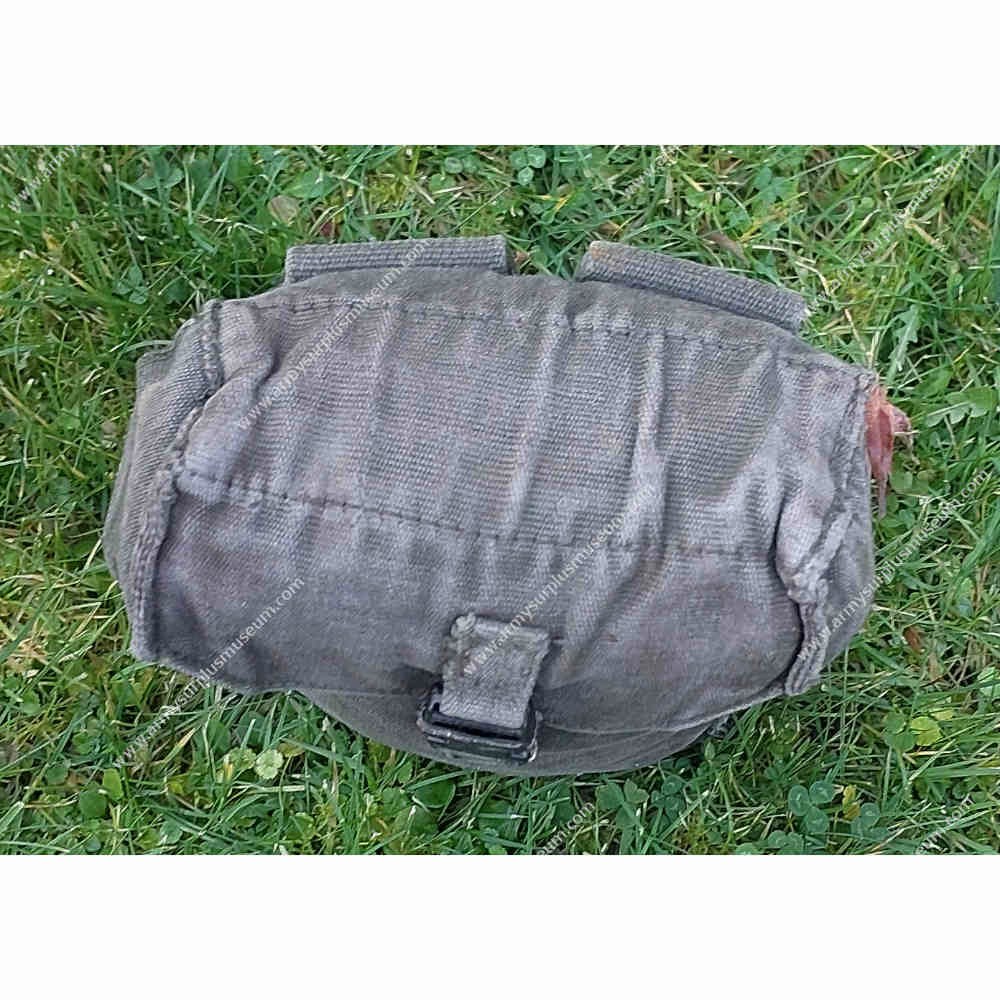
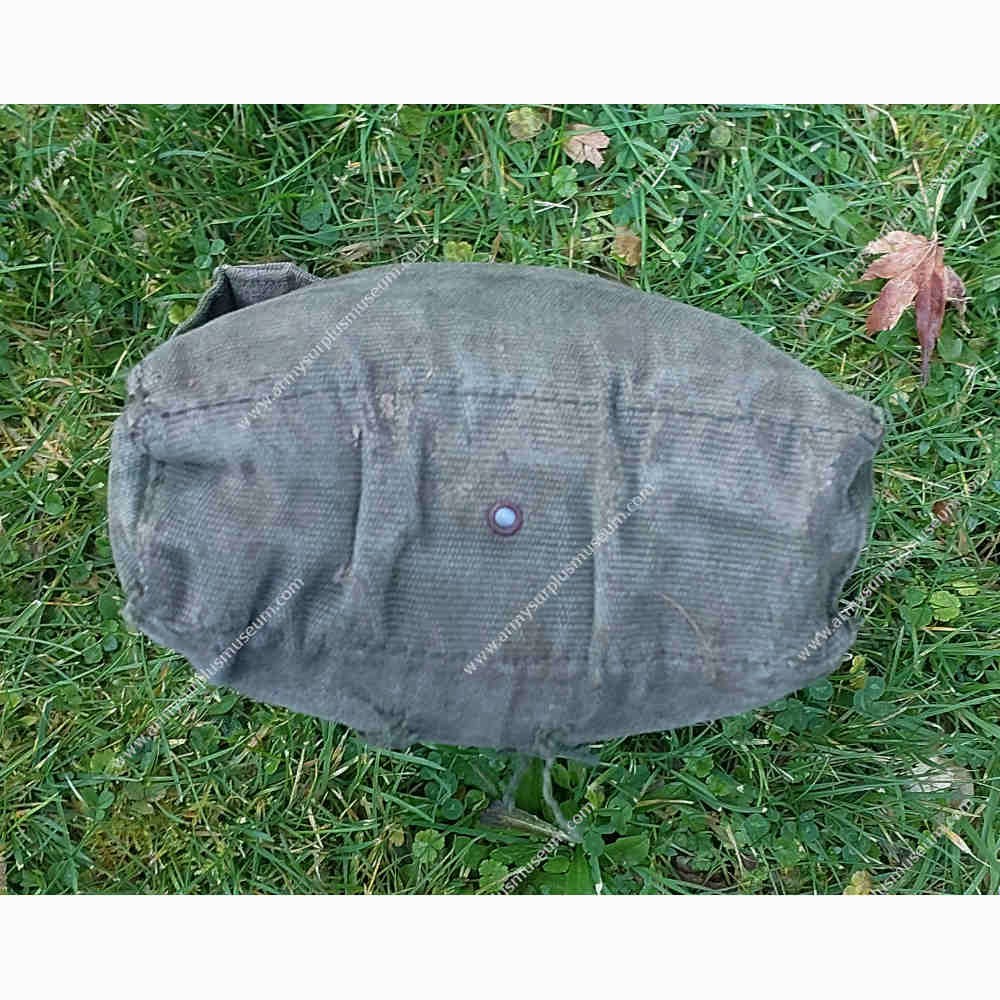
Object Number: 2435-826-45101.
