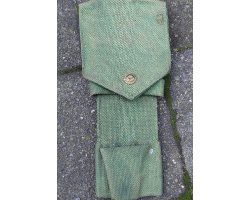
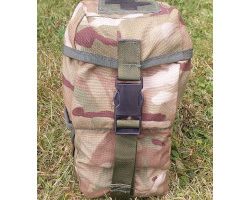
Frog, Cutter, Wire, Folding. (Mk I)
British Frog, Cutter, Wire, Folding (Mk I), developed during the First World War to carry folding wire cutters and remaining in service until the 1990s.
United Kingdom
Home » Countries » Military Uniforms And Equipment From The United Kingdom
British Frog, Cutter, Wire, Folding (Mk I), developed during the First World War to carry folding wire cutters and remaining in service until the 1990s.
The British Army Smock, Parachutist’s was a specialist airborne combat smock developed for parachute forces, featuring a longer cut, crotch strap, large poacher’s pockets and reinforced construction for use during airborne operations.
Read More
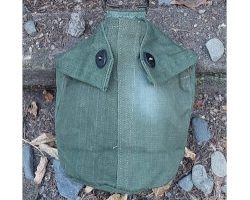
The Pattern 44 Carrier, Water Bottle was a British military water bottle carrier influenced by the U.S. canteen cover design and developed for tropical operations, later seeing widespread Commonwealth and international use.
Read More »
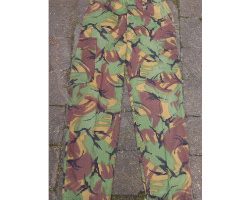
The Trousers, Combat (Tropical) were lightweight British military combat trousers developed for jungle and tropical environments. Produced in several variations of Tropical DPM camouflage, they became widely associated with the No. 9 Tropical Combat Dress and remained in service until the introduction of the 94/95-Pattern clothing system.
Read More
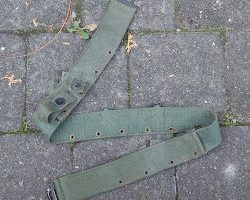
The Pattern 44 web belt marked a significant departure from the earlier Pattern 37 design, introducing a lighter, three-section construction better suited to tropical and jungle environments. Designed to improve comfort and adjustability during extended operations, it incorporated features such as grommets for attaching equipment and multiple suspension points for increased stability. Despite these improvements, some soldiers later adopted field-made alternatives using RAF cargo straps recovered from parachute resupply pallets during operations in Borneo.
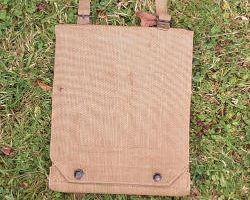
By the early 1940s, the original Case, Map, G.S. No. 2 Mk. 1 was redesigned under wartime production pressures. The revised Mk. 1/1 (Emergency or Economy Pattern) eliminated the rigid plywood backing, reducing both material use and manufacturing complexity.
Read More »
The Pouch, Side, Rucksack—unofficially known as Rocket Pouches—were issued in pairs and fitted to the sides of British Army rucksacks, including the Infantry Long and Short Back, Other Arms, and later the Air Support Field Pack. They could also be mounted to a dedicated yoke, allowing the pair to be worn as a small patrol pack, often giving the wearer the appearance of a “Jet Pack.” With minor re-threading, the yoke could also be configured to carry a single pouch.
The Hat, Combat, Tropical, Multi-Terrain Pattern (MTP) was introduced following the adoption of MTP in 2010, during the final phase of the Combat Soldier 95 (CS95) uniform system. It formed part of the transitional period between CS95 and the Personal Clothing System (PCS), and continued in service under PCS as the issued tropical hat. The design remained in use throughout the operational life of both uniform systems with minimal structural alteration.
Read More »
With official issue of the SAS/Para Bergen limited to specialist units such as the Special Air Service (SAS), Special Boat Squadron (SBS), Parachute Regiment, Pathfinders, and other specialist elements, commercial manufacturers later produced private-purchase versions based on issued examples. This commercial Bergen allowed standard infantry soldiers and civilian users to acquire packs identical in style and function to the issued model.
Read More »
Introduced as part of the British Army’s 90 Pattern Personal Load Carrying Equipment (PLCE), the Infantry rucksack (Long and Short Back) was designed to replace a wide range of earlier packs in service. Built around a modular system with detachable side pouches and a framed back system, it prioritised load carriage, durability, and compatibility with existing webbing, and served as the British Army’s primary infantry rucksack until it was replaced by the Virtus system.
Read More »
© 2026 The Army Surplus Museum