
Belt, Waist, Normal/ Large
General Information
Name: Belt, Waist, Normal
Belt, Waist, Large
Country of Origin: The United Kingdom.
Date of Production: Yet to be identified.
Manufacturer: Yet to be identified.
Armed Forces (AF) Code:
Normal- AA 2002.
Large- AA 2001.
NATO Stock Number (NSN):
Normal- 8465-99-973-6176.
Large- 8465-99-973-6177.
Colour: Jungle green (JG).
Equipment Family: Pattern 44 Web Equipment.
Weight: 200g.
Dimensions (cm): 5 (W) × Normal-102, Large-122 (L).
Waterproof: No.
History
The waist belt issued with the Pattern 44 web equipment was completely different from that used with the Pattern 37 web equipment. It was spun and woven from lightweight cotton webbing, making it softer in an effort to reduce webbing sores in tropical and jungle environments.
The belt was issued in two sizes—normal and large—with maximum adjustments of approximately 102 cm and 122 cm respectively. It was constructed in three sections, allowing for improved adjustment and making it easier to resize—particularly important given the regular weight loss experienced during extended jungle patrols, a problem commonly encountered by troops using Pattern 37 web equipment in Asia and the Pacific.
This new belt featured metal grommets spaced along the lower edge, an idea derived from U.S. military equipment. These allowed items such as the water bottle carrier, binocular case, and holster to be attached directly to the belt using hanger hooks.
Internal D-rings were also incorporated, enabling the yoke (suspenders) to be fitted with up to six supporting straps. This provided increased stability and allowed the web set to be worn with the front of the belt undone for ventilation while on the move.
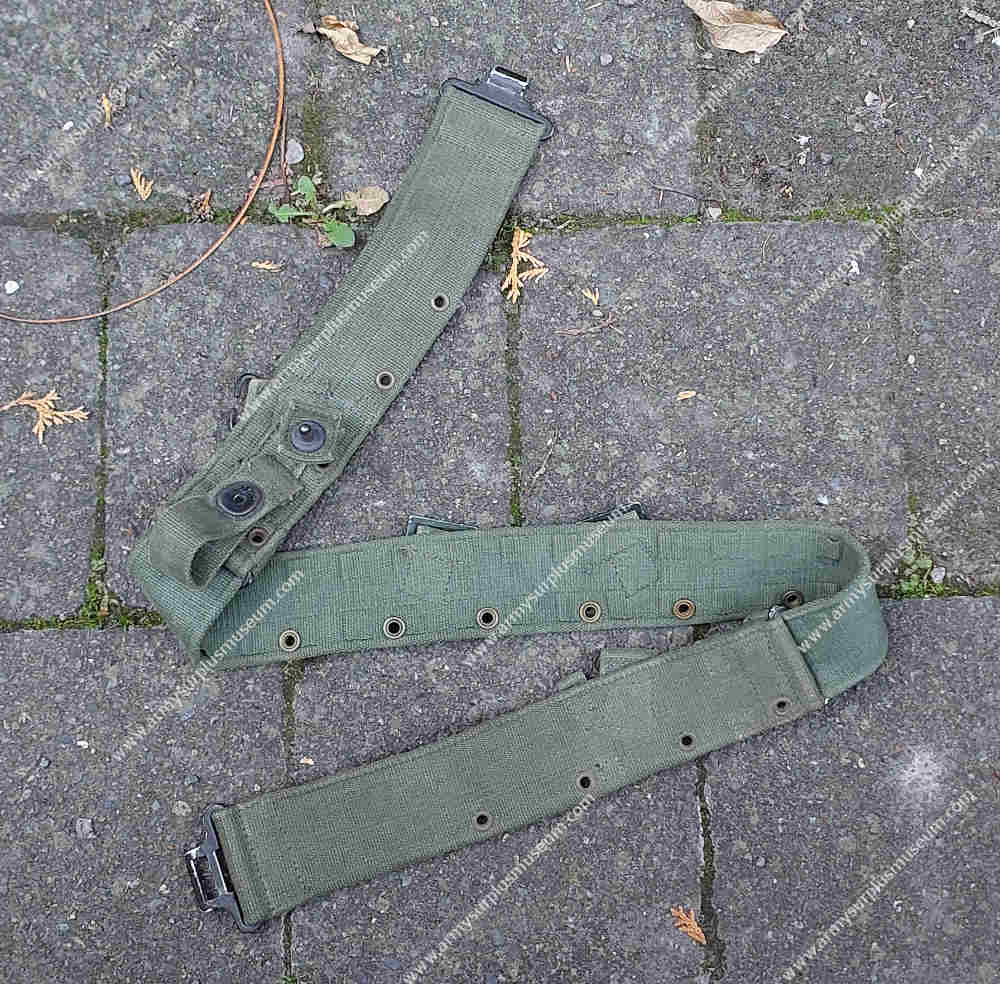
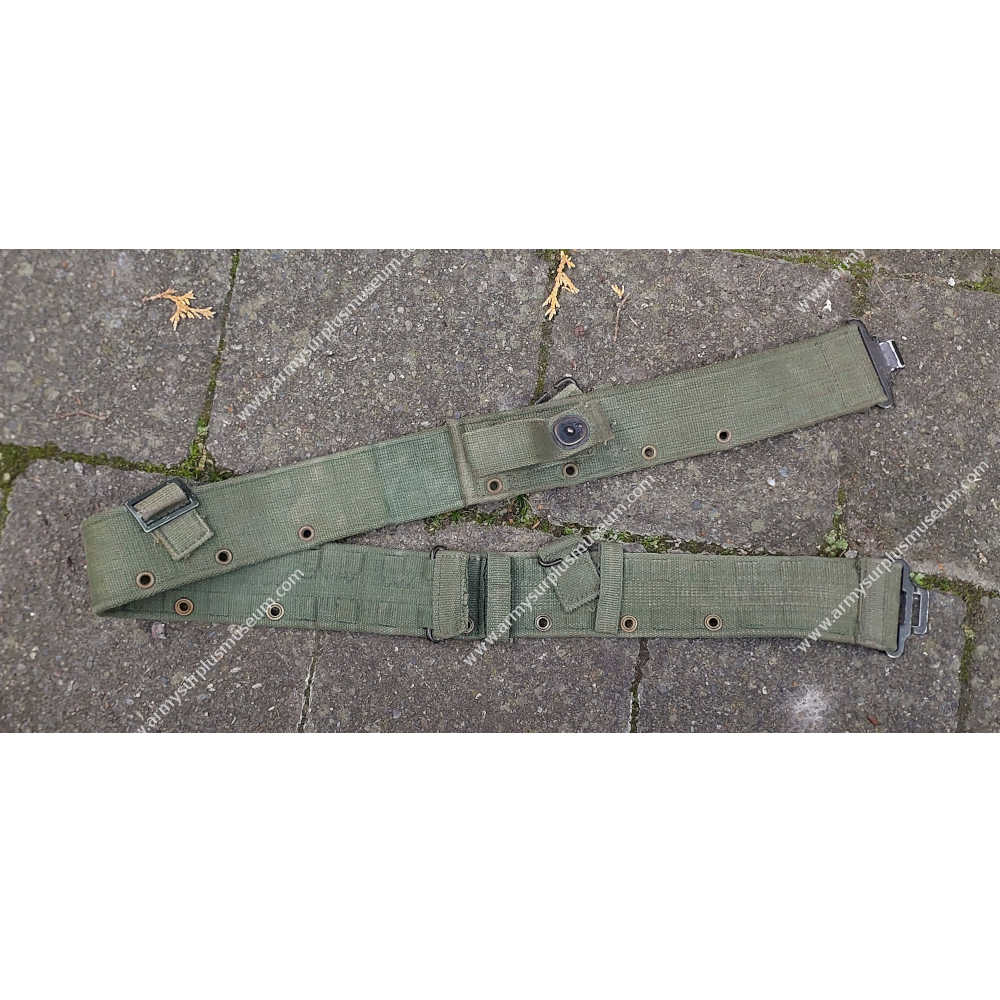
On the right side of the belt, a short webbing retaining strap was fitted, secured with a Lift-The-Dot (LTD) fastener. This was intended to secure the butt of the Rifle, No. 5 at the pistol grip when slung on the march. In practice, it was rarely used, and belts are often encountered with this strap removed. When retained, it was sometimes repurposed to hold a field dressing.
However, during operations in Borneo in the 1960s, some British soldiers preferred web belts made from RAF cargo straps taken from parachute resupply pallets following an airdrop.
Description
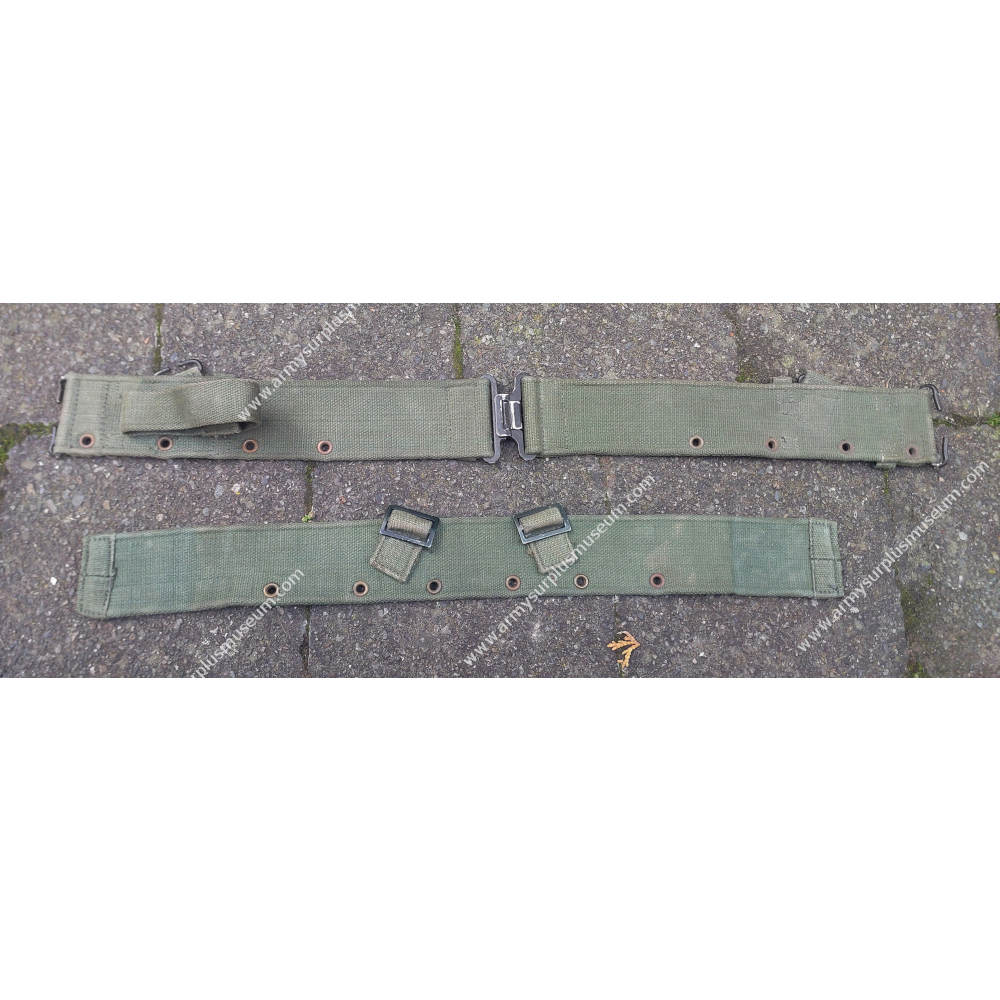
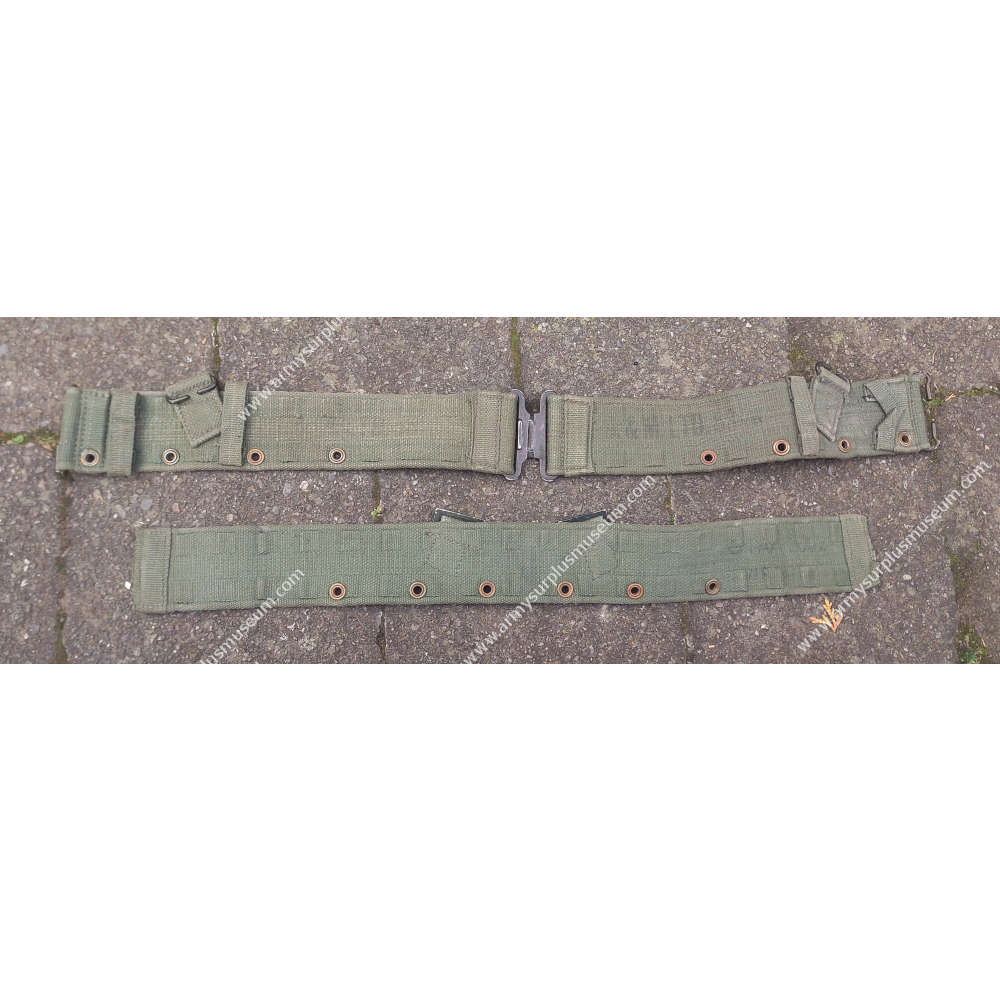
The Belt, Waist is fabricated from jungle green woven cotton webbing and three ridged webbing sections, each featuring reinforced raised ribs along the upper and lower edges. Along the lower rear edge of the left and right sections are four metal grommets, while the rear section has six grommets centred along its lower edge.
The left and right sections each have a double (C) hook fitted to their inner ends, allowing the belt to be adjusted as required. The internal side of each section features a series of woven, open-top attachment loops designed to engage the double hooks of the web pouches and front belt sections, securing them firmly in place.
Additionally, on the internal side of each section are two sewn narrow webbing loops designed to retain the free end of the centre (rear) section. Positioned between these loops is an angled, open-top D-ring, oriented toward the rear of the belt.
At the front, the left section carries the loop half of the hook-and-loop alloy buckle, while the right section carries the hook half. At the rear of the right section is a small 25 mm webbing retaining strap, secured with either a curtain clip or a Lift-The-Dot (LTD) fastener.
Examples
Example One
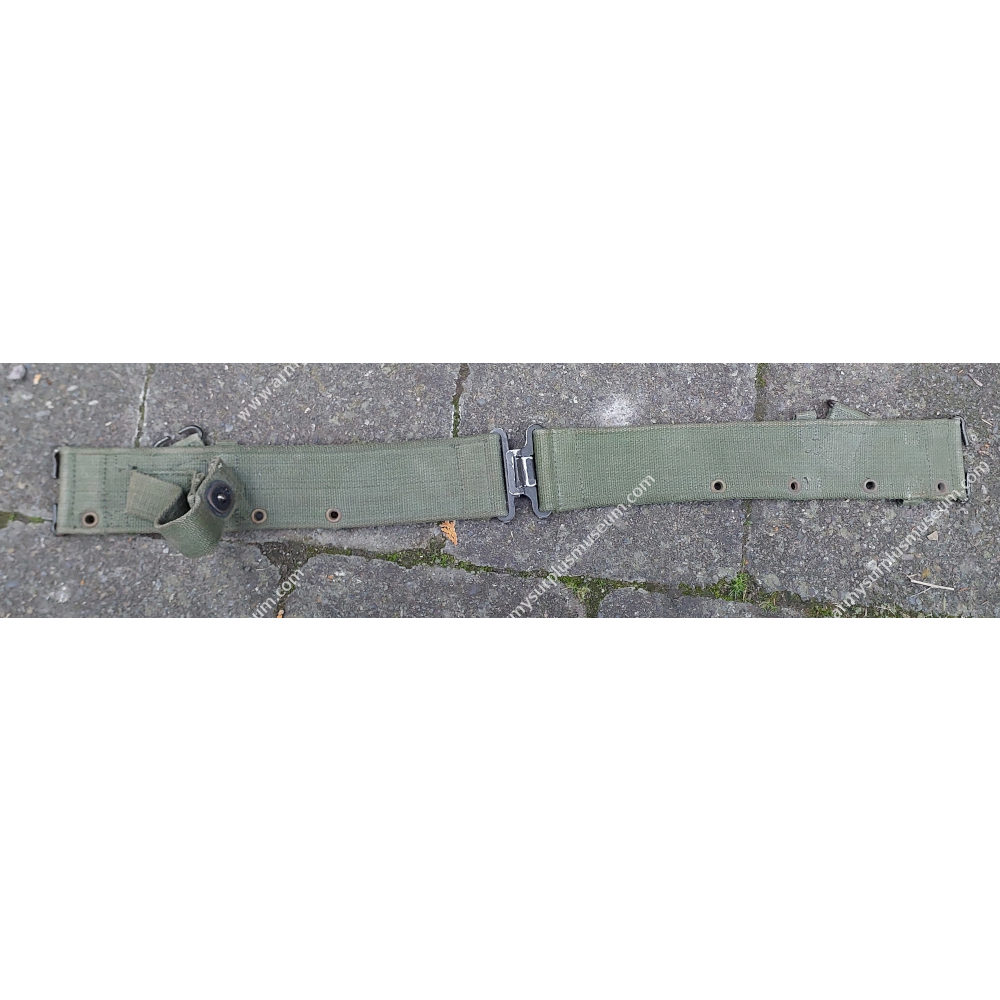
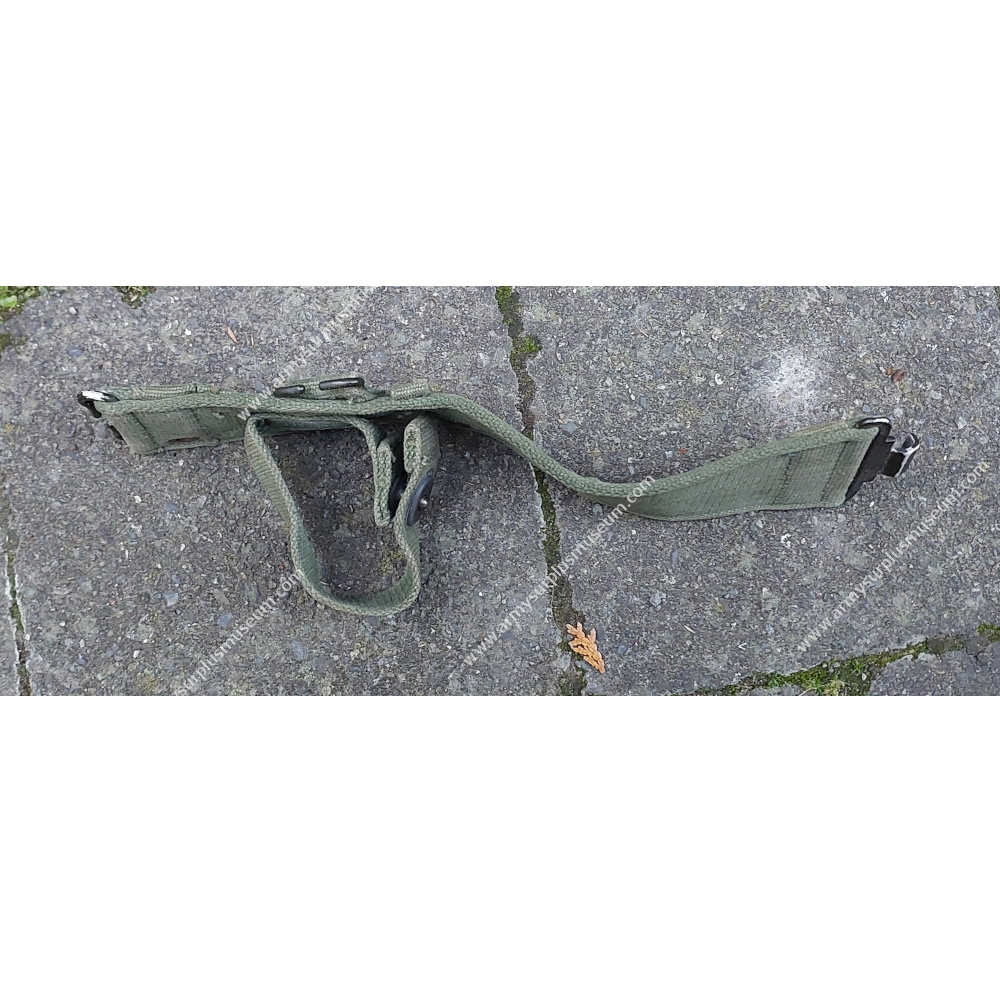
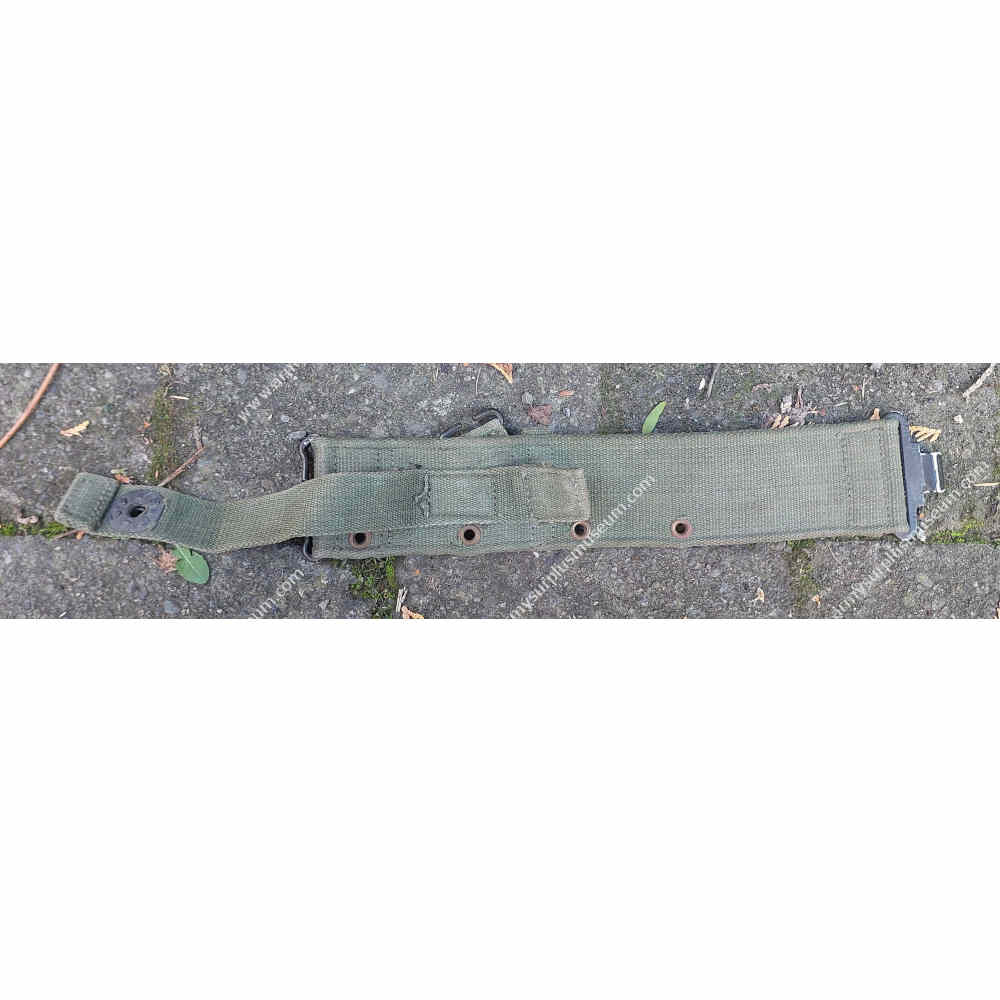
Object Number: 2407-826-37173.
