
Field Pack, Combat (Geonari Botjim)
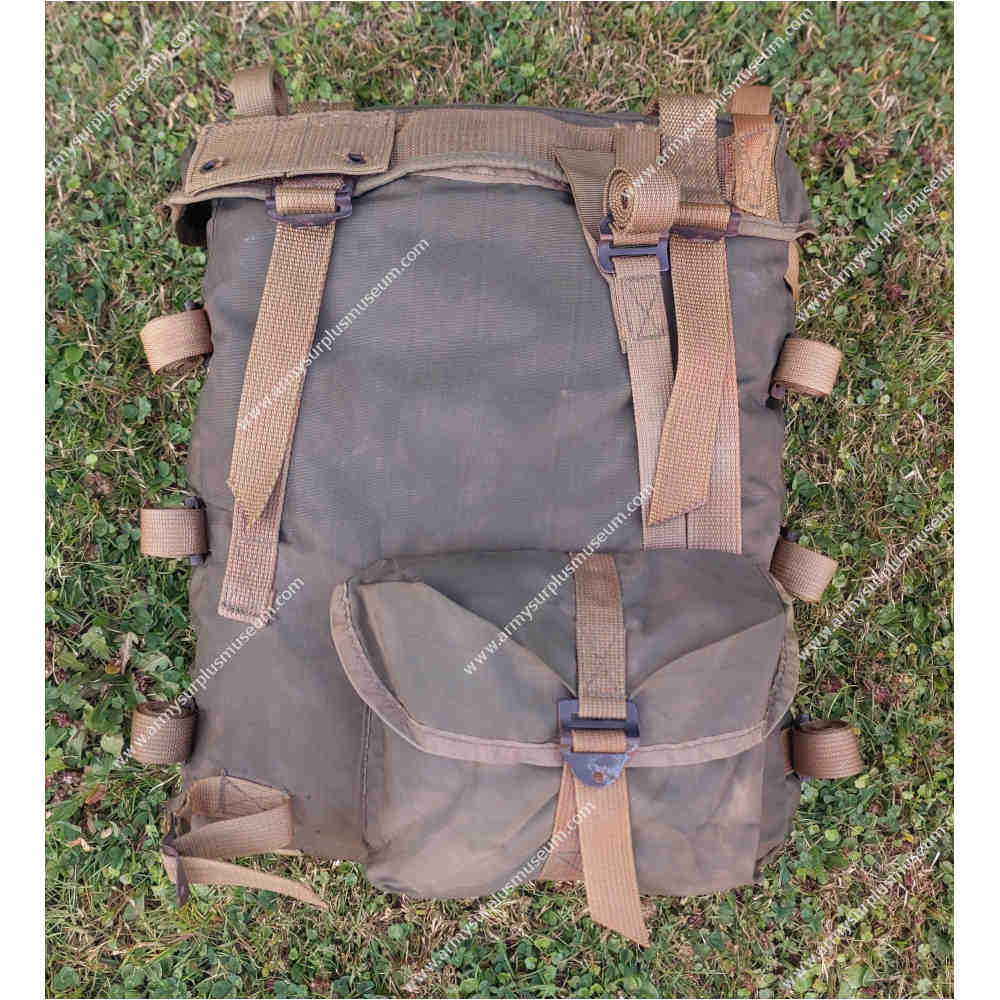
General Information
Name: Field Pack, Combat (Geonari Botjim).
Country Of Origin: South Korea.
Date Of Production: See individual examples.
Manufacturer: Yet to be identified.
Colour: Olive Drab (O.D).
Equipment Family: Yet to be identified.
Number Of Compartments: Two.
Volume Capacity: 19.5L.
Weight: See individual examples.
Dimensions (cm): 31 (H) × 28 (W) × 10 (D) — excluding external pouch.
Waterproof: No.
History
During the Korean War (1951), the Republic of Korea received large quantities of military aid from the United States in the form of surplus World War II uniforms and equipment, in order to support its fledgling military still recovering from Japanese occupation. By the end of the conflict, the ROK still held stocks of wartime gear, which continued to be issued to national service personnel.
By the early 1960s, much of this equipment had worn out. The U.S. M-1945 Field Pack, Combat was among the items in short supply. Needing a replacement, the ROK opted to develop a domestic pack based on the M-1945 but tailored to its own requirements. The official designation at this stage was simply Backpack (1960s–70s).
The earliest Korean-made version, produced in canvas, featured built-in shoulder straps that replaced separate web suspenders. This design effectively joined the web set and the field pack together, resembling the U.S. M-1910 and M-1928 haversacks worn by American soldiers during the First and Second World Wars. By the late 1960s, the pack was redesigned to work with a pair of M-1945 suspenders, allowing the field pack to be detached from the web gear.
The pack never earned much affection from the men who carried it. Its most common nickname, Geonari Botjim (“bundle pack”), literally means bundle, tied load, or wrapped pack—something bundled together for carrying. It is an older Korean word often used for cloth-wrapped bundles, similar to the traditional bojagi. Soldiers saw the same thing in their rucksacks: a tangle of straps meant to lash on blankets, ponchos, or anything that wouldn’t fit inside. Packing and unpacking was slow, the straps tangled easily, and buckles had a habit of working loose on long marches. The shoulder suspension bit into the wearer, and once a sleeping bag was lashed underneath it would thump against the lower back with every step, causing discomfort and chafing.
In Vietnam, ROK troops deployed with this domestic pack, but in practice many preferred to replace it with locally acquired ARVN field packs when they could get one. The ARVN design was simpler, carried more, and fit Asian body proportions better — making it far more practical in the field. This dual use often led to confusion later on between the ROK design and the ARVN pack.
Even when the Korean pack shifted to nylon construction in the late 1970s, the changes didn’t fix its fundamental problems. The lighter material helped with drying, but the awkward strap-heavy layout remained. The revised style stayed in service until the early 1980s, when it was re-designated as the Combat Backpack. A nylon version followed, but by the early 1990s the type was already being phased out, and it was finally retired from service in the late 2000s under the name General Field Backpack.
For many veterans, the ROK field pack came to symbolize over-complicated kit that looked good on paper but failed in practice — a design remembered more for frustration than for function.
Description
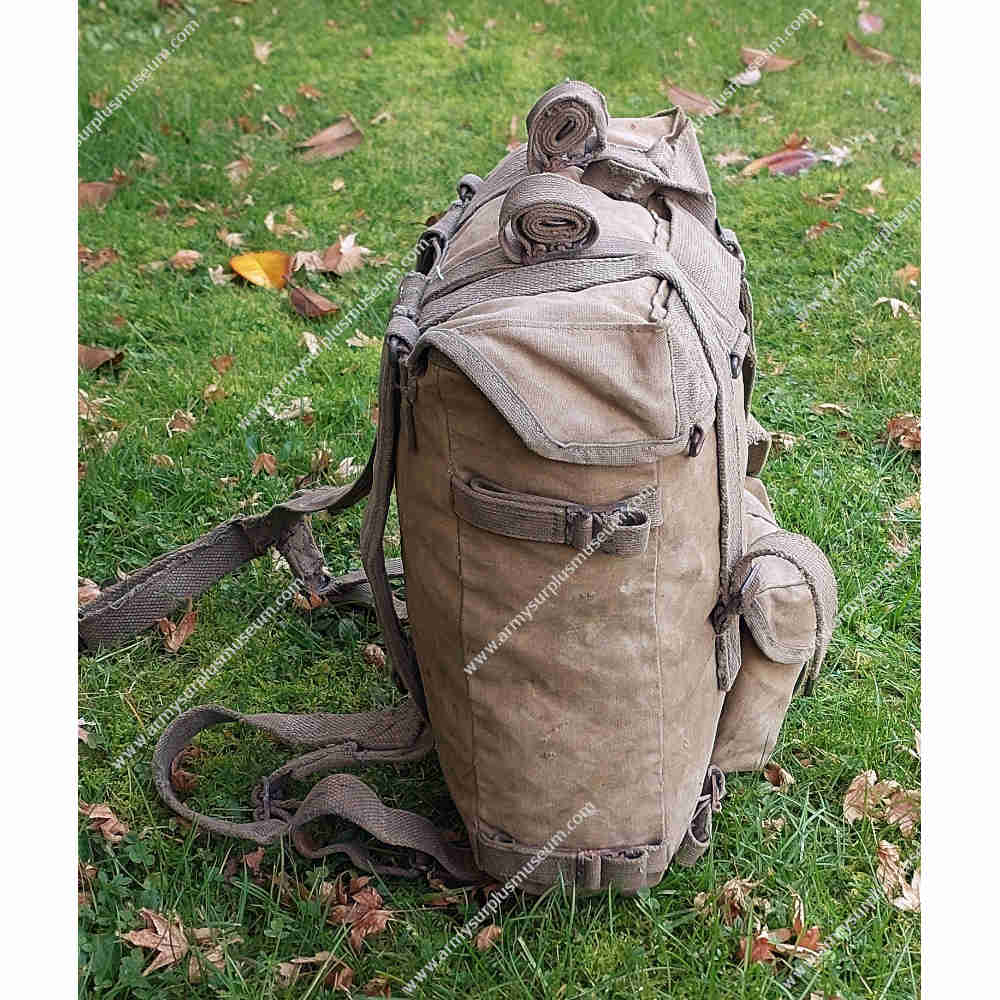
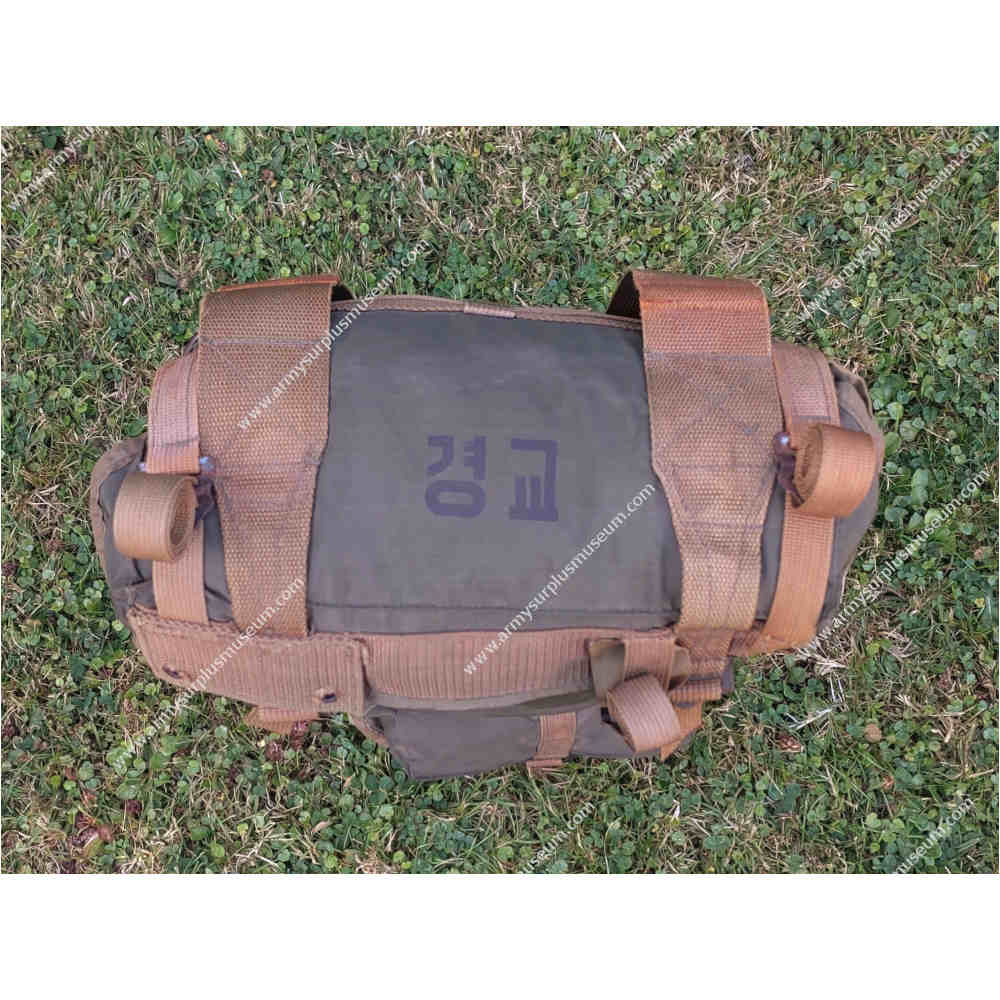
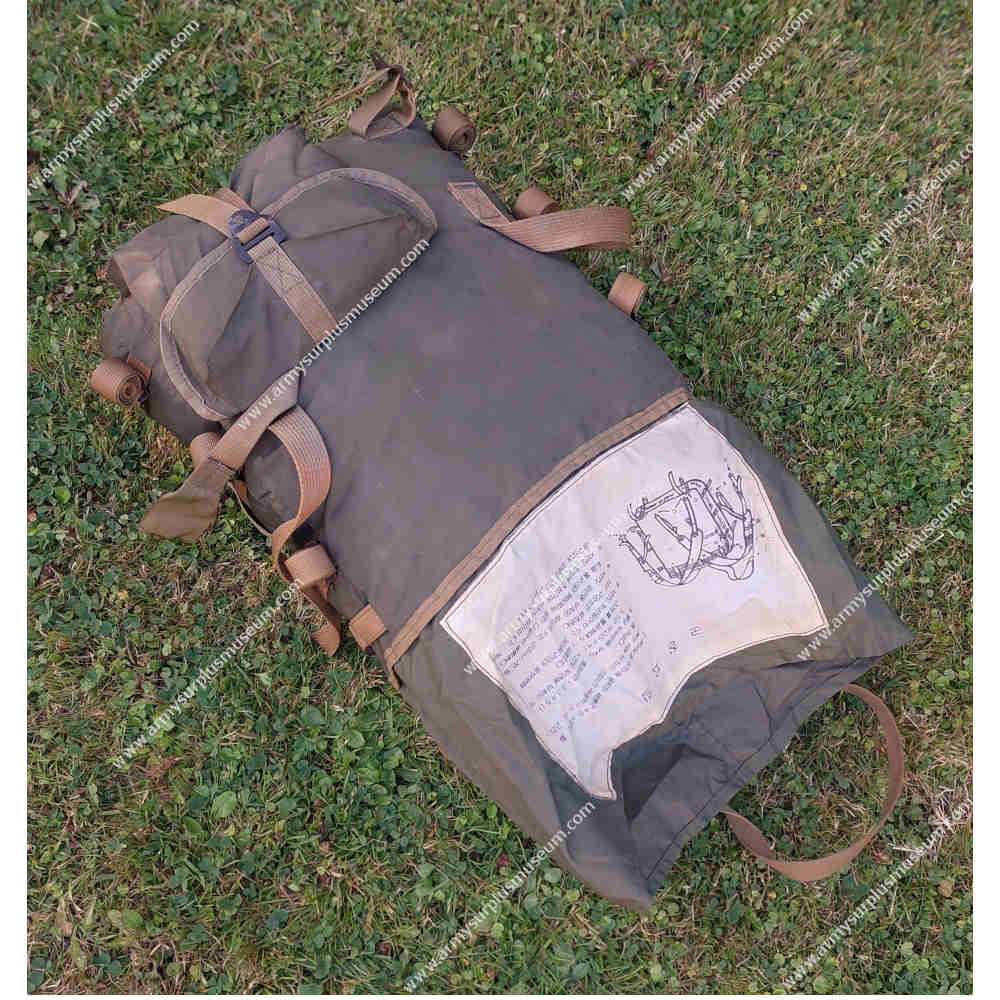
The field pack is a medium-sized, rectangular, box-shaped design that appears as a confusing mass of straps attached to a pack. The lid is tailored to fold neatly over the main compartment, with extended sides that come down to protect the opening. Two closure straps extend from the rear of the lid and are sewn down across the top and front panels.
Attached to the top of the lid are a pair of straps. The front of the lid features a reinforced 50mm webbing strap, which includes a mounting point on the left side for an entrenching tool and its cover. On the right side, a long webbing strap runs through a buckle above a small external pouch—this strap is designed to secure a Korean-issue mess set (similar in design to the Japanese model) to the pack’s exterior.
The mouth of the main compartment is fitted with a 15cm-high nylon throat that helps retain contents and protect against debris intrusion. Two large metal buckles are positioned at the mid-front of the pack, one on each side, to anchor the lid’s closure straps.
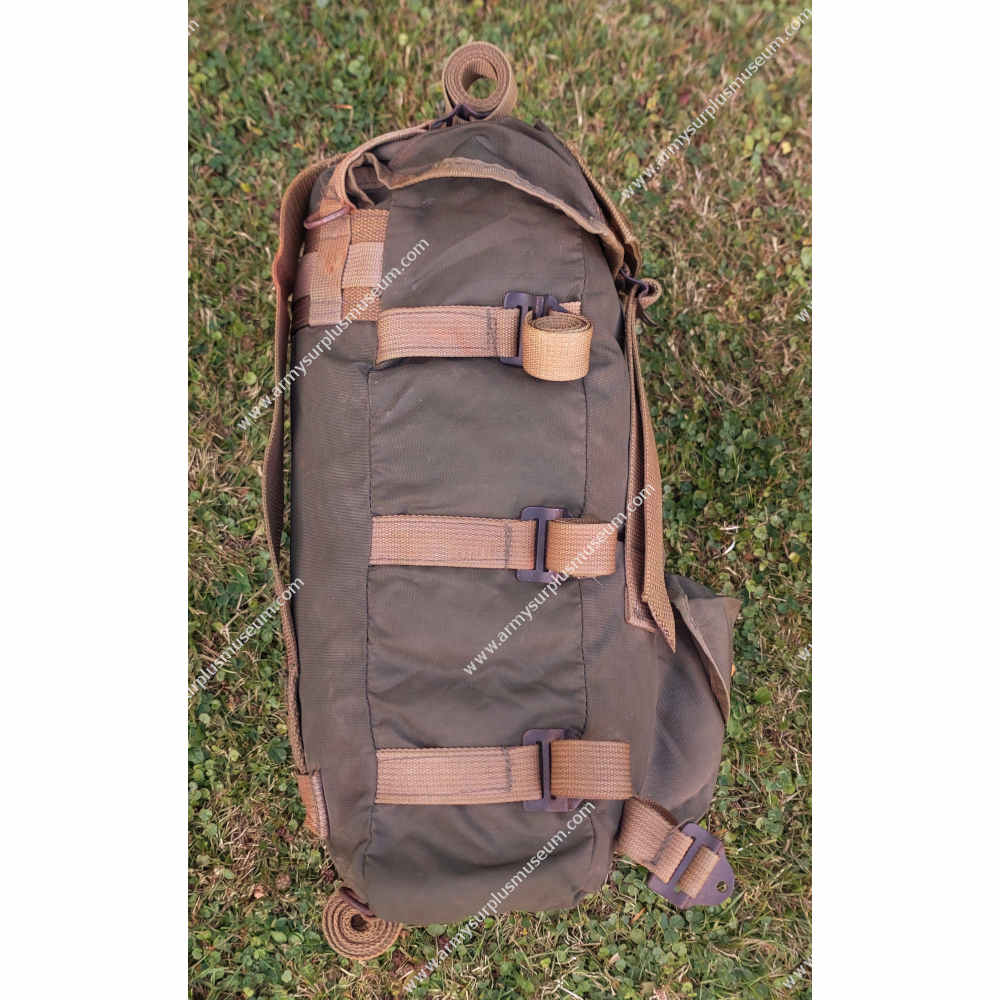
On the left flank of the pack is a small, box-shaped external pouch that secures with a webbing strap and buckle. Beside it is a short, horizontal webbing strap and buckle intended to secure the handle of the entrenching tool..
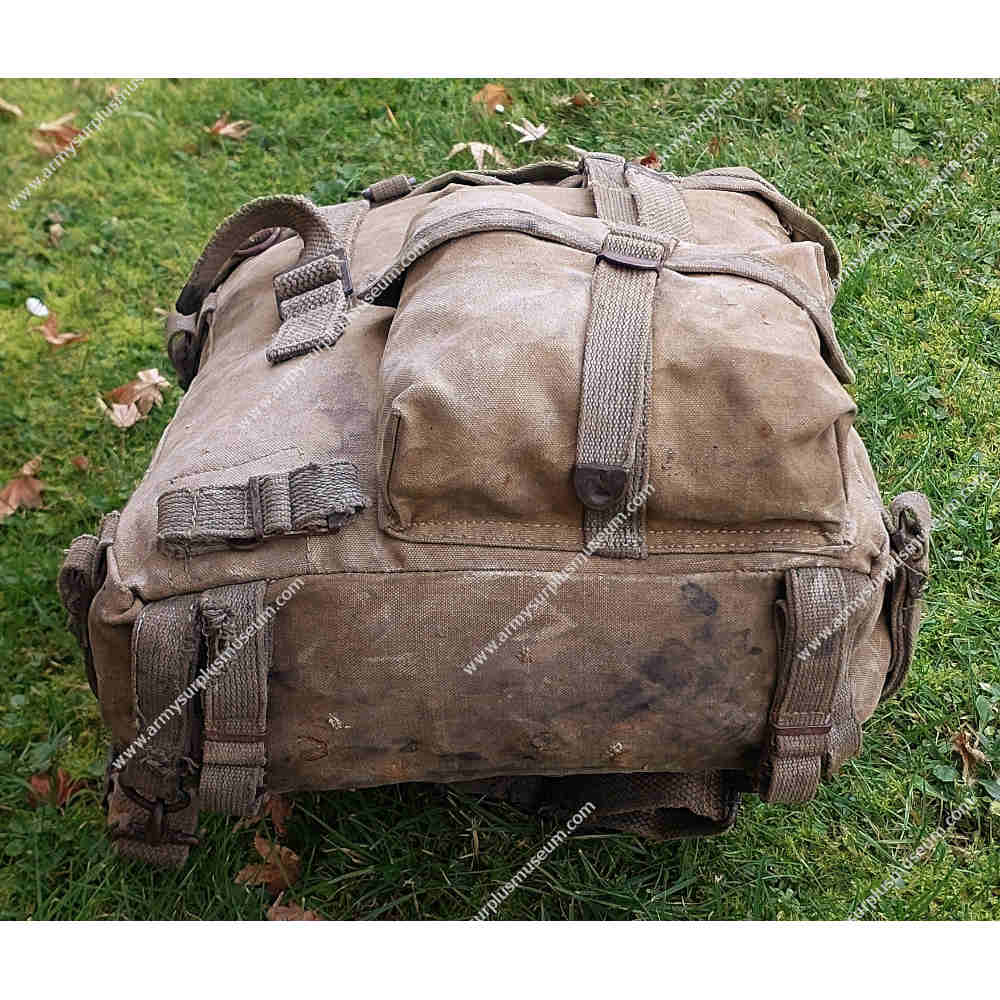
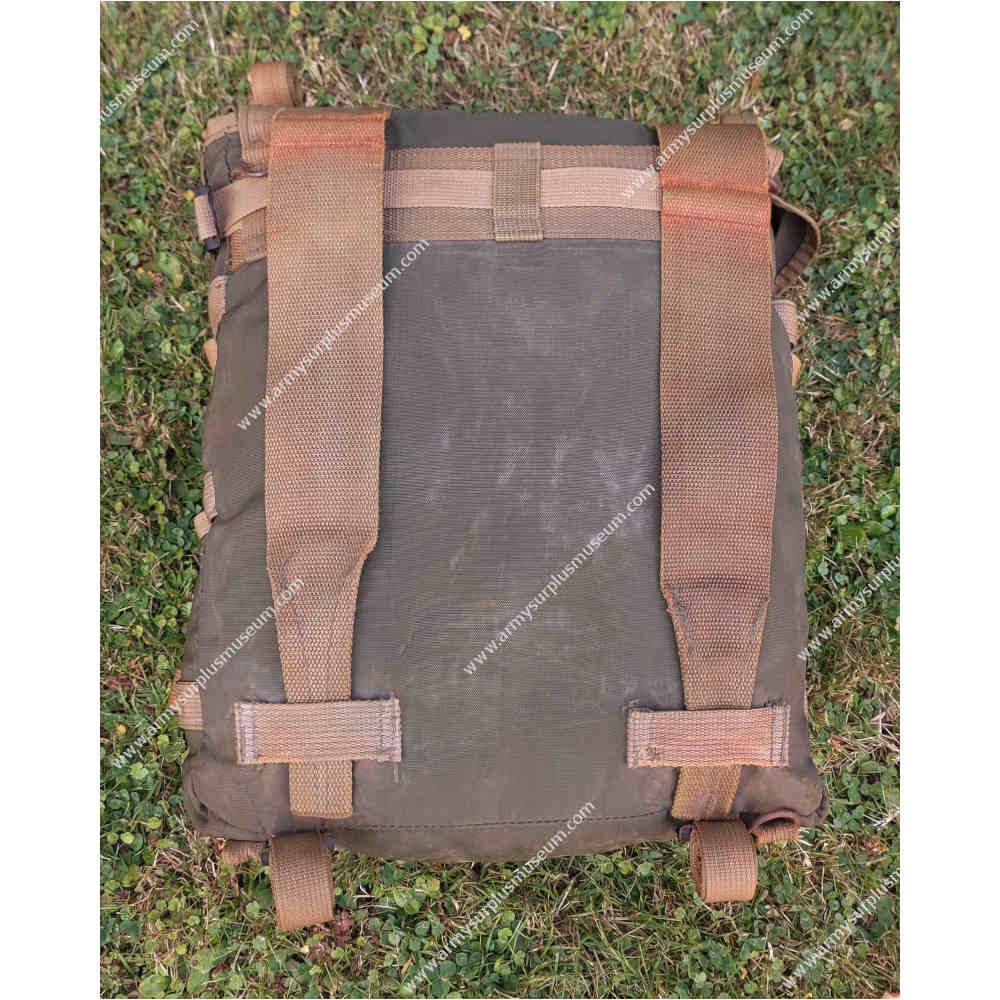
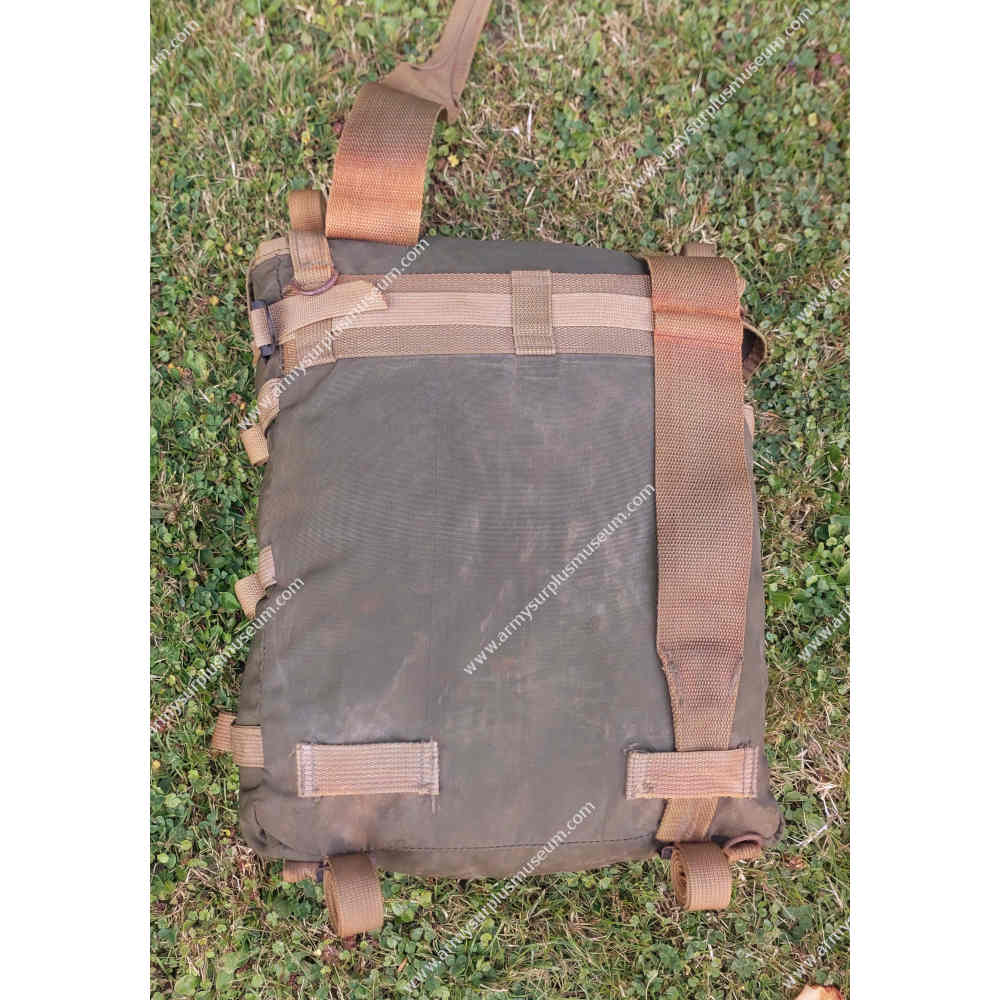
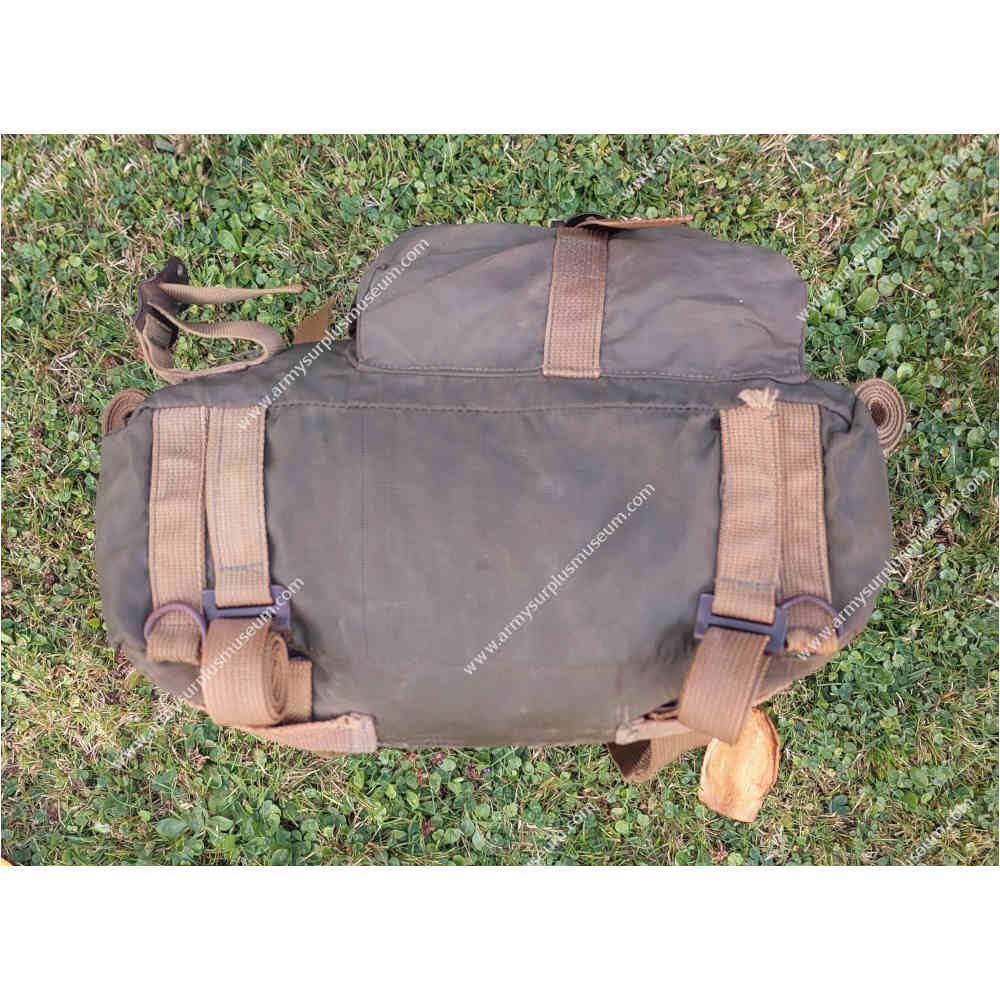
Both the sides and base of the pack are equipped with additional webbing straps, allowing a bedroll, shelter half, or other bulky items to be attached, and when combined with the lid straps, it can be carried in a horseshoe style. At the rear of the pack, small D-rings are placed at the outer edges near the shoulder strap mounts.
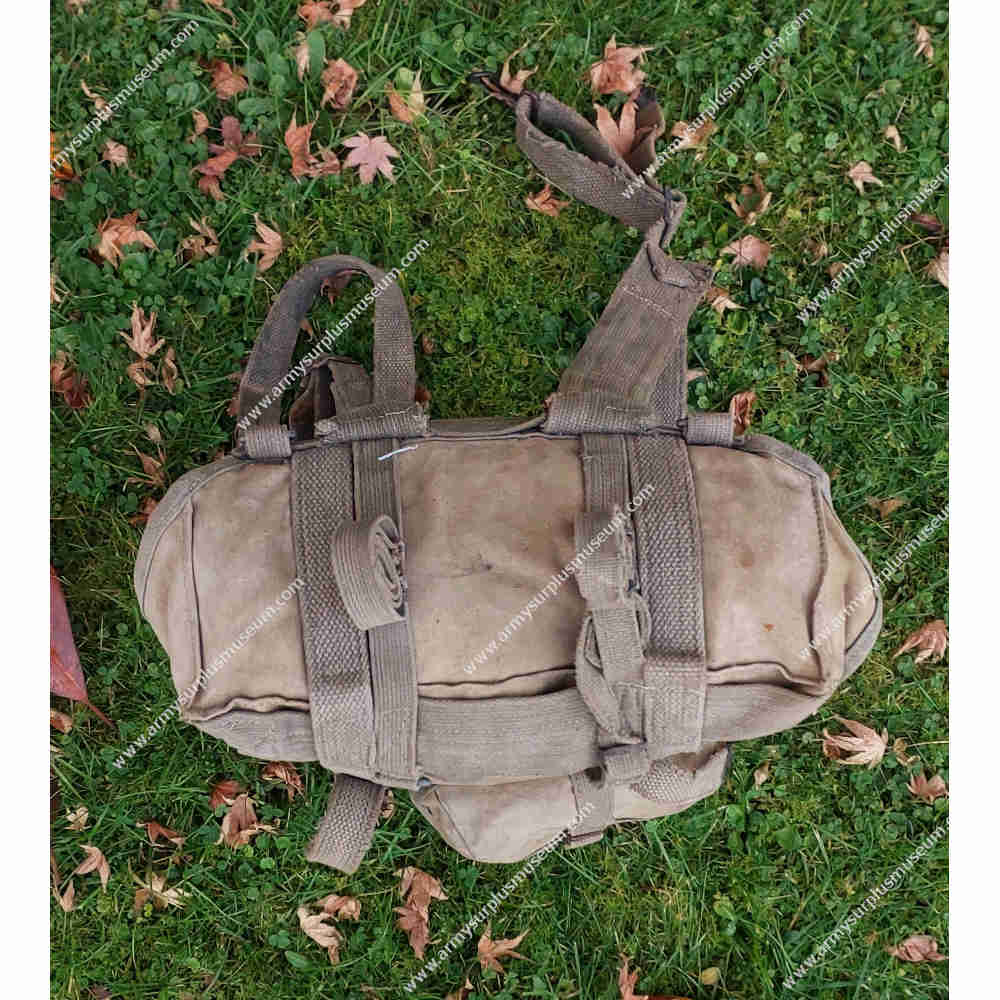
Early production versions of this field pack had permanently attached shoulder straps. Later models adopted simpler webbing straps that thread through large tri-glide buckles on the web suspenders, aligning more closely with the U.S. M-1945 field pack system. The base of both styles of shoulder straps is reinforced with 50mm webbing sewn down across the bottom of them at the top of the pack. The base also features two small D-rings, one on each side, to attach, inner web suspender shoulder straps, allowing the pack to be worn correctly.
Examples
Example One
Example One represents the earliest Korean-produced field pack. This version features permanently attached shoulder straps, internally padded with wool-felt cloth for comfort. On the front of the pack are small D-rings, intended for securing the entrenching tool. Unfortunately, this specimen is not in the best condition.
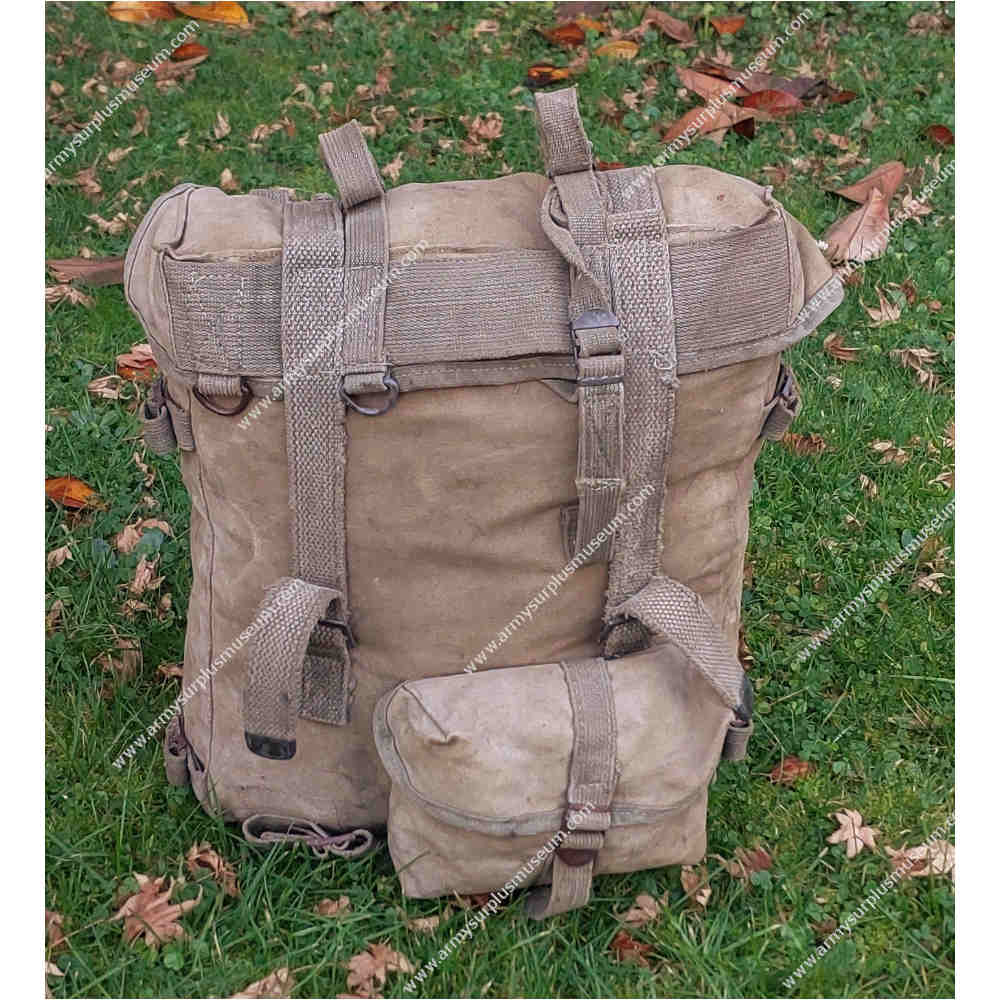
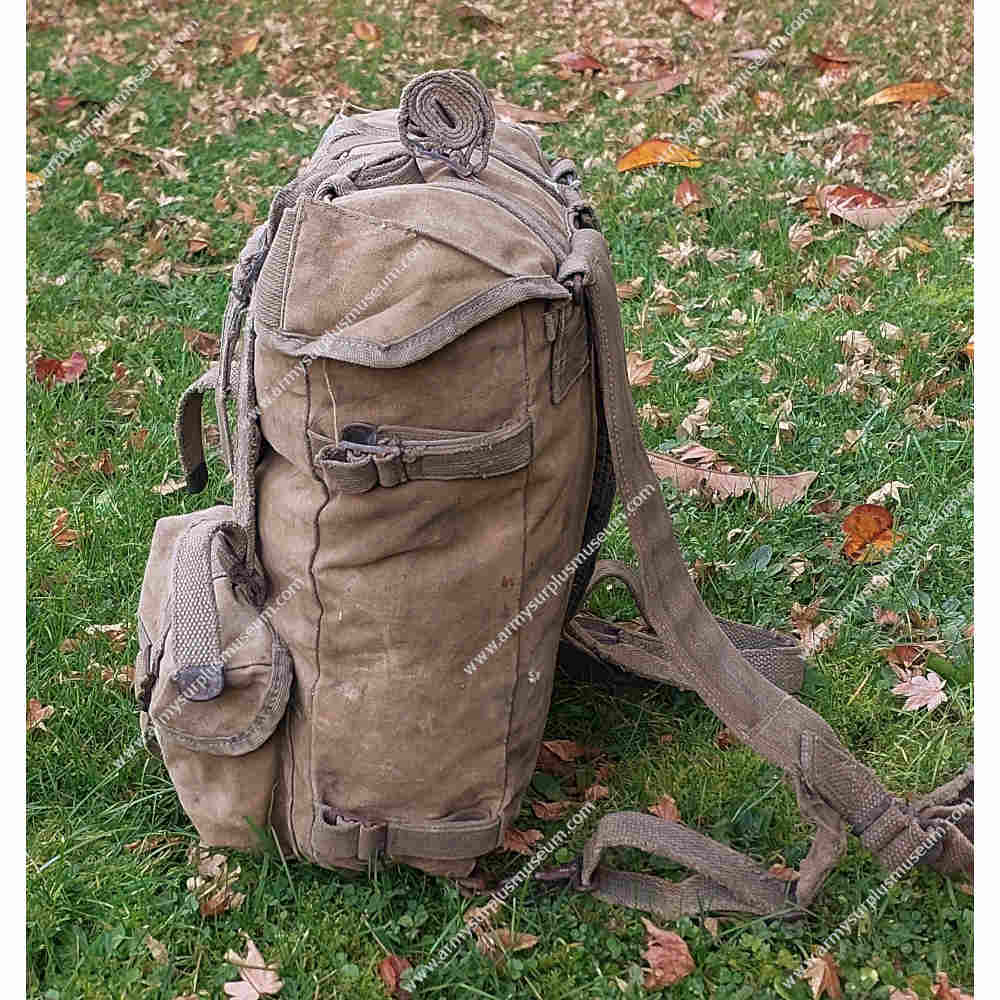
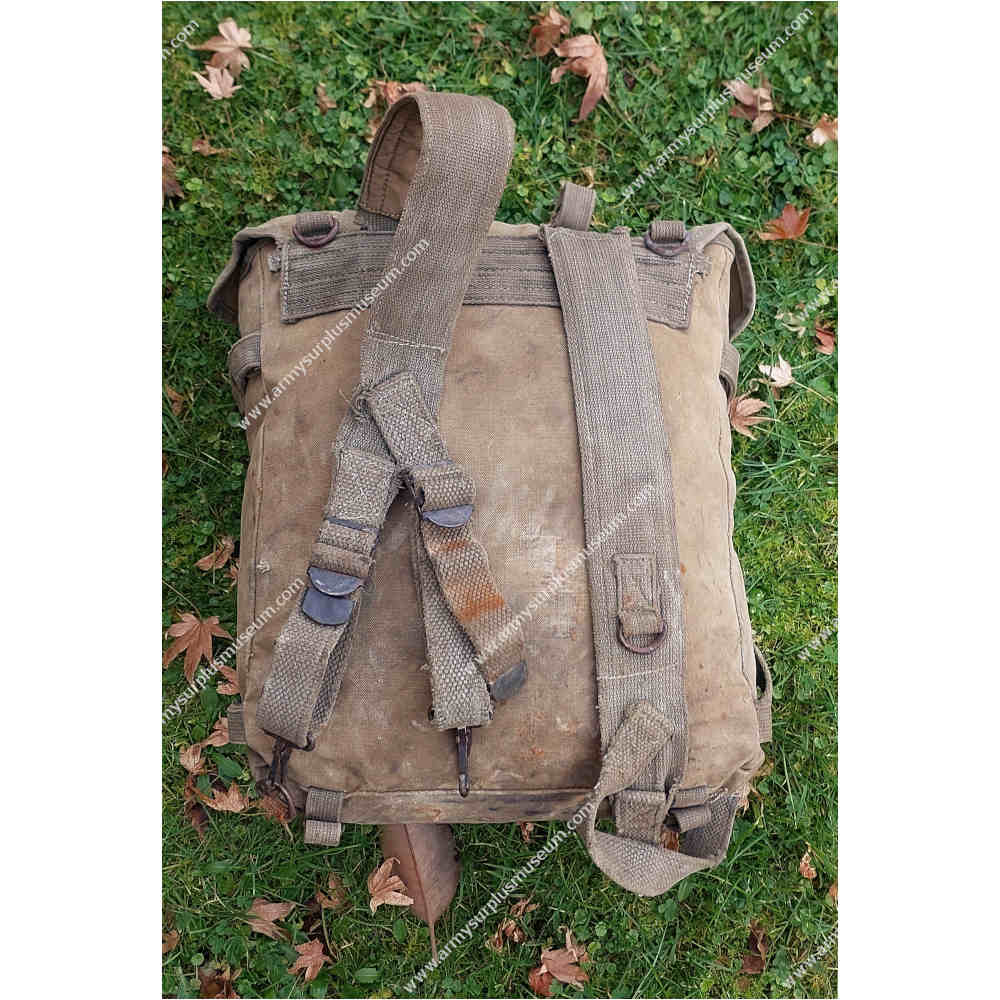
Date Of Production: c 1965.
Volume Capacity:
main compartment- 18L
Small external pouch- 1.5L
Weight: 800g.
Object Number: 3116-408-45101.
Example Two
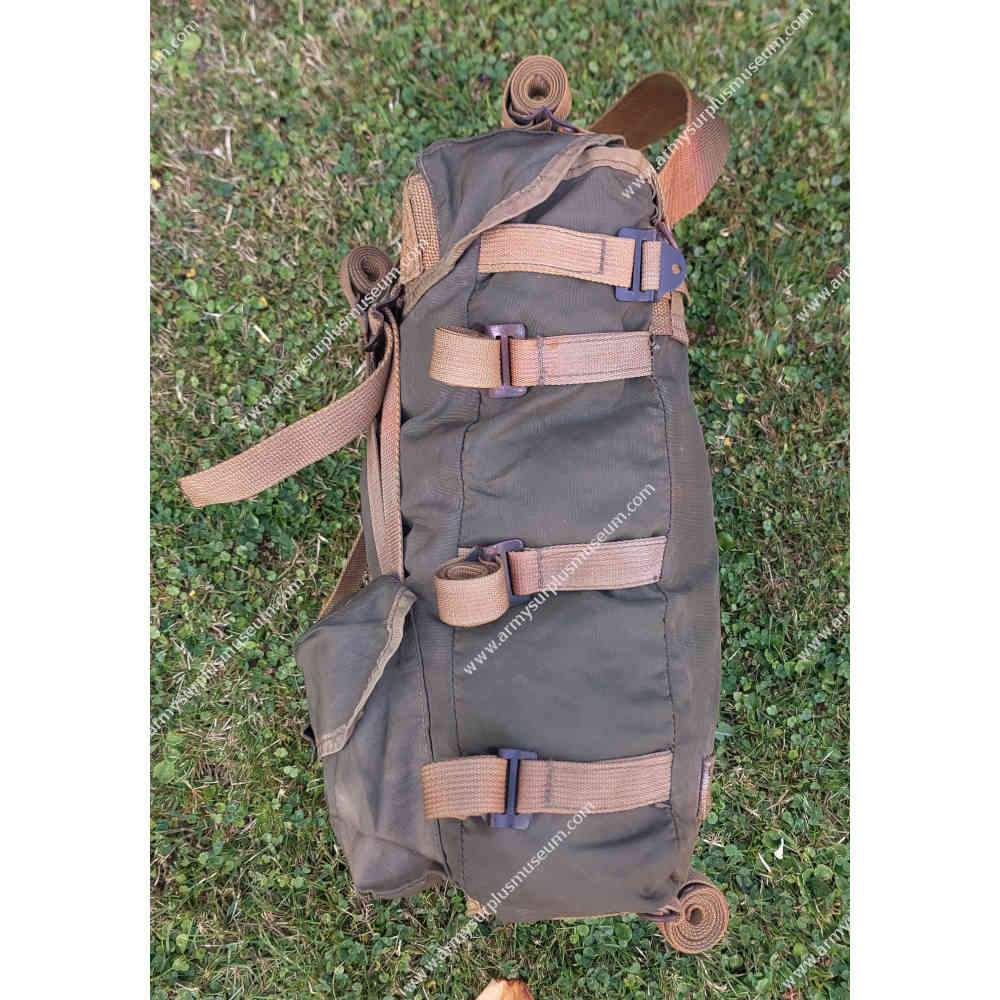
Example Two is the final style of this field pack produced by Korea. Made from nylon and re-designated as the Combat Backpack, it represents the last iteration of the design before being retired from service in the 2000s. The Korean marking on the pack reads: 경교 (Gyeonggyo). Depending on context, this can mean “training” or “schooling,” and was often used as shorthand for specific military schools or training establishments. This suggests the pack was most likely issued to a training unit rather than front line troops.
Date Of Production: c 1985.
Weight: 600g.
Volume Capacity: No change.
Object Number: 3116-408-45100.
