
Field Pack, CCFS-75
General Information
Name: Field Pack, CCFS-75 1.
Country of Origin: New Zealand.
Date of Production: c 1988.
Manufacturer: Hallmark NZ.
Product Number: 010881.
Camouflage Pattern: See examples.
Equipment Family: N/A.
Number Of compartments: Four.
Volume Capacity: 85L.
Weight:
Waterproof: Yes, but depends on the condition of the fabric.
Similar Objects
History
With Hallmark producing the Onward Field Pack for the New Zealand Army during the mid-1980s, the company also developed a commercial version that incorporated many of the pack’s key design ideas while avoiding a design that could be visually identified as the military Onward Field Pack. This resulted in the CCFS-75 pack, more commonly known in New Zealand as the “commercial Onward pack”.
The CCFS-75 was less modular than the military version and incorporated several distinct design differences. These included a unique roll-down collar closure system for both the main pack and side pouches, along with a removable closed-cell foam mat housed in a dedicated rear compartment. The foam mat served both as a sleeping mat and as a simple internal frame for the pack.
The pack was sold through department stores throughout New Zealand and was produced in three main versions: olive drab, woodland camouflage, and DPCU/Auscam camouflage. The DPCU/Auscam versions appear to have been primarily marketed in Australia, while the olive drab version was likely aimed at soldiers and general outdoor users. The woodland version was likely marketed toward hunters as well as soldiers who were permitted to use privately purchased woodland camouflage field packs.
By the mid-1990s the olive drab CFS-75 pack had found its way into New Zealand Cadet Corps units, while the camouflage variants gradually faded into obscurity.
Description
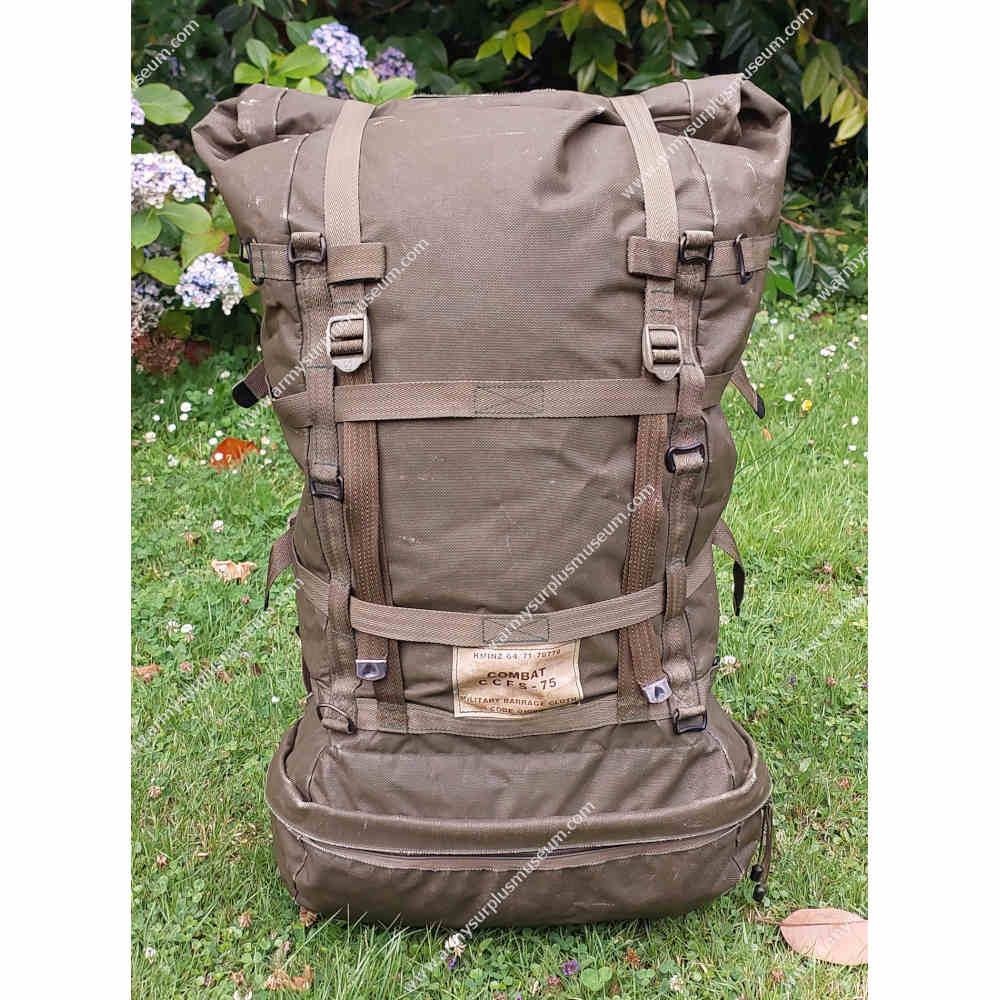
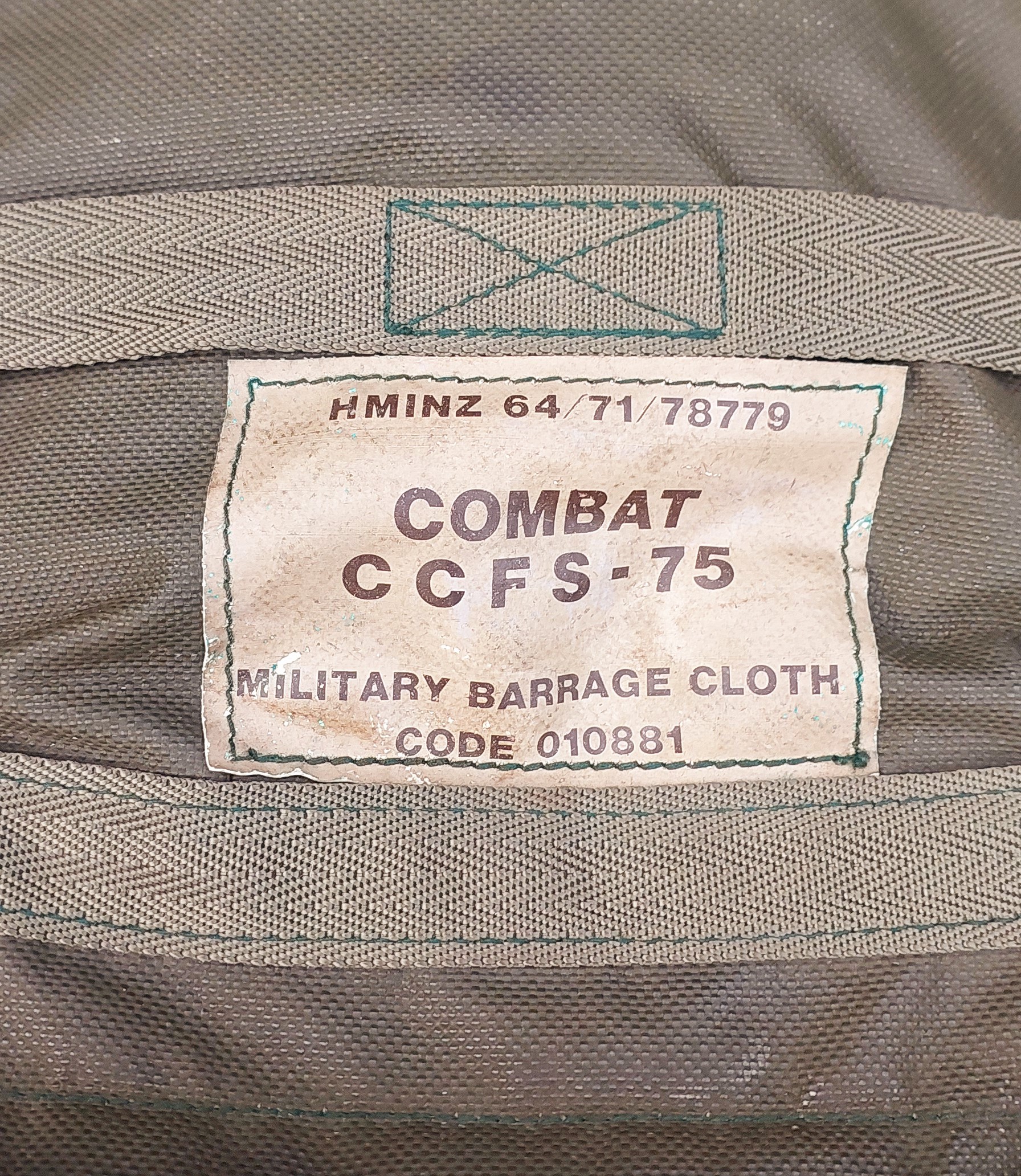
The CFS-75 is a large-capacity soft-frame field pack fabricated from heavy-duty “barrage” nylon fabric.
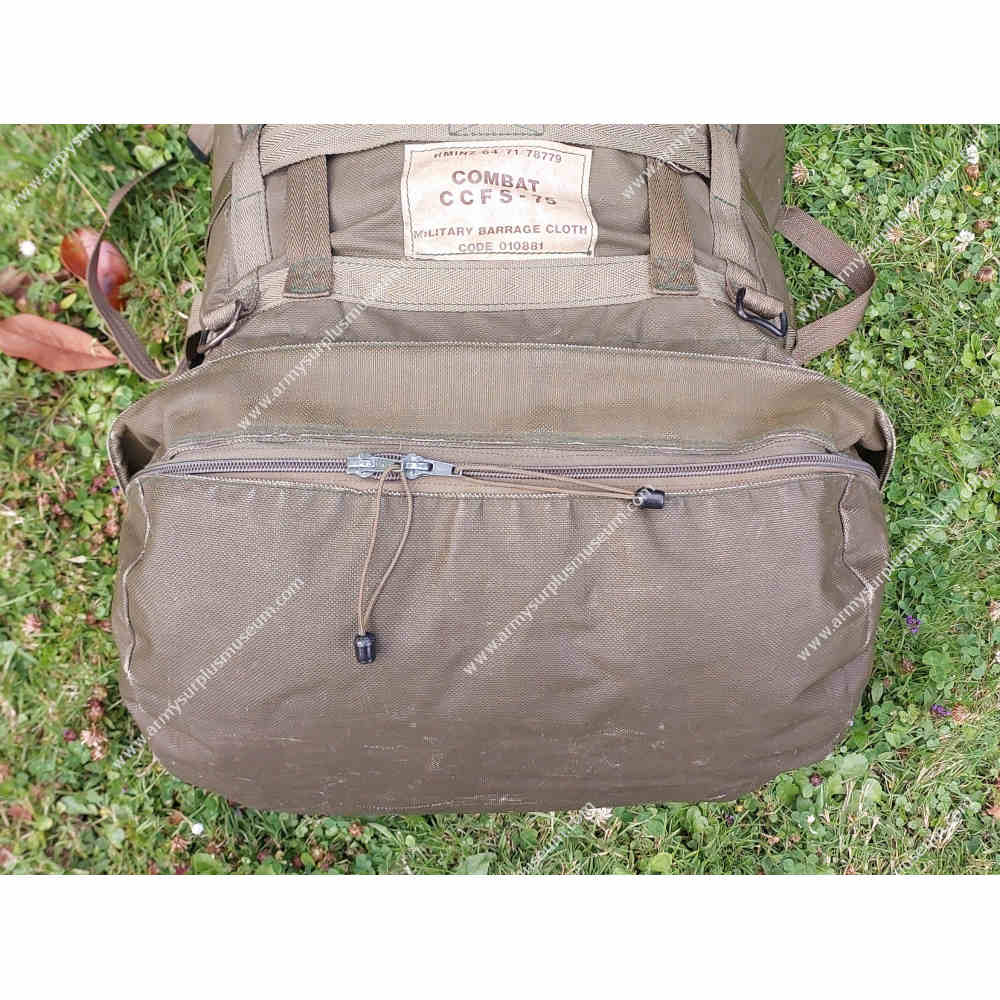
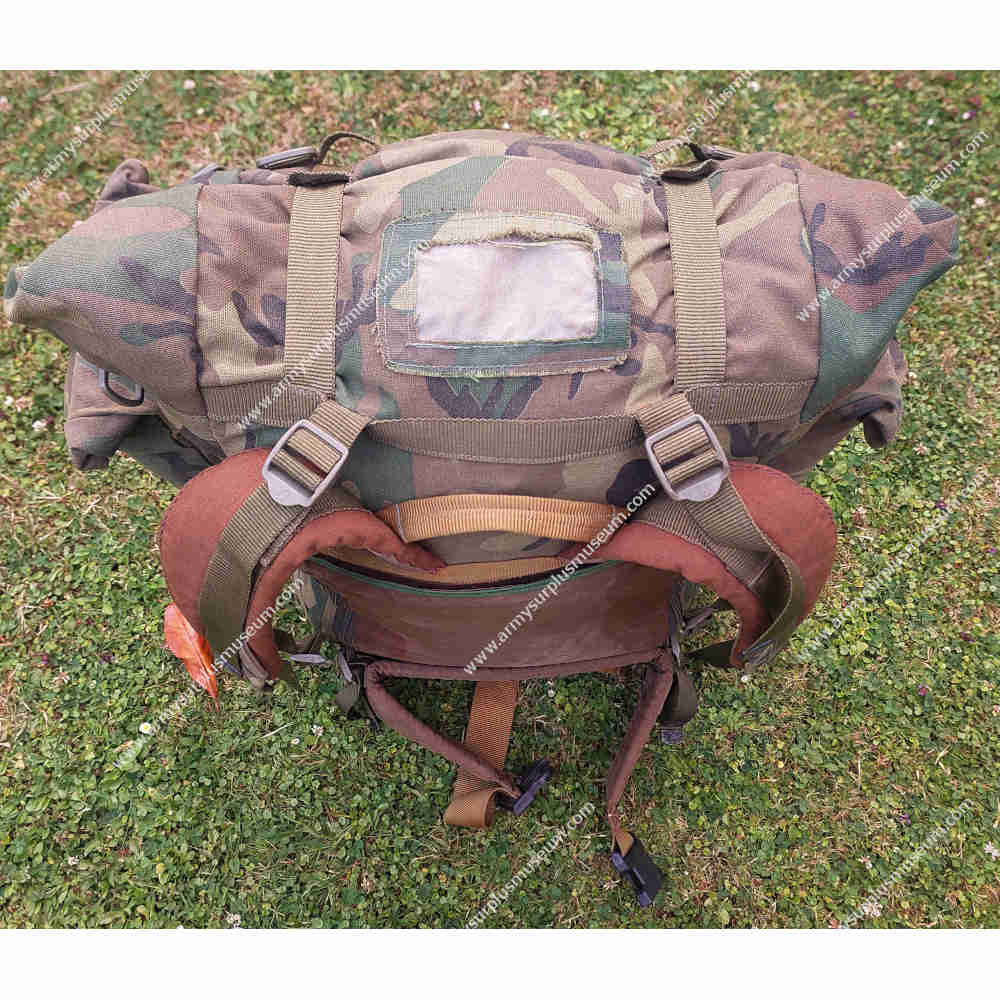
The pack features an open-mouth main compartment with a rolled collar closure. The collar extends upward from the pack body and incorporates flat internal plastic stiffeners at the front and rear. These stiffeners allow the opening to be compressed to form a tight seal before the collar is rolled down and secured using two webbing straps fitted with plastic ladder-lock buckles. A webbing loop on each side at the rear retains the closure straps.
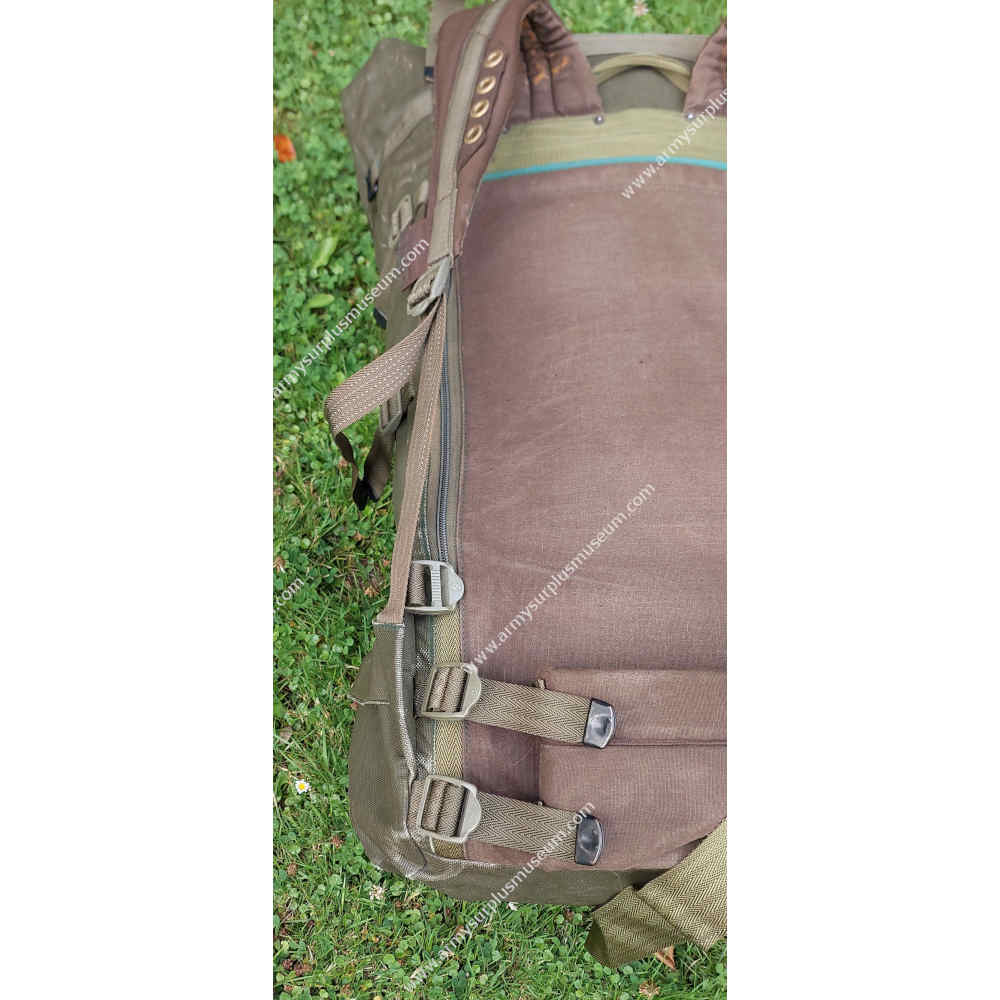
Compression of the pack body is controlled by two compression straps sewn and bar-tacked to the centre of the front panel. These straps run across the front and sides of the pack and are adjusted using plastic ladder-lock buckles.
Each side of the front panel is fitted with a vertically mounted webbing strap incorporating plastic D-rings positioned at the top, middle, and bottom, along with two webbing guide loops. The D-rings allow equipment such as bedrolls or additional kit to be secured to the front of the pack. The webbing loops guide the compression straps to ensure even compression when tightened. A webbing loop at the top also allows the collar closure straps to be routed through it. The compression straps additionally secure the removable side pouches to the pack.
The sides of the pack are fitted with horizontal webbing straps sewn at the top and bottom edges. Each strap incorporates plastic D-rings, allowing additional items to be secured externally to the pack.
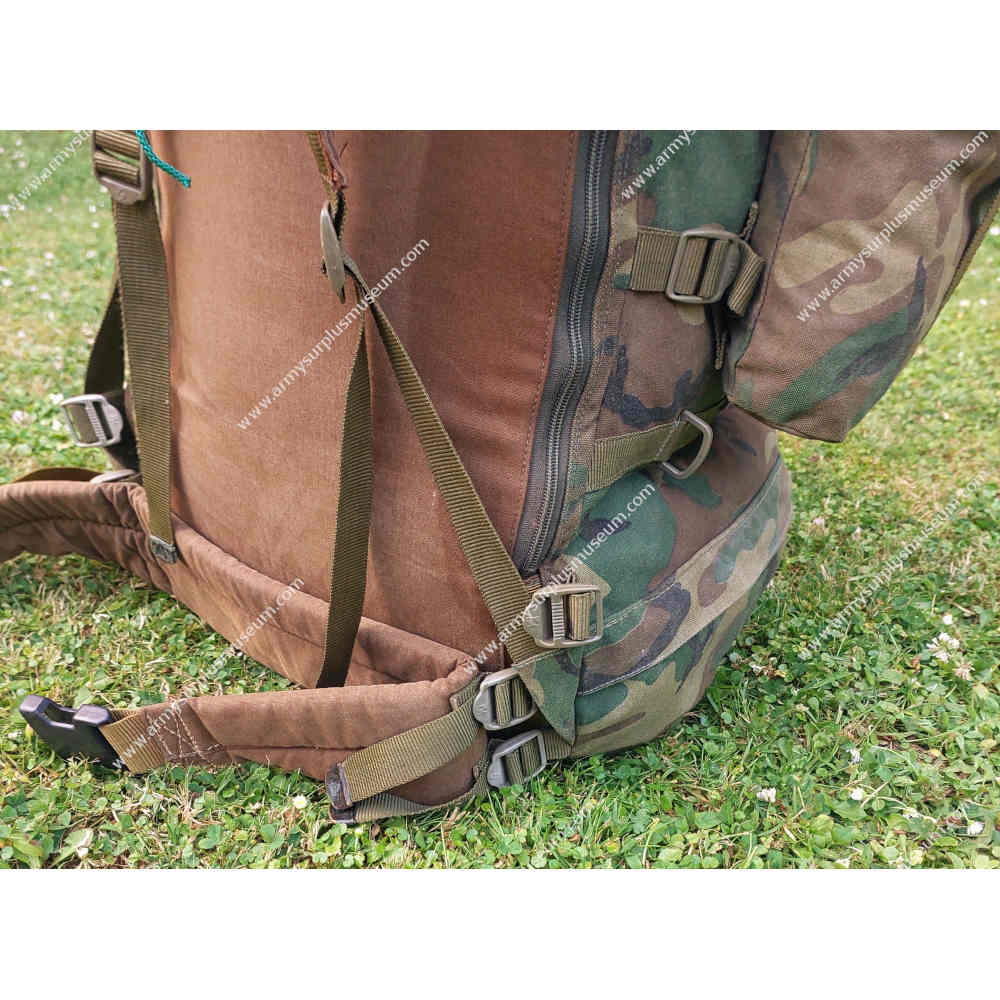
The base of the pack forms a large separate compartment sealed from the main compartment by a section of barrage nylon sewn across the bottom of the pack body. Access to this compartment is through a full-length heavy-duty nylon zip with double runners. The zip runs from one side of the pack to the other and is protected by a fabric storm cover to limit water entry.
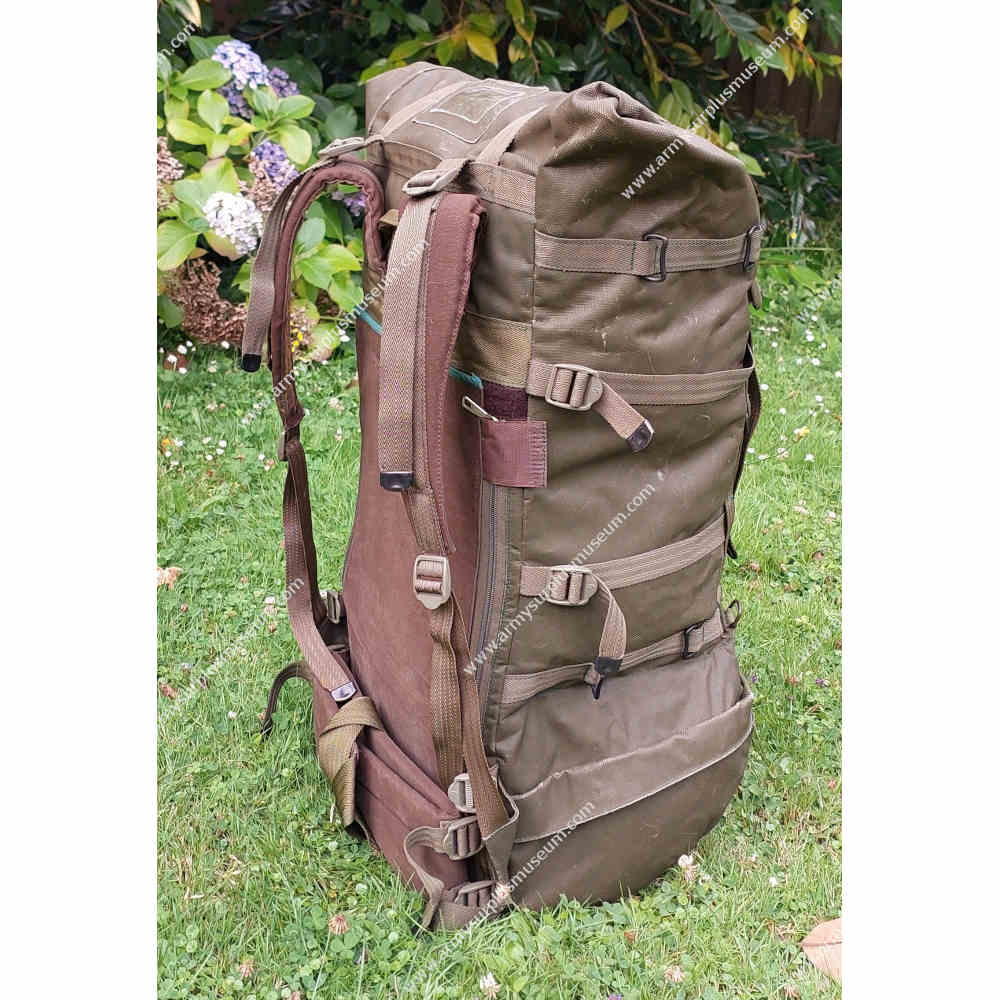
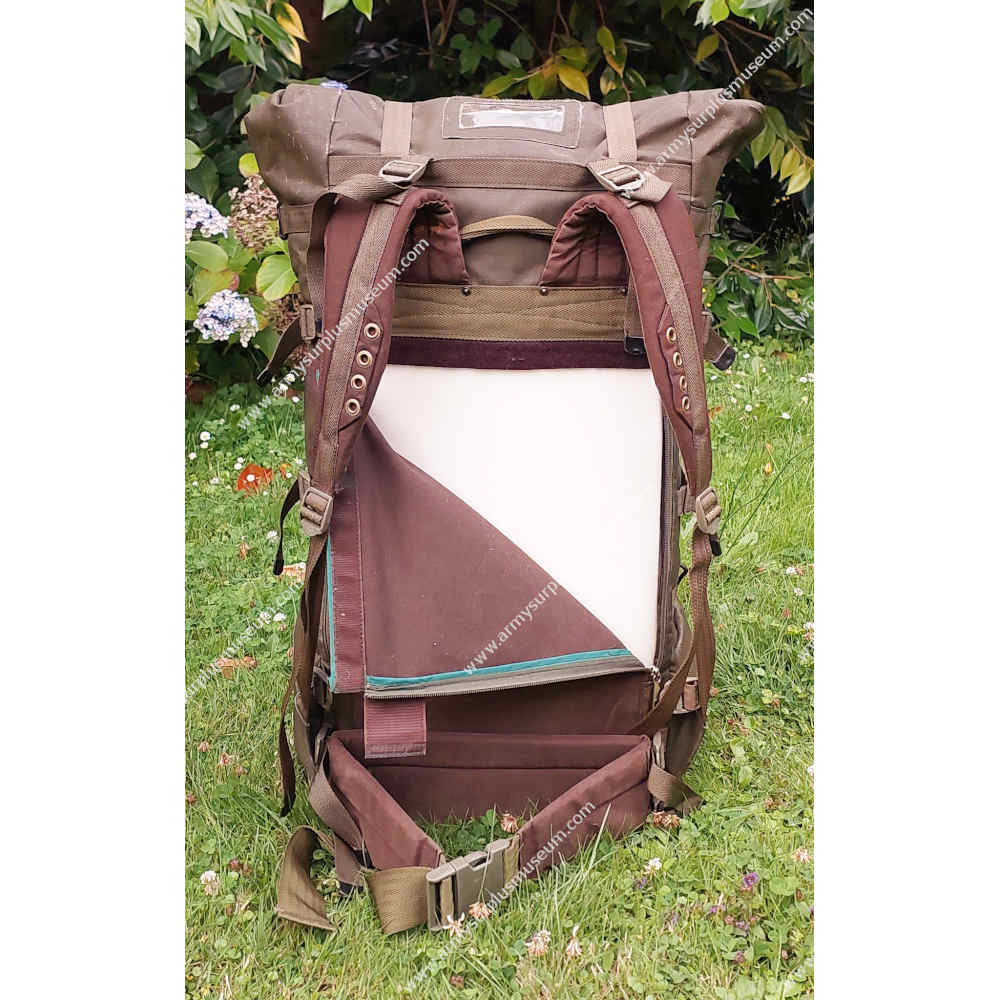
The shoulder straps are internally padded with dense closed-cell foam. They are anchored to the top of the pack using a 50 mm nylon webbing strap sewn across the upper ends of the straps and reinforced with rivets for additional strength. A heavy-duty nylon carry handle is sewn into this anchor strap.
Each shoulder strap incorporates a load-lifter strap adjusted using nylon webbing and plastic ladder-lock buckles. The main shoulder strap adjustment is controlled by webbing straps and ladder-lock buckles, with the lower ends sewn to the base of the pack.
Metal O-rings mounted on webbing tabs are positioned along the centre of each shoulder strap facing inward toward the wearer. These rings provide attachment points for an adjustable chest strap. The chest strap attaches using metal clips and provides four points of adjustment.
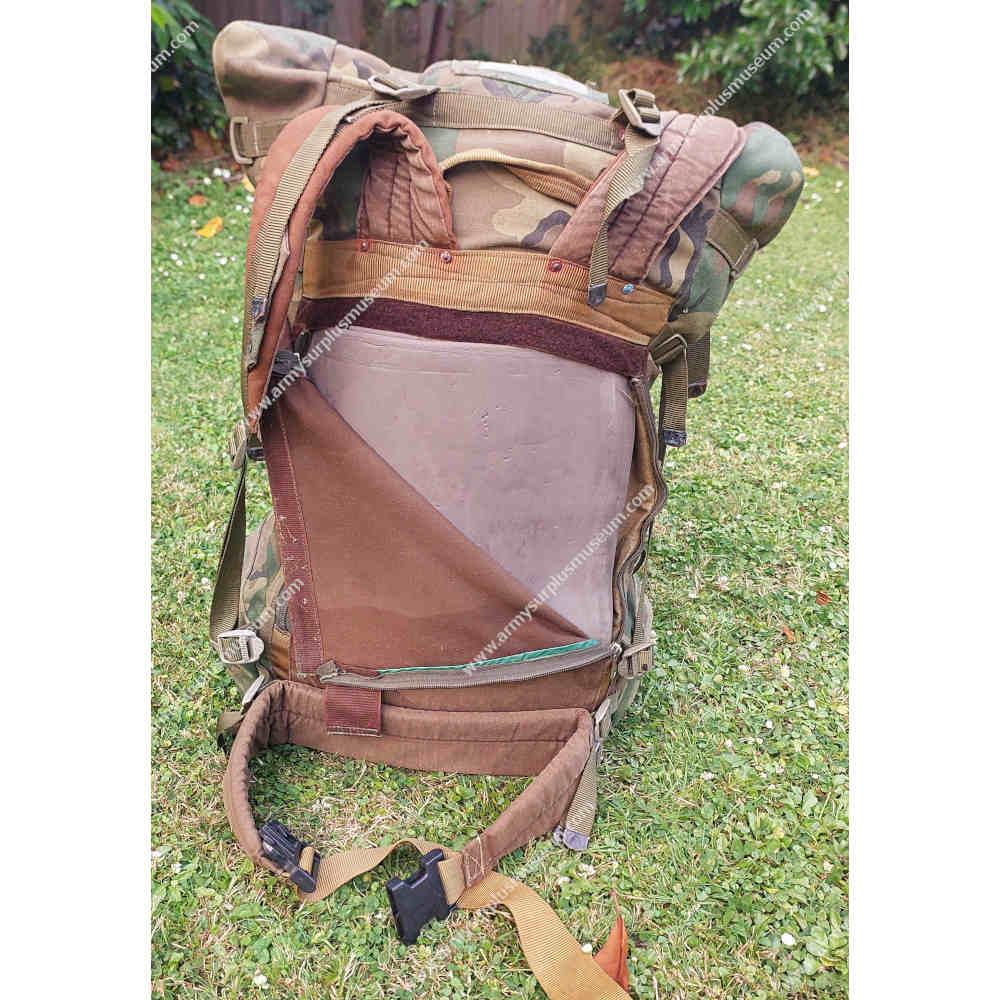
Structural support is provided by a removable closed-cell foam sleeping mat housed within a large sleeve in the back of the pack. Unlike the military version, where the mat is carried externally, this example houses the mat internally.
Access to the mat sleeve is provided by a large cotton-nylon blended fabric panel forming the rear of the pack. The panel is secured at the top with hook-and-loop fastening and closed along both sides with metal zips. In addition to providing access to the mat sleeve, the panel also functions as a sweat-absorbing layer between the pack and the wearer’s back.
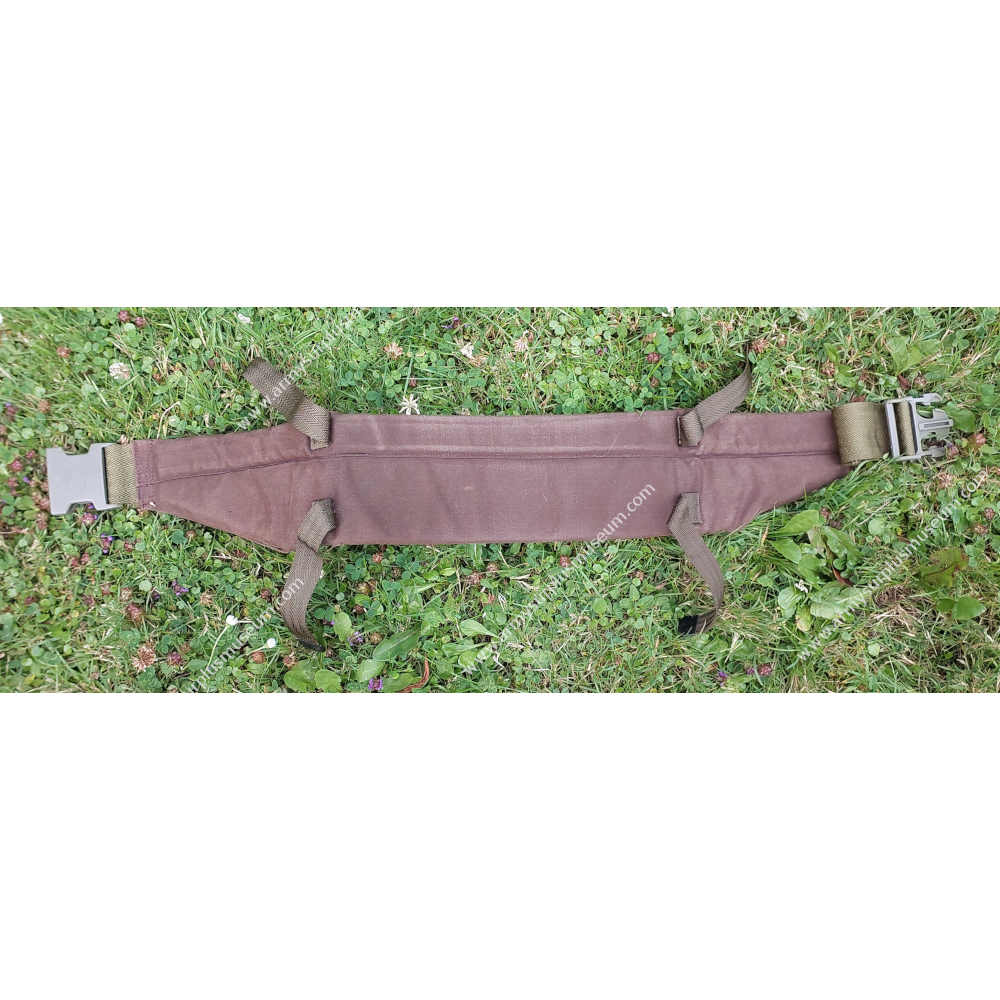
The pack is fitted with a padded waist belt containing thick closed-cell foam rubber. The padding is housed within a sleeve made from the same sweat-absorbing fabric used on the rear panel. The waist belt is secured using a 50 mm plastic side-release buckle with webbing adjustment.
The belt attaches to the pack using two webbing straps on each side threaded through plastic ladder-lock buckles, allowing limited adjustment.
The pack is fitted with removable utility pouches attached via webbing attachment points. These pouches can be mounted on the sides or re-positioned onto the front of the pack. Up to six pouches can be carried depending on load requirements.
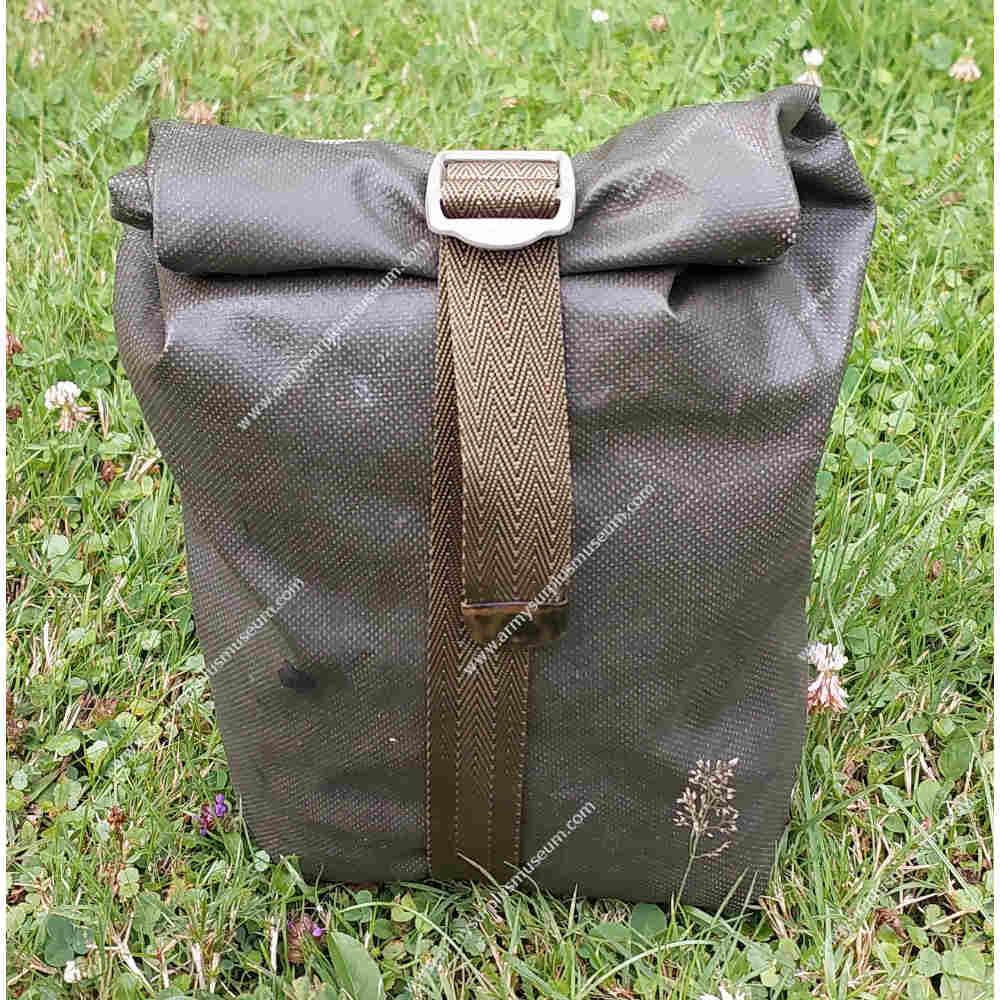
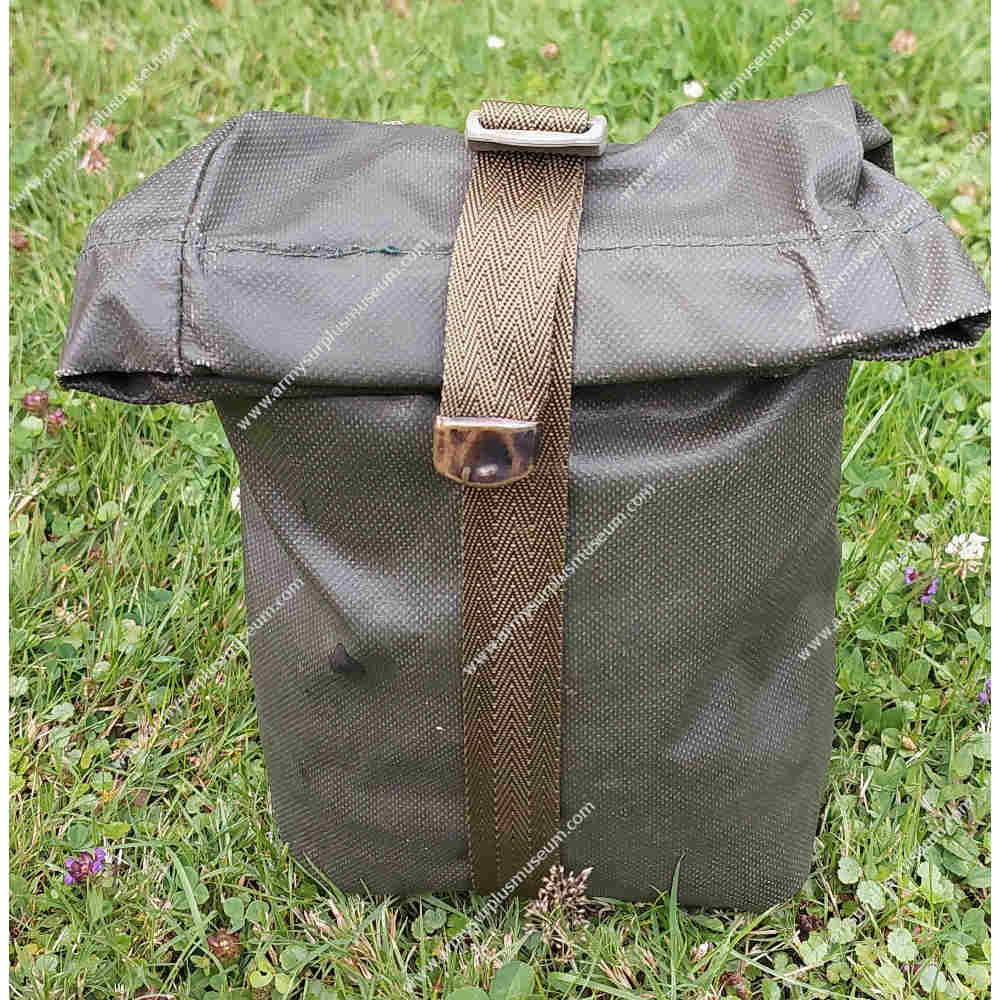
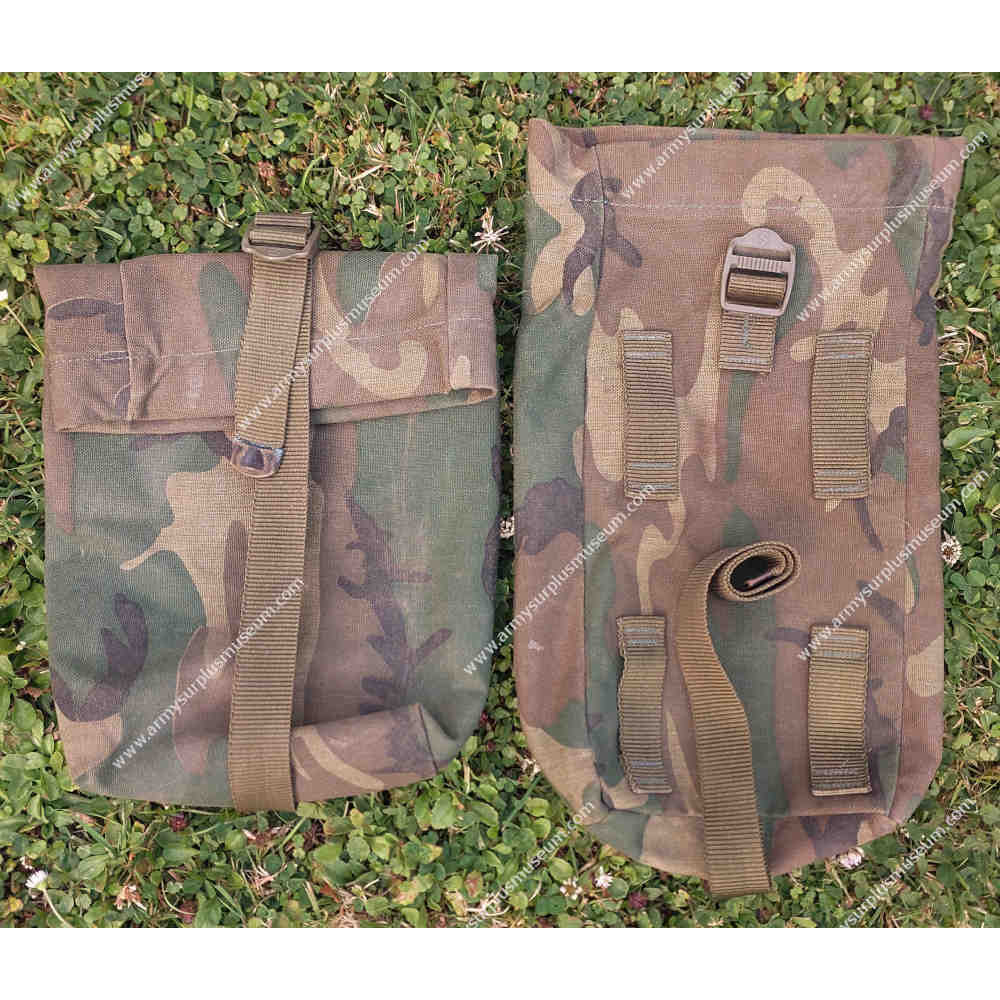
The side pouches are fabricated in the same style as the main pack body. Each pouch features a roll-down collar closure incorporating a plastic stiffening rod at the rear to assist in sealing the opening.
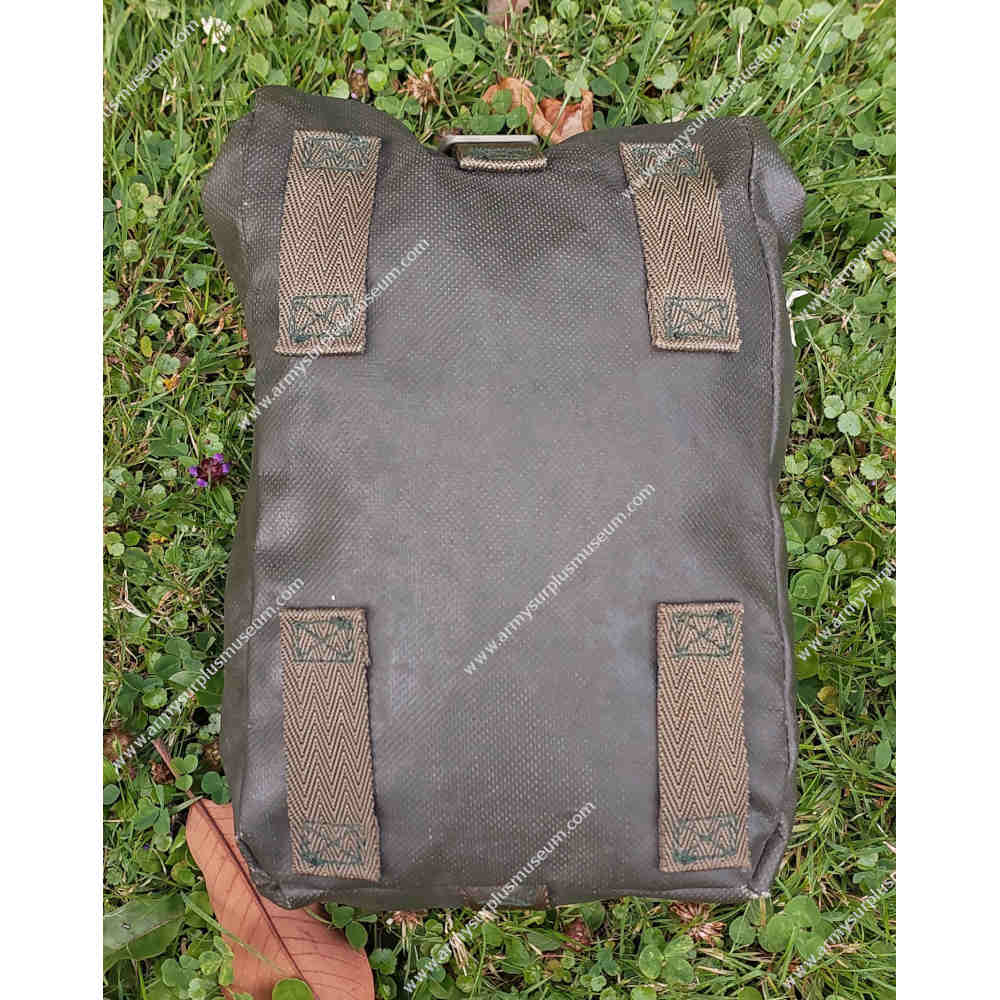
The rear of each pouch is fitted with a plastic ladder-lock buckle positioned partway down the back panel. Vertically mounted webbing loops are positioned at the top and bottom of each side of the pouch, allowing it to be secured to the pack using the compression straps.
The base of each pouch incorporates a long nylon webbing strap threaded through the ladder-lock buckle to secure the rolled collar closure.
Examples
Example One
Example One was produced in the late 1980s and represents the most commonly encountered variant of the CFS-75 field pack.
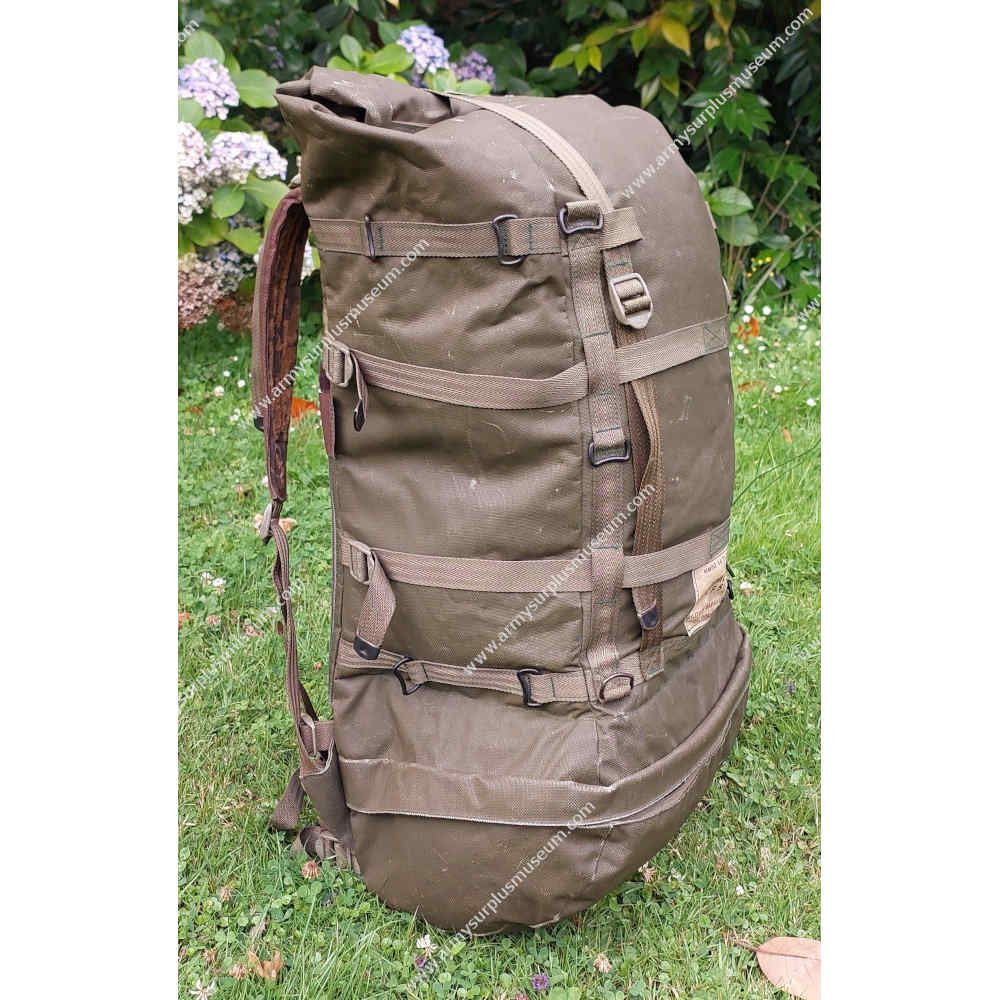
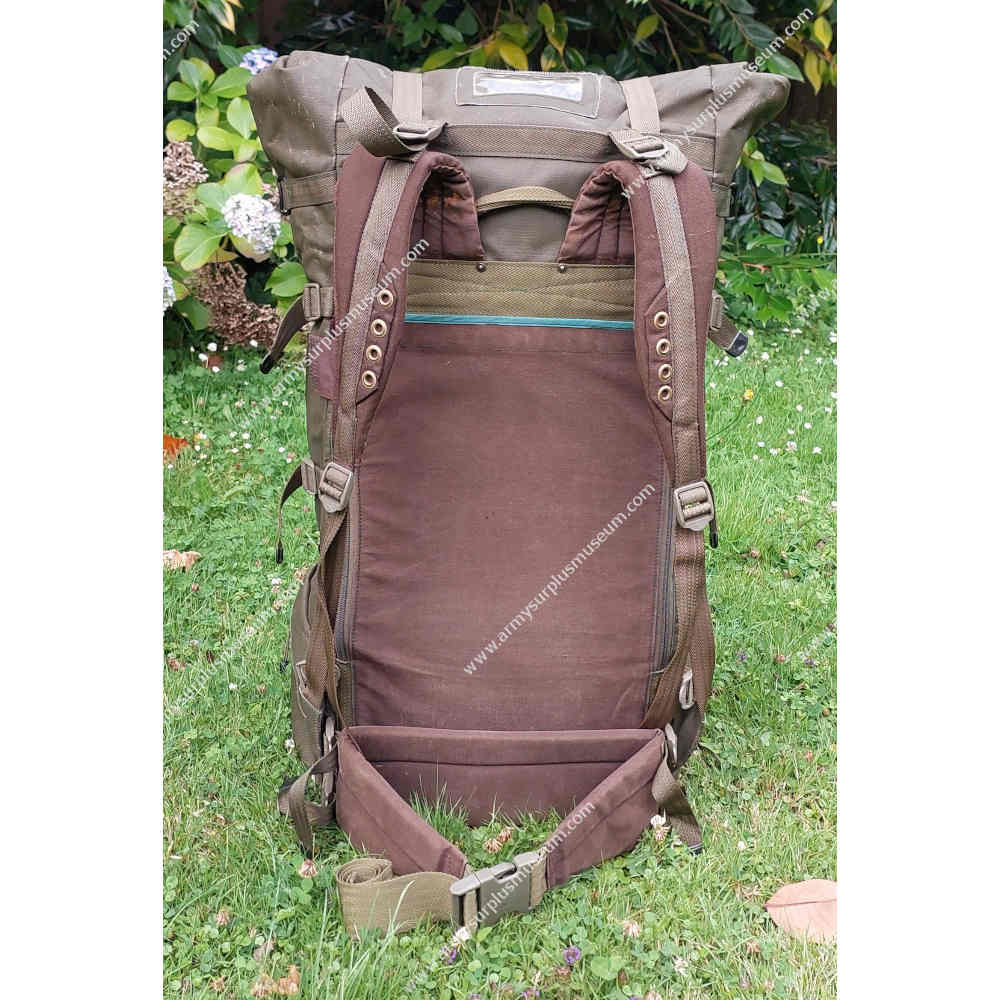
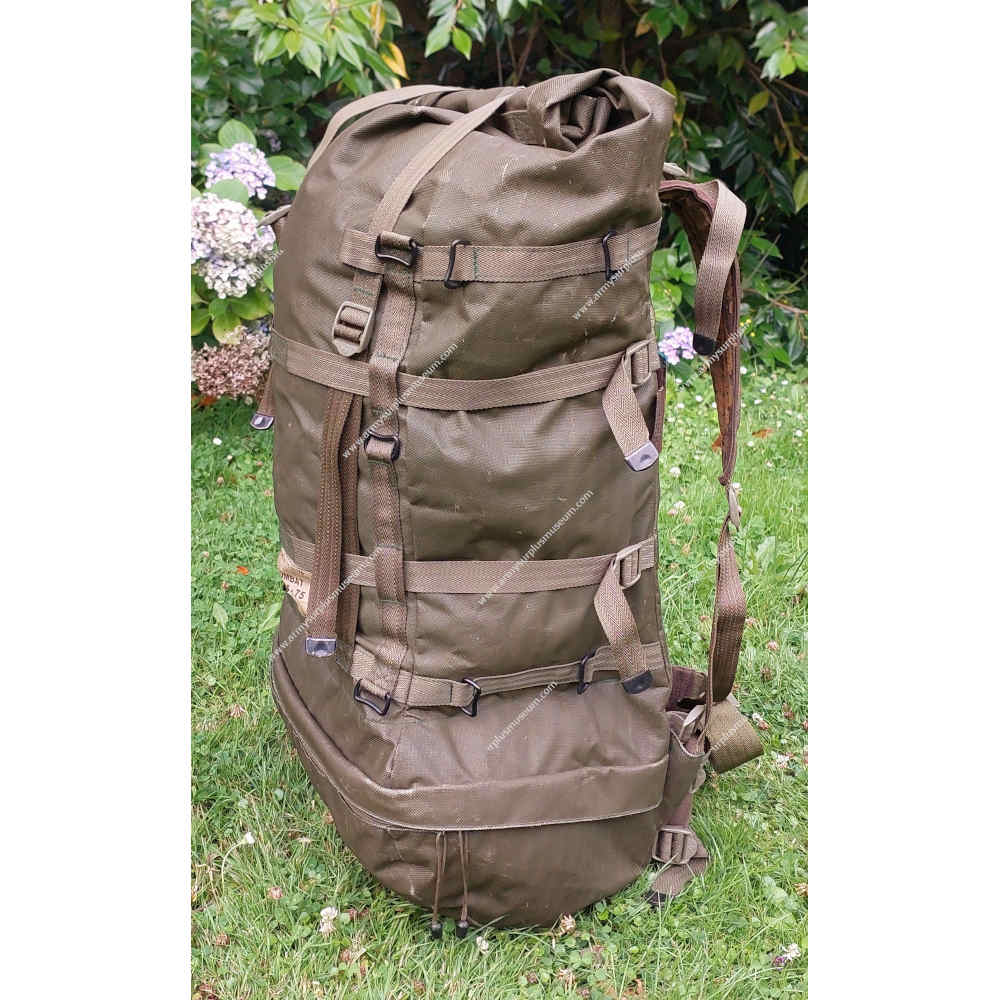
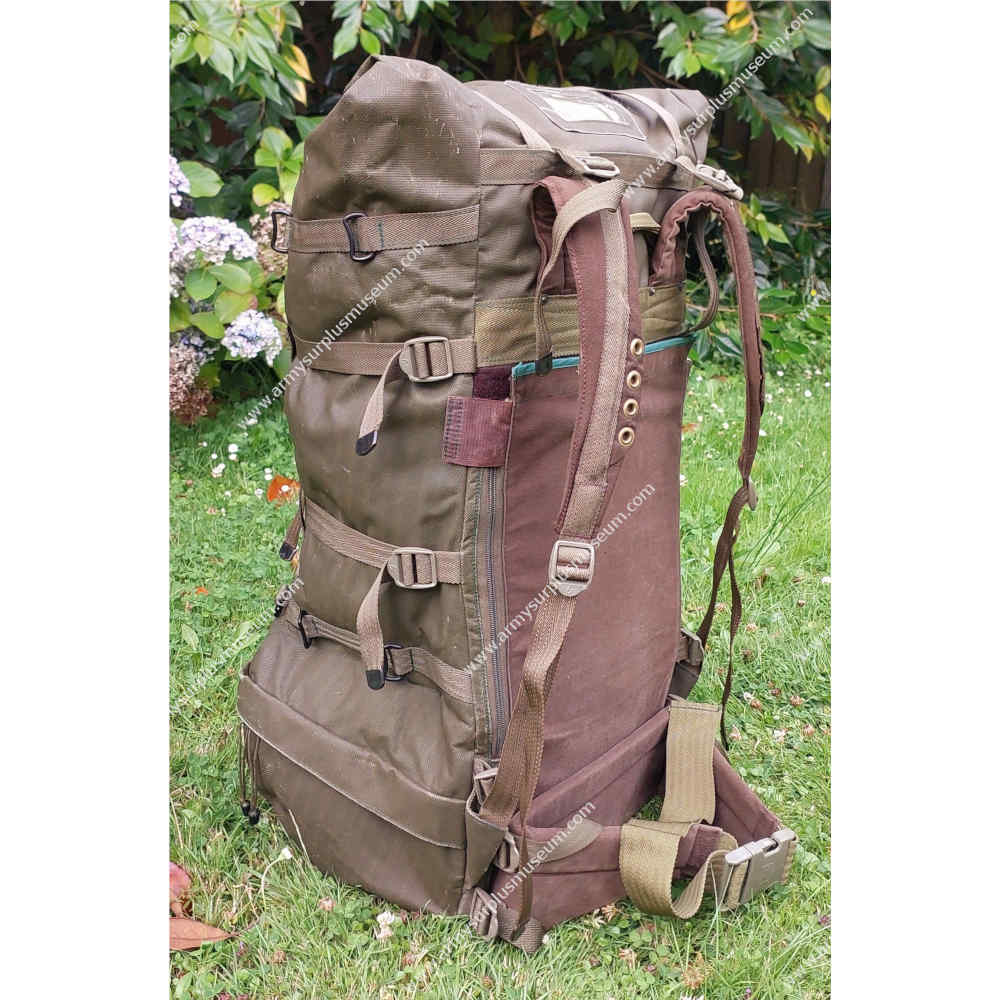
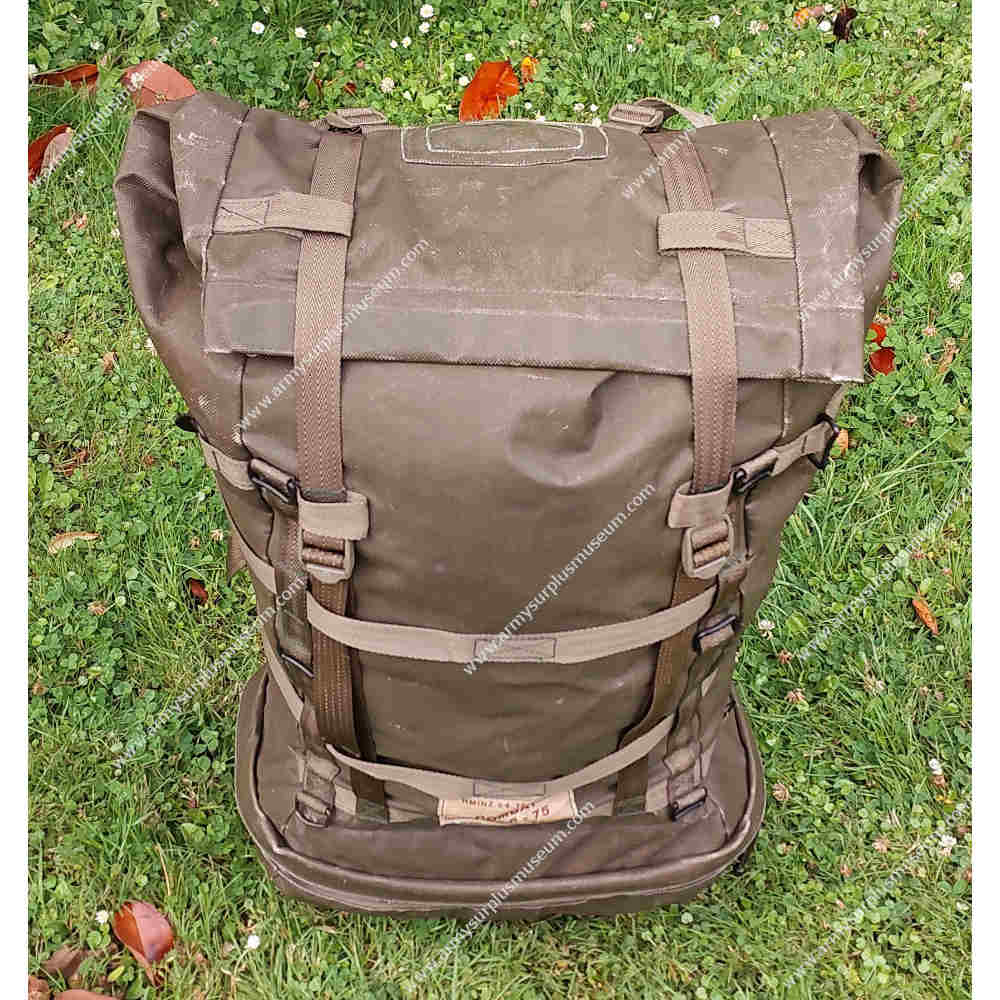
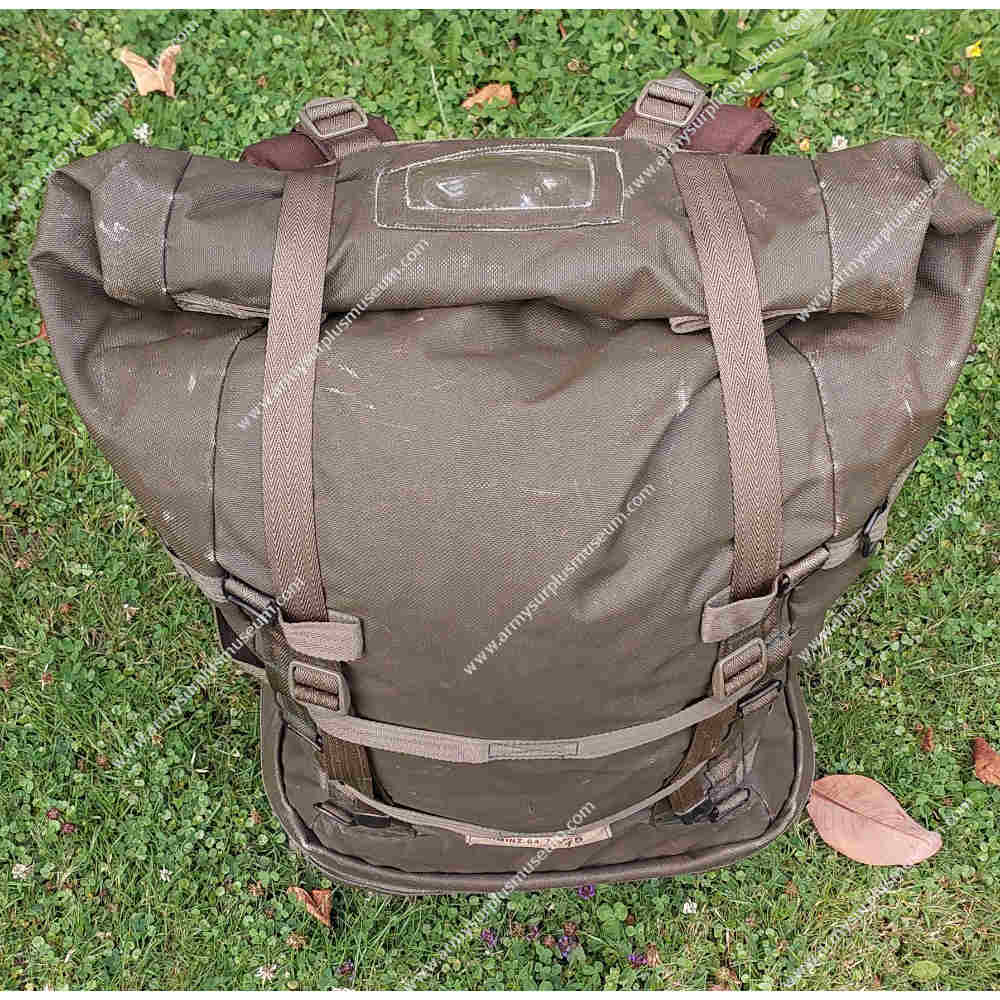
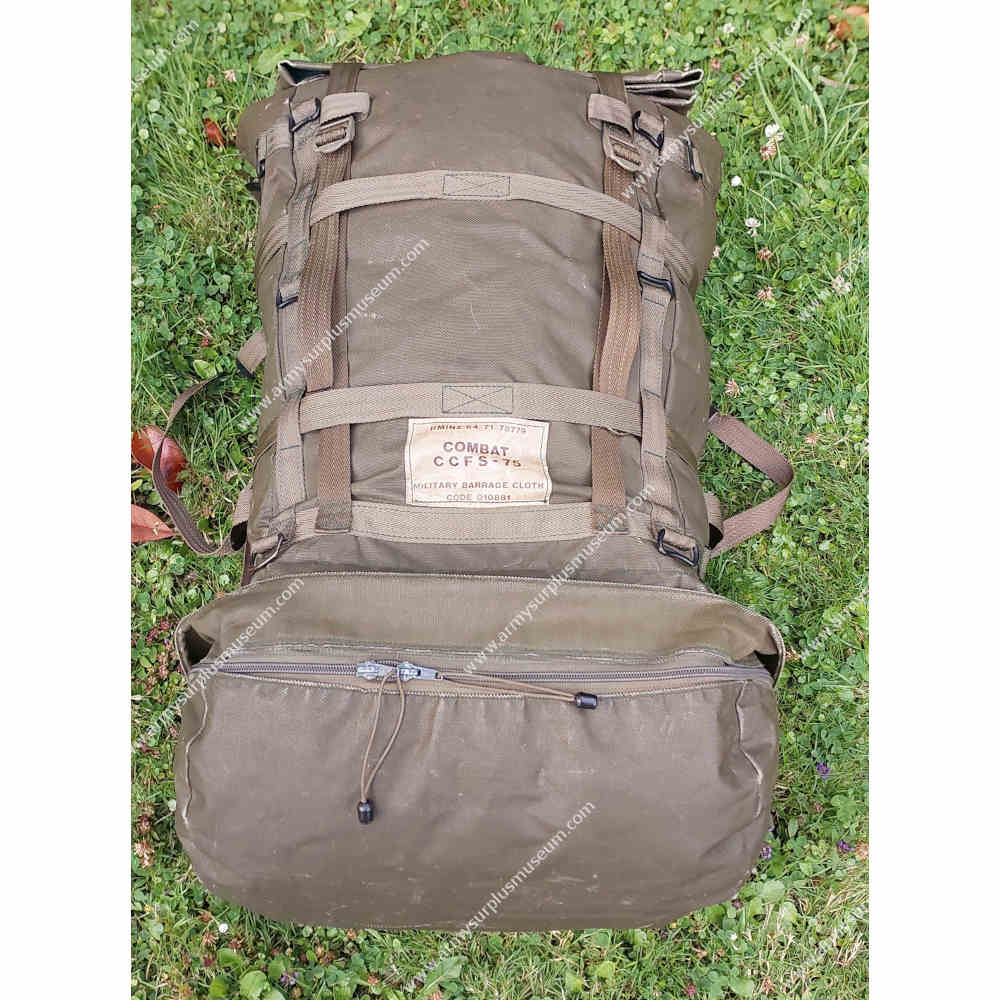
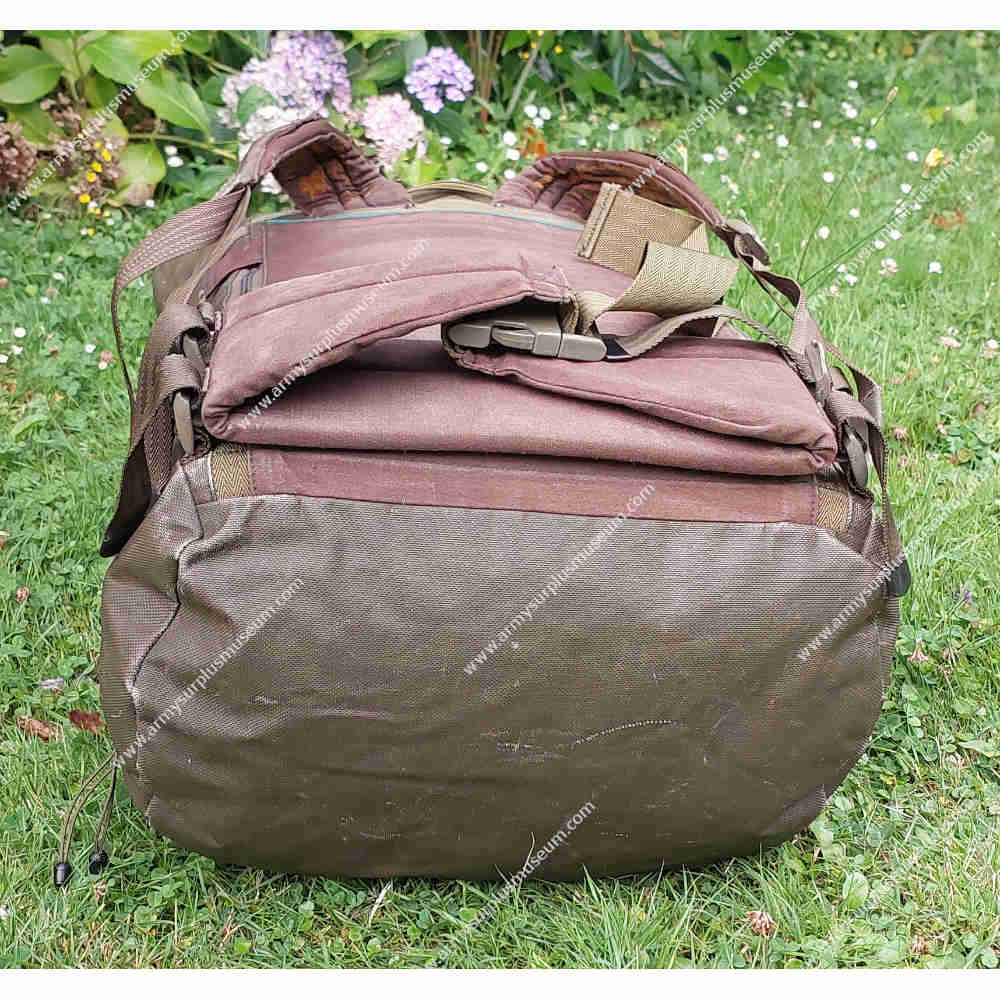
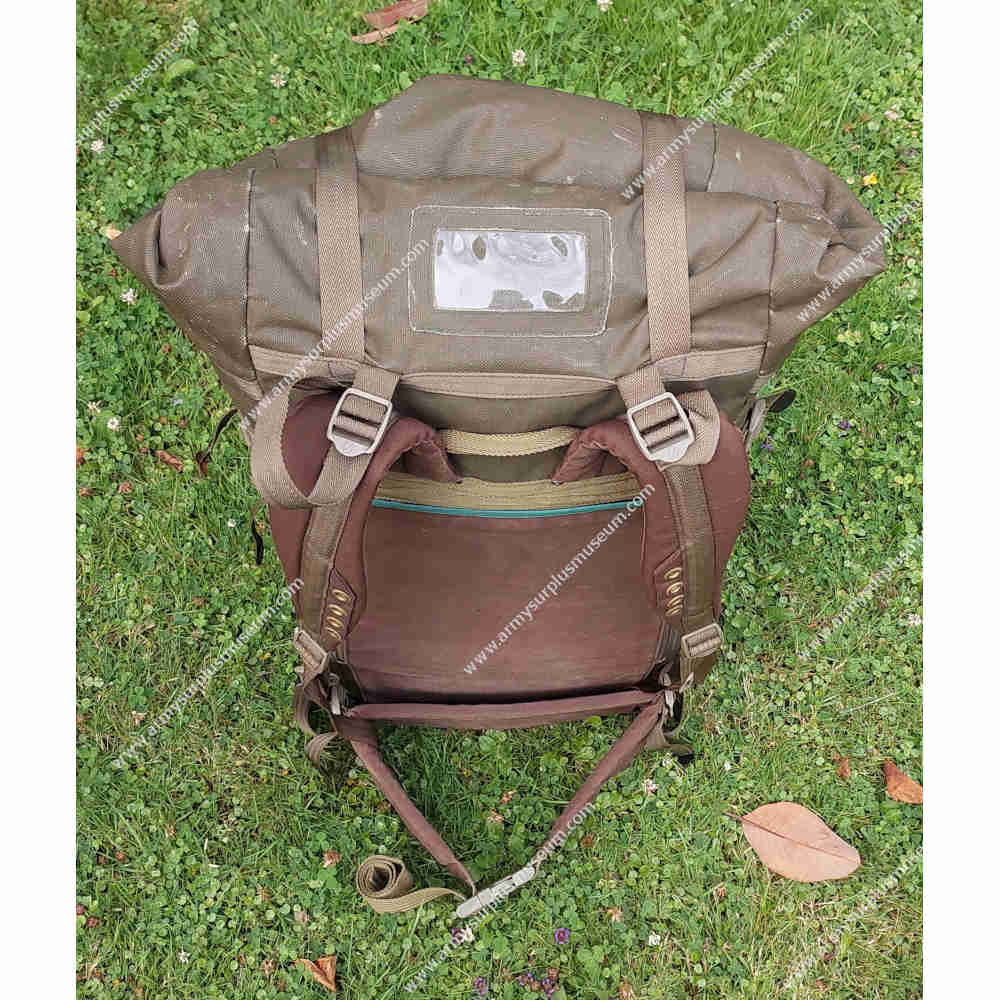
Camouflage Pattern: Olive Drab (O.D).
Volume Capacity:
Main compartment- 50L
Bottom compartment- 25L
Side pouches- 5L each.
Object Number: 3124-554-46109.

Side Pouches

Example Two
Example Two was produced circa 1988 and is constructed from heavy-grade nylon Cordura fabric printed in a woodland-style camouflage pattern.
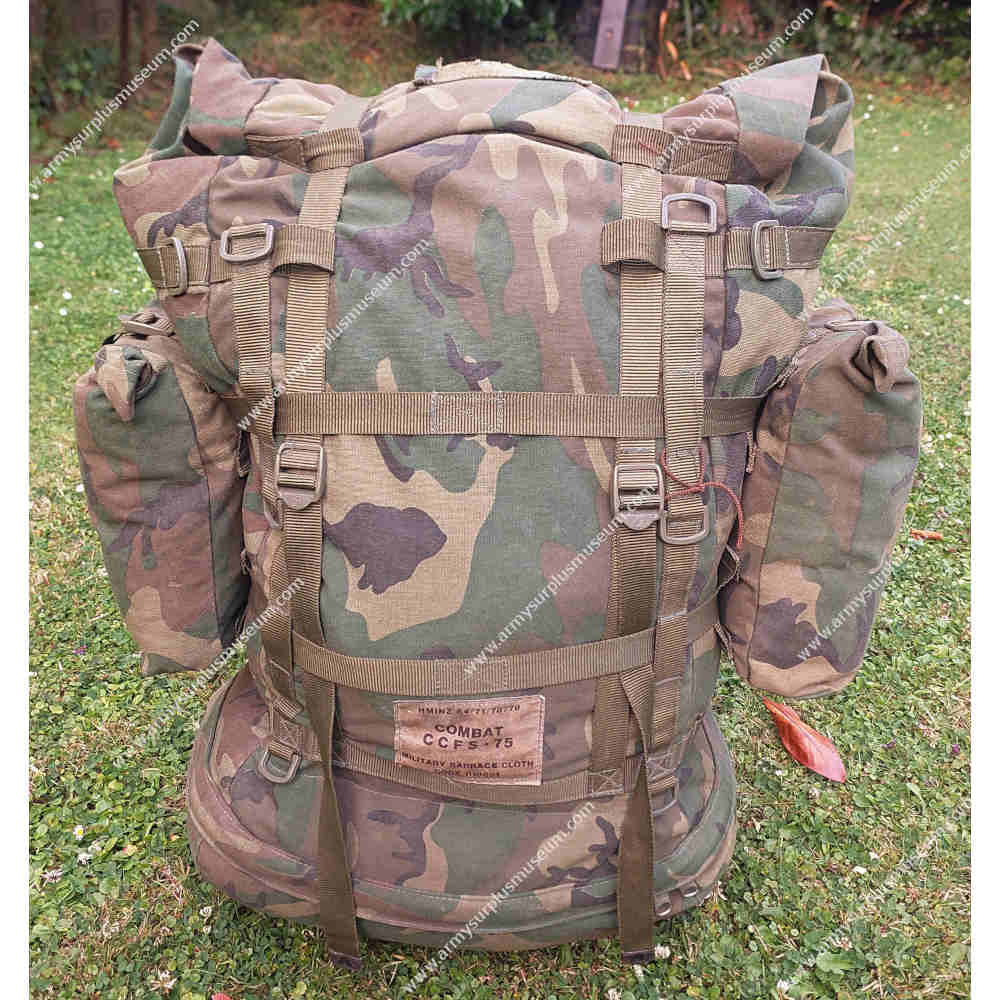
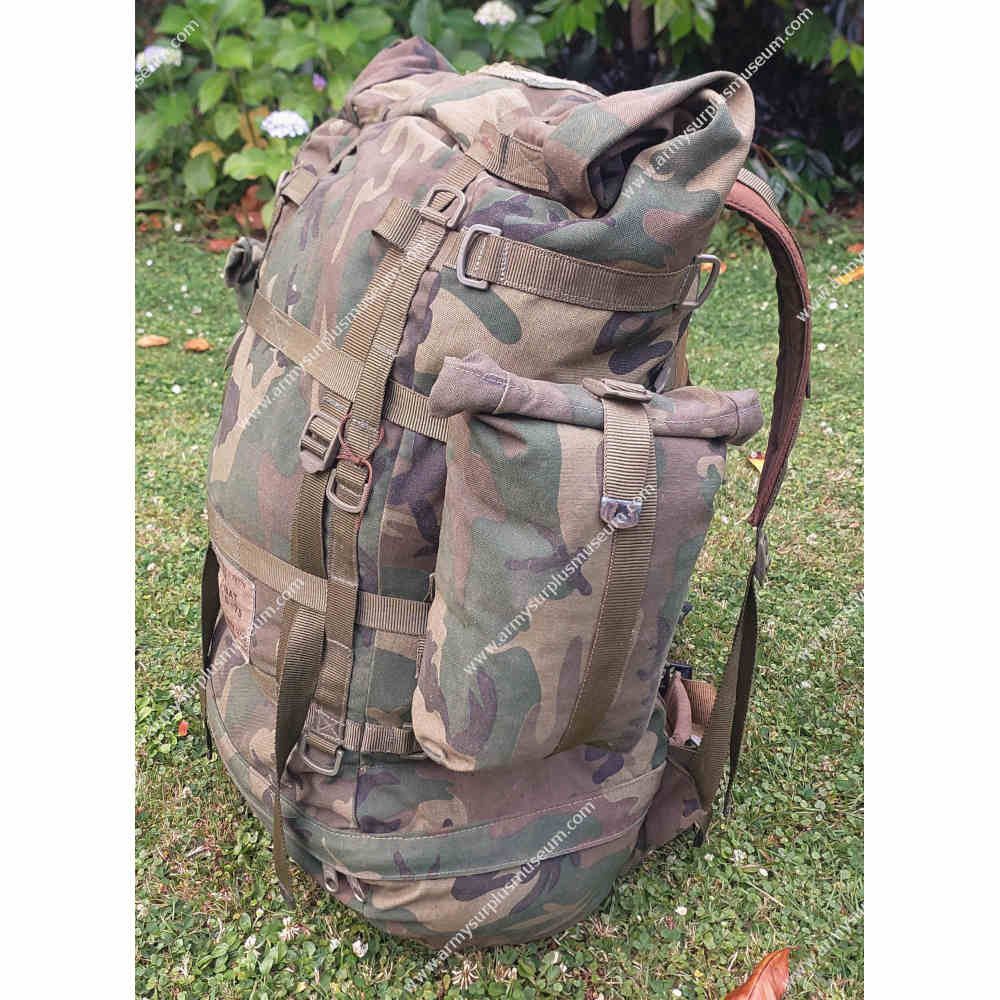
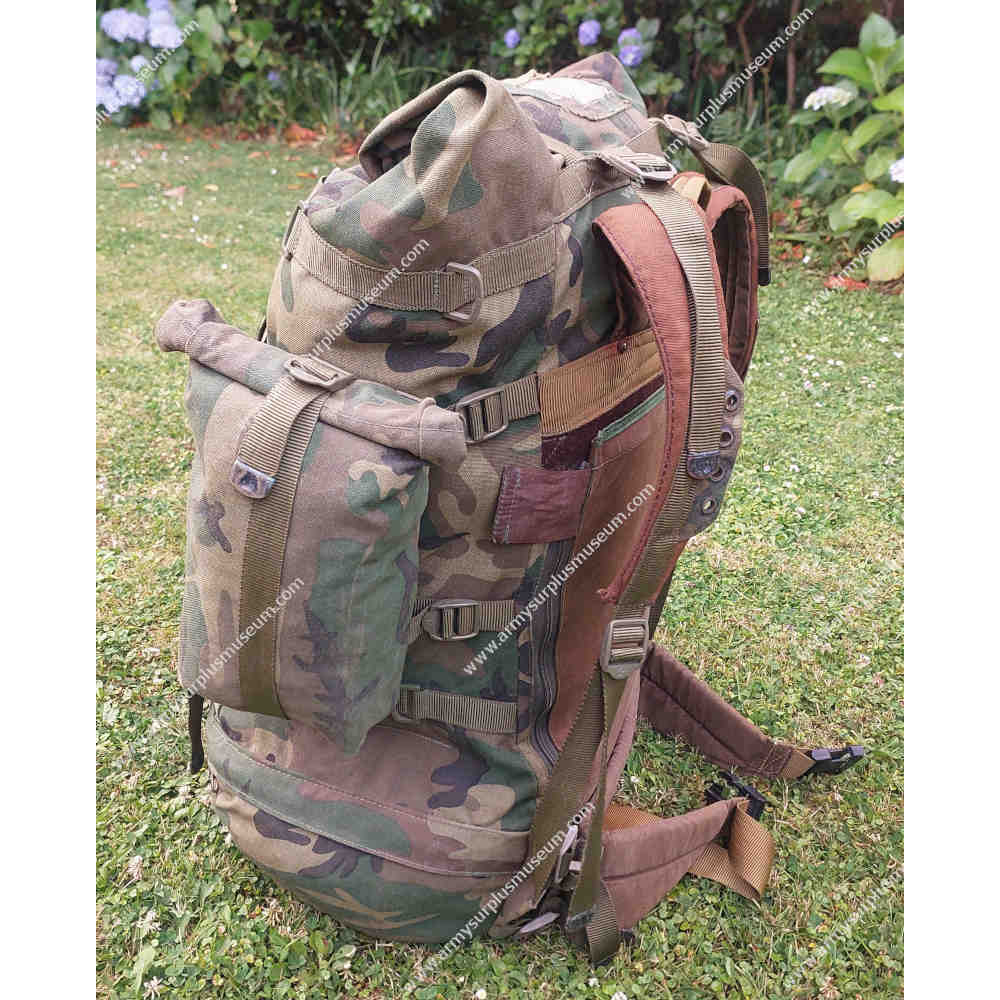
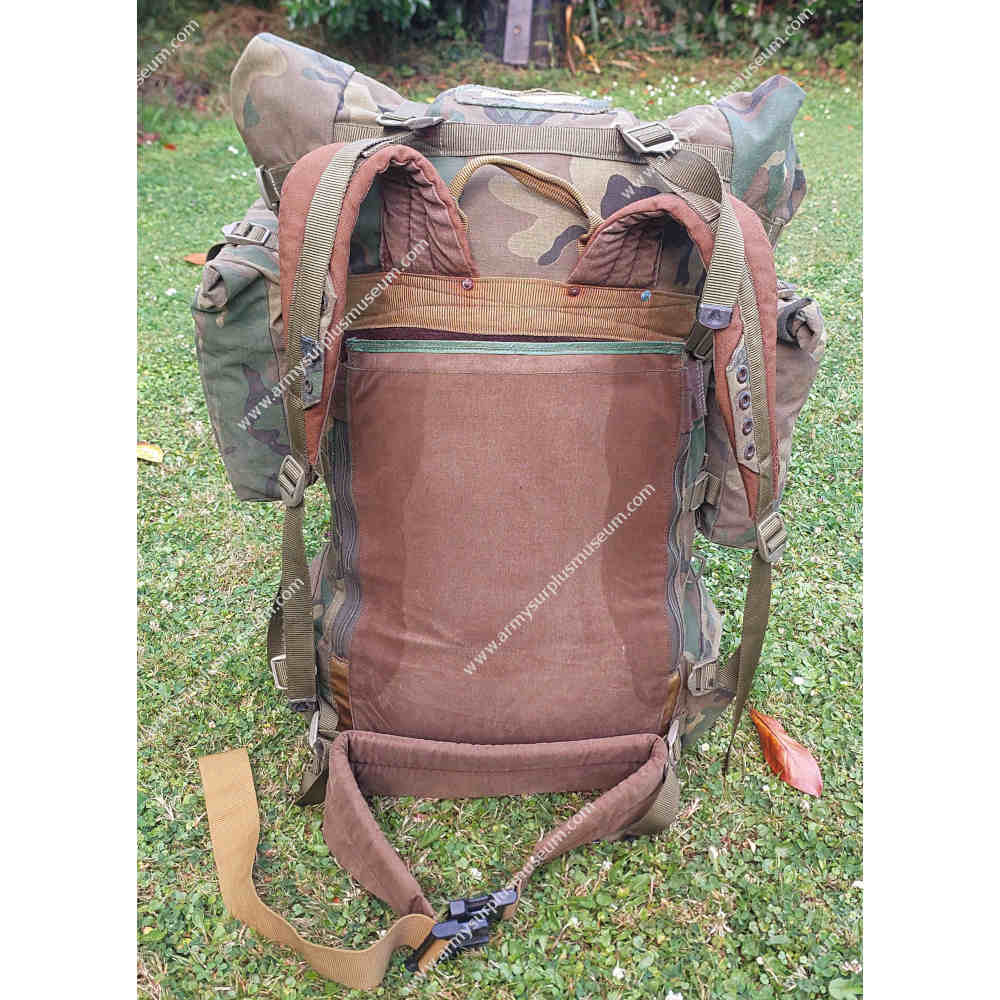
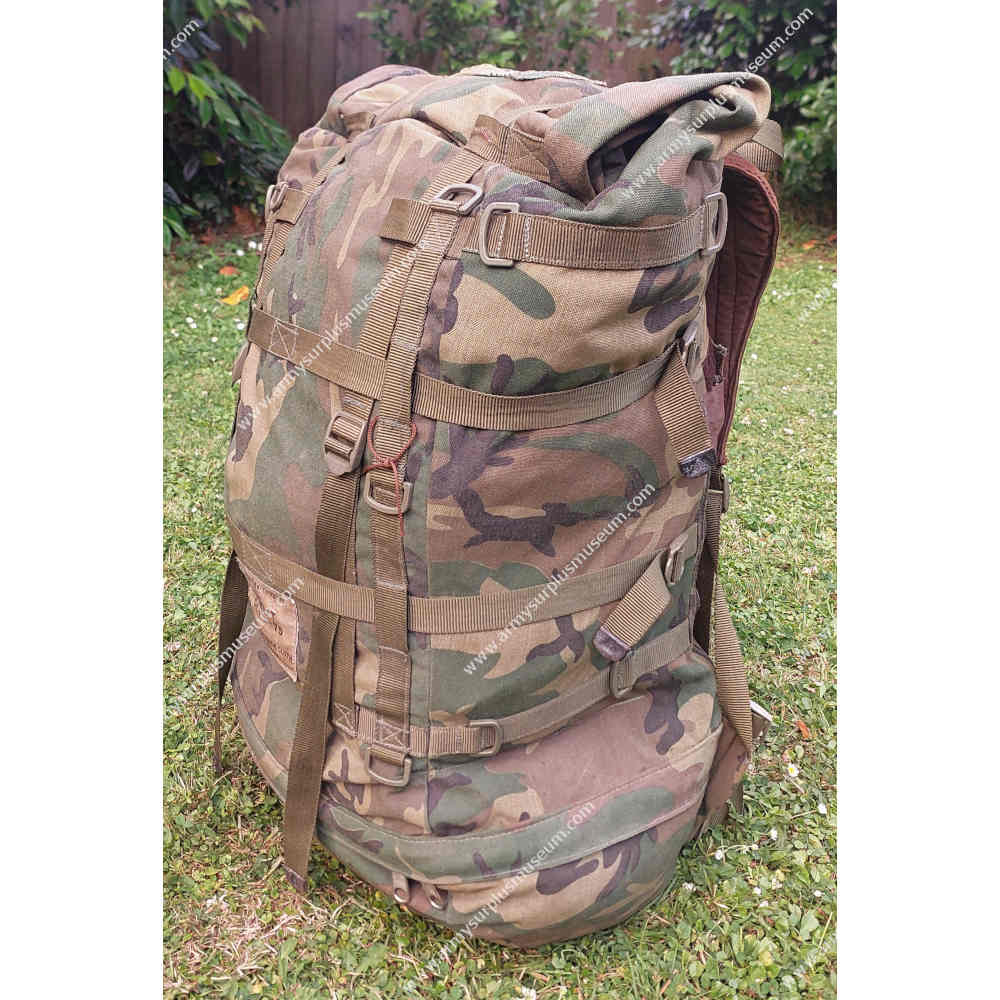
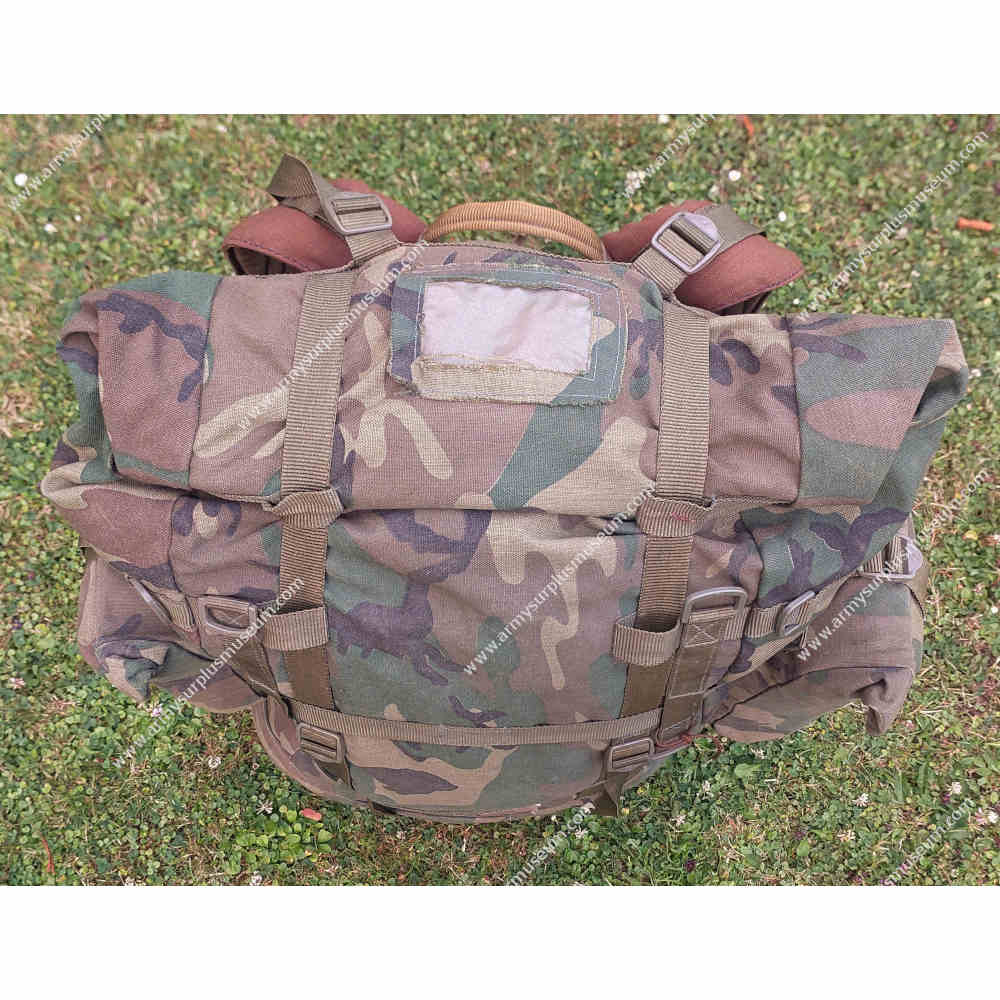
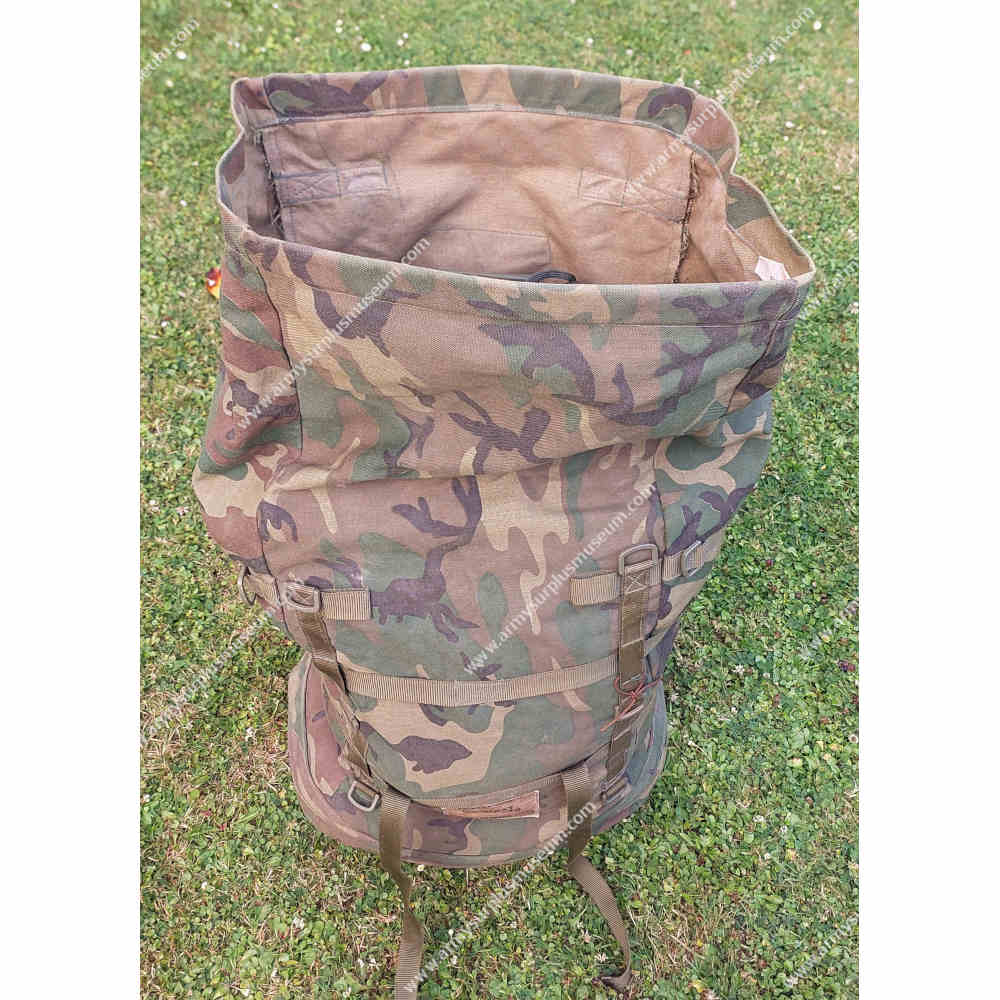
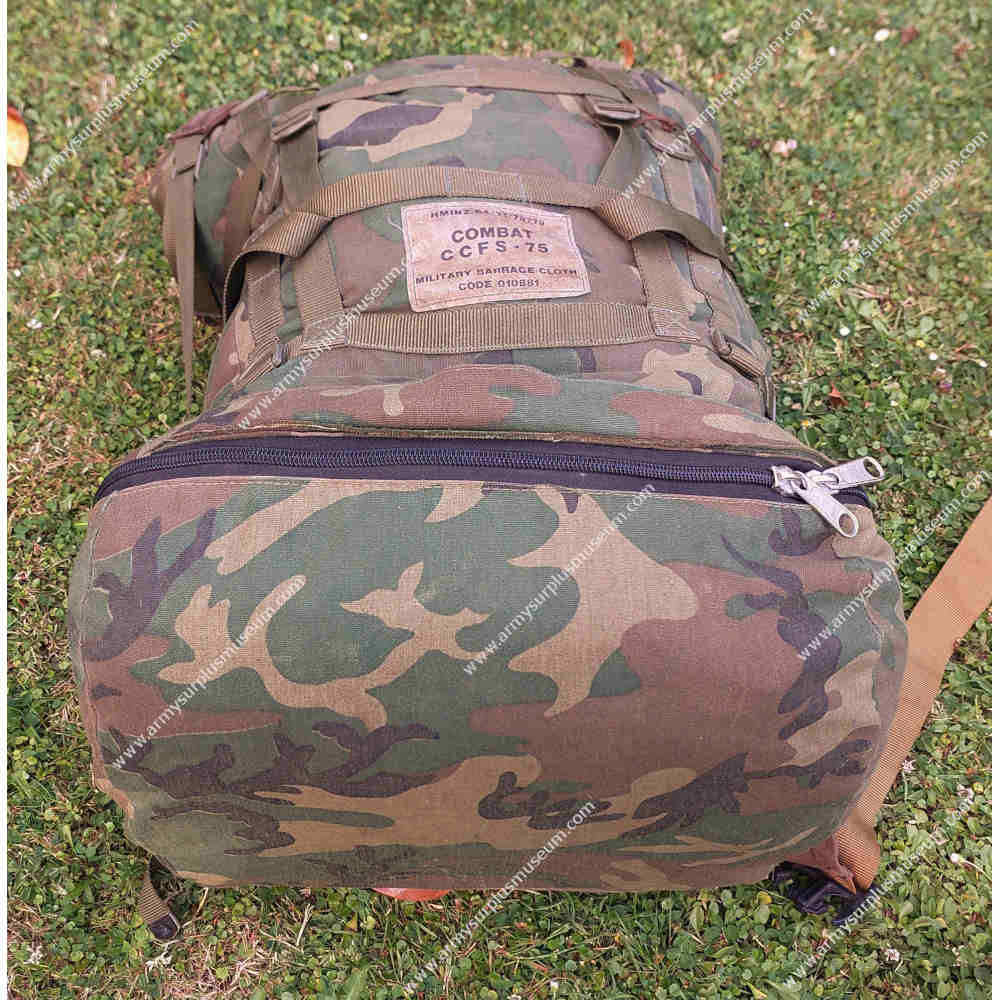

Camouflage Pattern: Woodland Style camouflage pattern.
Object Number: 3124-554-46110.
1 Note 1: This is just a generic name, as we have yet to find its actual name.
