
Bag, Canvas, TEWT
General Information
Name: Bag, Canvas, TEWT 1.
Country of Origin: New Zealand .
Date of Production: From the late 1980s to early 1990s.
Manufacturer: Yet to be identified.
Colour: Olive Drab (O.D).
Number Of compartments: Two.
Volume Capacity: 8L.
Weight:
Dimensions (cm): 32 (H) × 36 (W) × 7 (D).
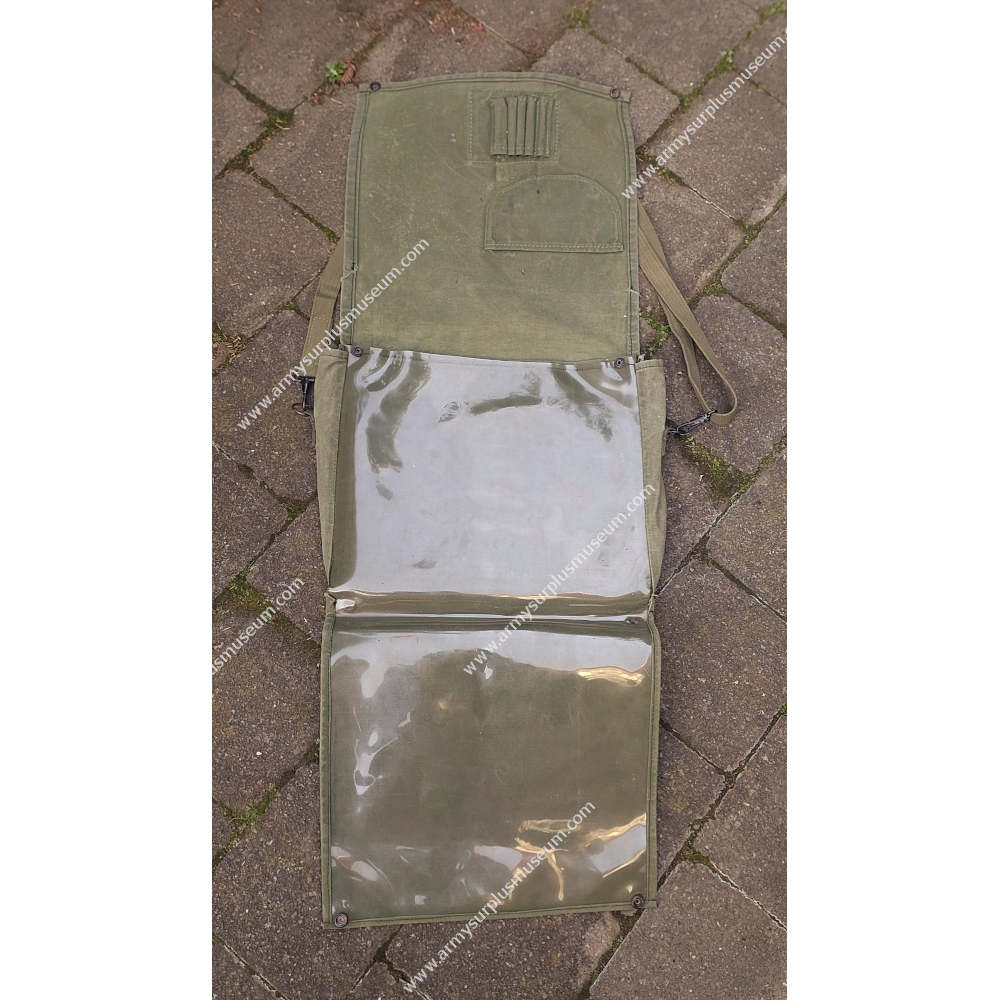
Map case unfolded: 65 cm (L).
Waterproof: Water repellent.
History
The exact role of this bag has yet to be determined, however there is a high probability it was used as a TEWT (Tactical Exercise Without Troops) bag by junior officer cadets or officers during navigation and battlefield movement exercises.
Based on its construction and overall quality of manufacture, it is also likely the bag was either a private purchase item or a locally produced one-off example made for individual use.
Description
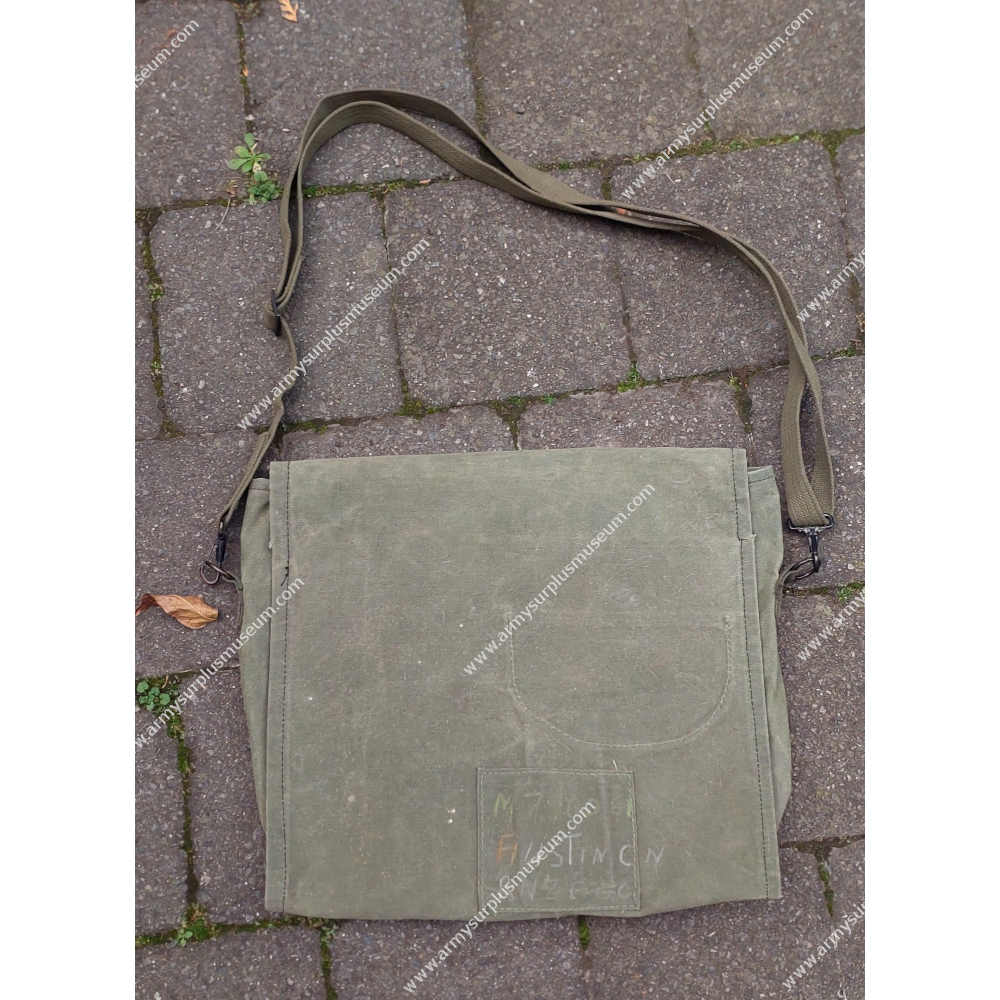
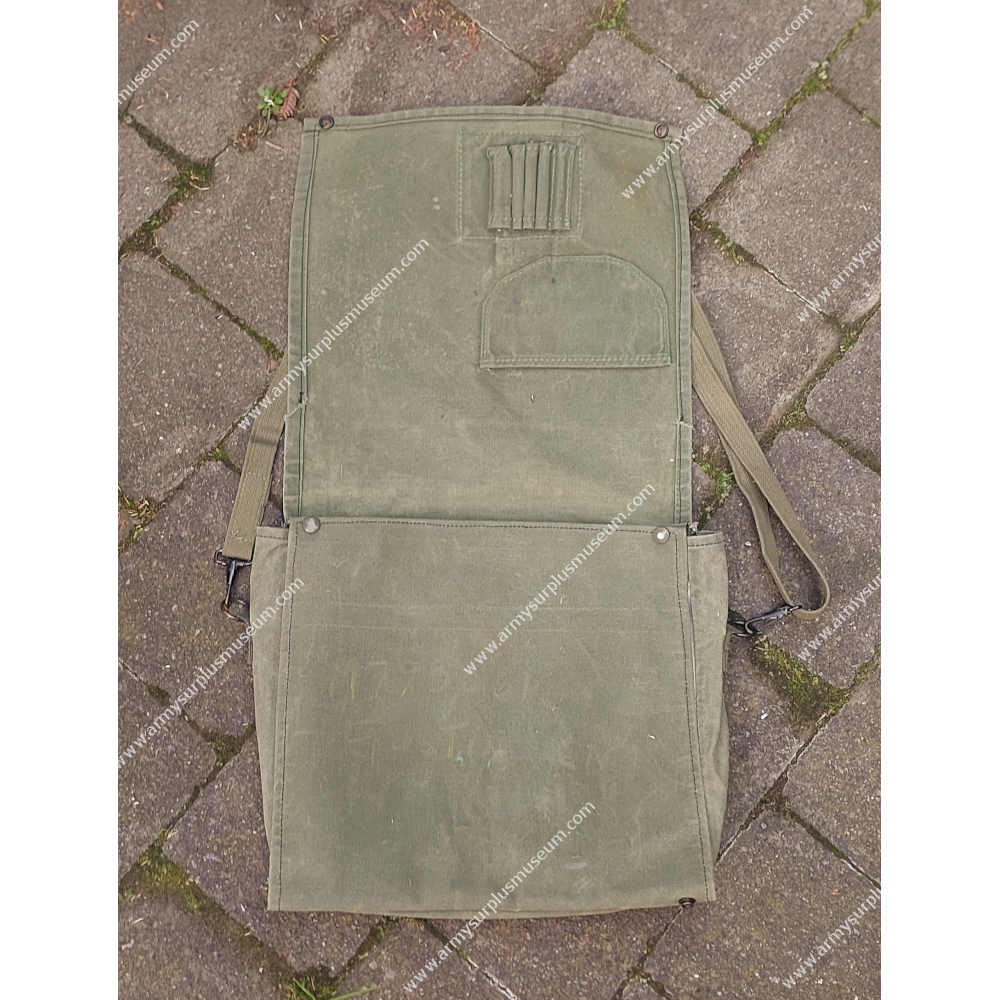
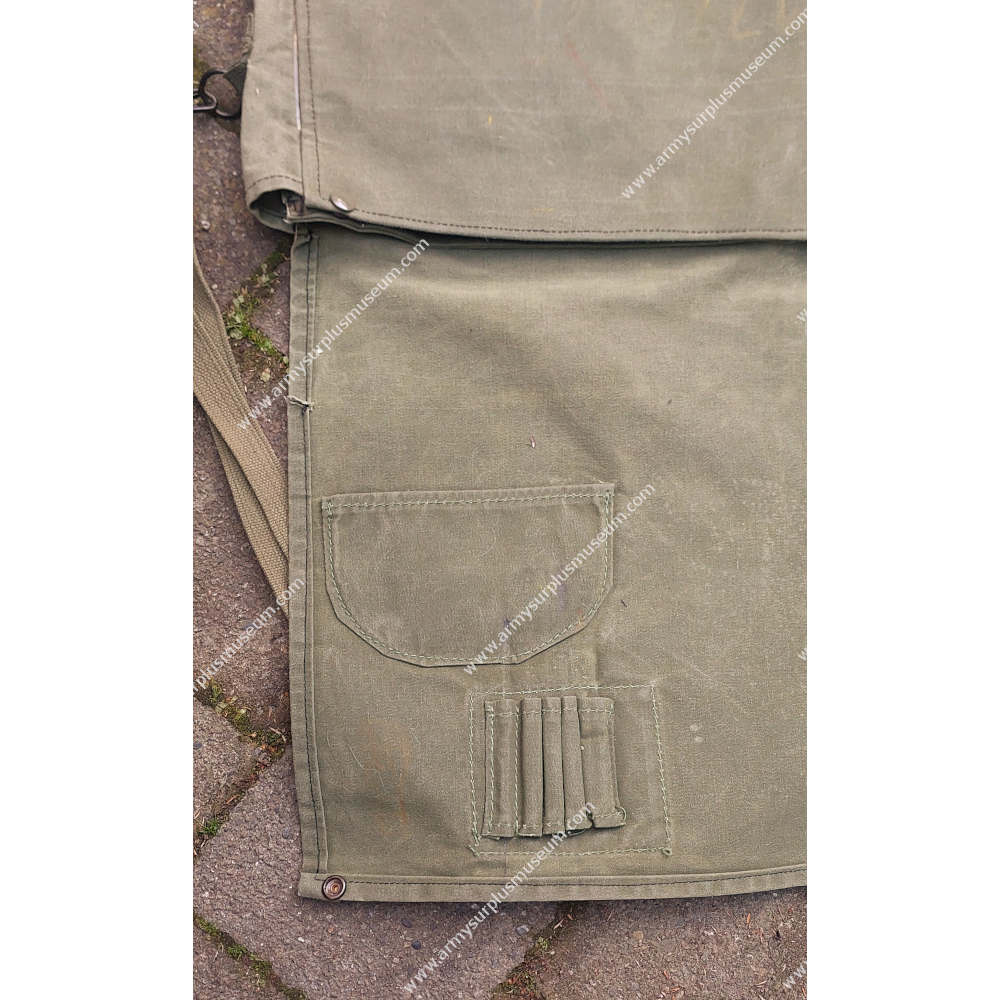
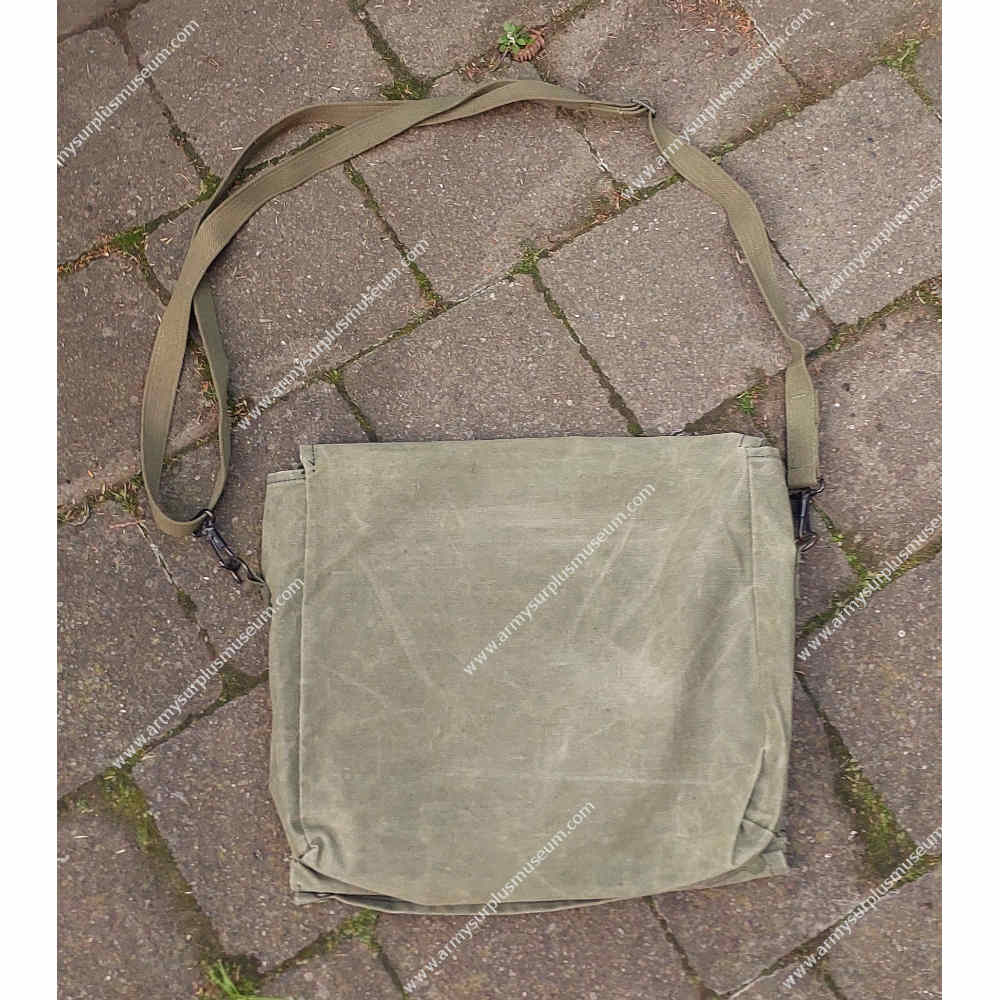
The TEWT bag is fabricated from olive green, water-repellent cotton canvas and closes with a large simple lid secured to the base of the folded map case with metal domes. Sewn to the lower front edge of the lid is a square patch of canvas of unknown purpose. The rear of the lid has a large semi-circular open-top canvas pocket sewn to it designed to hold a large plastic protractor. Below this are five open-ended canvas sleeves intended to hold grease pencils used for marking maps while placed inside the transparent map case.
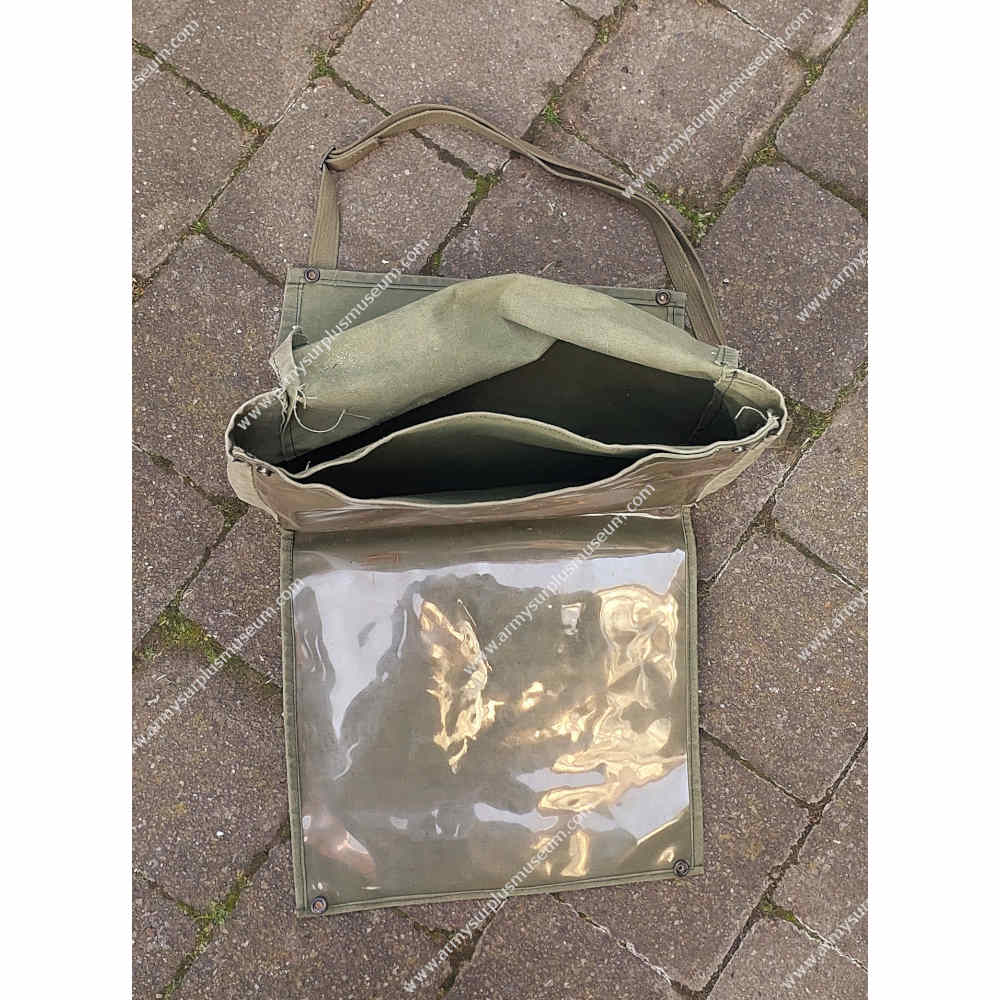
The front of the bag incorporates a large transparent vinyl map case designed to hold a 1:25,000 map folded into quarters, allowing the active working area to remain visible while also permitting grease-pencil markings to be made over the top without marking the actual map itself.
This transparent section is sewn into the front of the bag down to approximately the halfway point and is open at both ends, forming a large tunnel-like compartment. This arrangement allows the transparent map case to fold in half, with the lower end secured to the top of the bag with metal domes when not in use.
The main compartment is large enough to hold folders, large manuals, folded maps, and similar training or navigation materials.
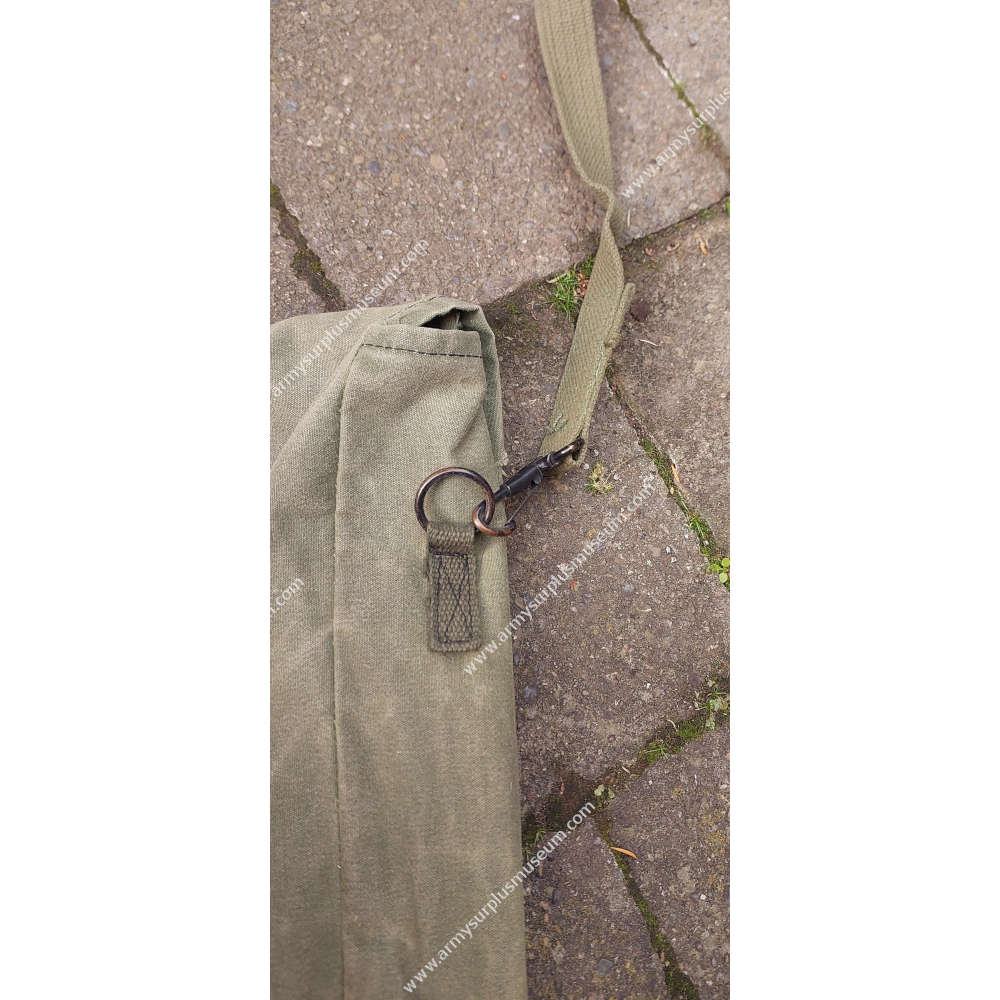
Sewn to each side of the bag, approximately 8 cm below the top edge, are metal O-rings to which the adjustable webbing shoulder strap attaches using metal spring clips. The shoulder strap is adjusted by means of a metal tri-glide buckle.
Examples
Example One
Object Number: 9110-554-46111.
1 Note 1: This is just a generic name, as we have yet to find its actual name.
