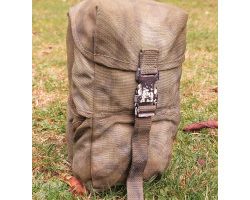
Pack, Medical Equipment
The Pack, Medical Equipment was not issued to every soldier and was not technically part of the Pattern-90 Web Equipment. Instead, it was issued to personnel trained in trauma management.
Read More »
The United Kingdom

The Pack, Medical Equipment was not issued to every soldier and was not technically part of the Pattern-90 Web Equipment. Instead, it was issued to personnel trained in trauma management.
Read More »
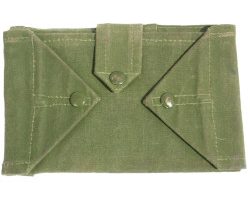
Adopted in late 1943, the new map case replaced the General Service No. 2, Mk. 1, which was issued to all British and Commonwealth forces but failed to protect maps in humid jungle conditions. The Case, Maps, Special No. 1 was made from waterproof canvas and featured an acetate sleeve for maps, which could be marked with chinagraph pencils without damage.
Read More »


The Case, Canvas, O.D Medical was a medium-sized canvas pouch designed to hold a section-sized medical kit in its nylon case, used for general medical ailments. The Case could also be used as a medium-sized utility pouch and was carried on a web belt. Its design resembled a New Zealand-style hunting pouch more than a traditional military-style medical.
Read More »

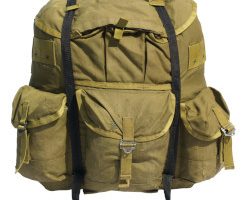
In the mid-1980s, the New Zealand Army began developing the Onward pack to replace the Field Pack, Combat, Canvas (Modified). As ties with NATO powers severed, they turned to commercially made Alice packs from South Korea. Despite setbacks in production, the green Alice pack became the standard-issue field pack, evolving into a Disruptive Pattern Material version by 1990.
Read More »
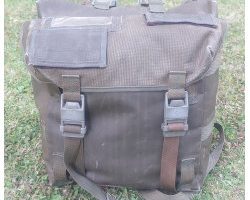
The Patrol Pack, Onward, is a small pack that was part of an Onward Field Pack system, which also included a much larger field pack. This patrol pack could be attached to the top of the larger Onward field pack, serving as a lid, similar to how the Pack, Patrol, Combat functions for the Field Pack, Large, With Internal Frame.
Read More »
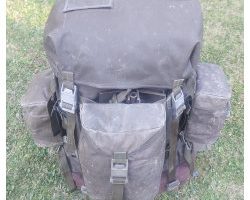
Having issued the field pack, Combat, Olive Drab (modified) for a number of years, the New Zealand army realized it needed a larger field pack that was designed better and fabricated with modern fabrics. In the meantime, the large Alice pack was issued out to troops.
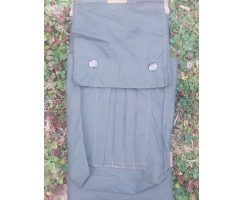
Issued by the Malaysian army in the 1970s, the map case is a close copy of the British army jungle map case issued during the closing years of World War 2. Essentially the same, with only a few changes made to the design.
Read More »

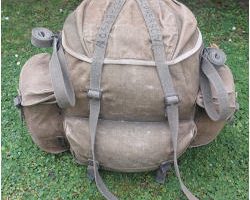
The 42-Pattern Rucksack, commonly known as the Bergen, originated in 1942 with the goal of providing specialist troops the capacity to carry larger and heavier loads, facilitating extended field operations without frequent resupply. Developed in collaboration with the Norwegian outdoor company Bergens, it earned its name “Bergen Rucksack,” later shortened to simply “Bergen,” which persists as the term used by British soldiers for any large rucksack to this day.
Read More »
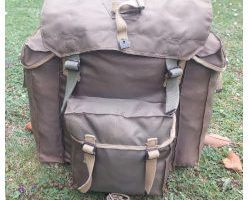
The Rucksack, Combat, Nylon was issued by the Malaysian Army. Although influenced by the British 44-Pattern rucksack, it has a distinctly different configuration to the standard field pack typically issued to soldiers, suggesting it was intended for special forces or other specialist units.
Read More »
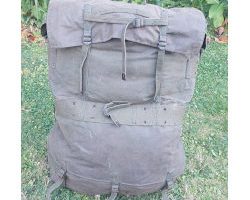
In the ’70s, the NZ army overhauled it’s field packs, drawing from Australia’s design. Modifications aimed for increased capacity and waterproofing and a overall standard size. Issued in mid-’70s, it fell short, leading to retirement in the late ’90s. The pack features green waterproof canvas, divided compartments, padded straps, quick-release, and internal frame for support.
Read More »
