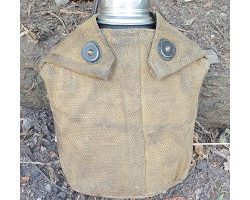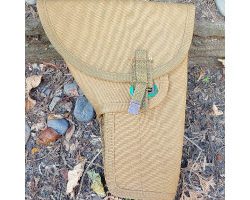
Pouches, Ammunition, Basic (Pair)
The most that can be ascertained at present is that these pouches are likely commercial variants of the Malaysian Army M-1970 Pouches, Ammunition, produced locally in Malaysia during the late 1970s.
Malaysia
Home » Page 4
The most that can be ascertained at present is that these pouches are likely commercial variants of the Malaysian Army M-1970 Pouches, Ammunition, produced locally in Malaysia during the late 1970s.
With Hallmark producing the Onward Field Pack for the New Zealand Army during the mid-1980s, the company also developed a commercial version that incorporated many of the pack’s key design ideas while avoiding a design that could be visually identified as the military Onward Field Pack. This resulted in the CCFS-75 pack, more commonly known in New Zealand as the “commercial Onward pack”.
The Hat, Combat, Tropical, Multi-Terrain Pattern (MTP) was introduced following the adoption of MTP in 2010, during the final phase of the Combat Soldier 95 (CS95) uniform system. It formed part of the transitional period between CS95 and the Personal Clothing System (PCS), and continued in service under PCS as the issued tropical hat. The design remained in use throughout the operational life of both uniform systems with minimal structural alteration.
Read More »
The Hat, Jungle DPM, Soft Brim was a commercially produced item available for purchase to New Zealand soldiers in the early 2000s. It was sold through Squires Tactical Gear in Taihape, a well-known military outfitter supplying serving personnel, civil organizations, and hunters.
This particular example was initially issued to the Royal Malaysian Police and is stamped PDRM – Polis Diraja Malaysia, confirming official service use. Its presence alongside New Zealand equipment reflects the informal but widespread practice of operational kit adaptation, where proven local tools were incorporated into individual field equipment based on performance rather than regulation.
Read More »
With South Korea holding numerous Korean War remembrance events throughout the year, this Marine-style cap originates from the 15th Dosolsan Festival (도솔산 전투 기념행사) in 2012.
The cap was worn by both veterans and serving personnel of the Republic of Korea Marine Corps (ROKMC) attending the commemorative function..
Not much is currently known about this specific hat; however, it can be ascertained that with the adoption of the Granite-B camouflage pattern around 2010, the Republic of Korea Army produced a waterproof boonie-style field hat fabricated from a tri-laminated, Gore-Tex–type fabric.
Read More »
Not much is known about this cap; however, it can be ascertained that it was fabricated from thick woollen cloth similar to that used in the production of the New Zealand Army’s DPM woollen jacket during the early 1990s. Heavy wool fabrics of this type were already well established within New Zealand’s tramping, farming, and outdoor working communities by the early 1980s, most notably through brands such as Swandri.
The Israeli binocular case appears to use the British Pattern 1937 Web Equipment binocular case as a design base and was intended for use with the Israeli Defence Forces Tziyud Ḥagur (Load-Bearing Equipment) web system. This system combined design elements derived from British Pattern 1937 and U.S. M-1936 web equipment, alongside locally developed Israeli solutions, and was in use during the 1960s and 1970s.
Read More »
Australia’s vast arid and semi-arid regions presented a persistent challenge to military operations, particularly in relation to water supply. Carrying sufficient water over long distances was difficult, and reliance on vehicle resupply was not always practical in remote or undeveloped areas. As a result, Australian forces explored methods of increasing the amount of water carried by individual soldiers without resorting to large, rigid containers or constant resupply.
Read More »
© 2026 The Army Surplus Museum