
M-1988 Individual Combat Load Carrying Equipment (ICLCE)
Lineage:
Overview:
By the late 1980s, the Australian Army began a full-scale modernization program that introduced new small arms and load-carrying systems to replace the aging M1956 webbing. The adoption of the F88 Austeyr rifle and at the time yet to be adopted F89 Minimi light machine gun created an urgent requirement for updated equipment that could support higher ammunition loads, modern plastics, and improved ergonomics.
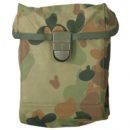
In 1987, following a formal user requirement, the QA Division, Clothing and Field Equipment Design and Development Section was tasked with designing a new system that corrected long-standing issues in the existing webbing. The result was the Individual Combat Load-Carrying Equipment (ICLCE)—a modular system fabricated primarily from Disruptive pattern printed canvas with synthetic webbing components, purpose-built for Australian conditions.
It was issued progressively from 1990, beginning with the Townsville-based Operational Deployment Force (ODF), and represented the Army’s first complete departure from cotton webbing to all-synthetic materials.
Design and Construction:
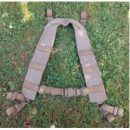
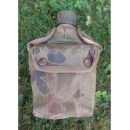
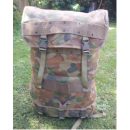
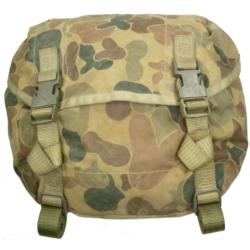
finished in Disruptive Pattern printed canvas, designed to blend with the newly introduced Disruptive Pattern Camouflage Uniform (DPCU). All metallic hardware was replaced with plastic quick-release buckles—lighter, quieter, and easier to camouflage.
The system introduced dedicated ammunition pouches for both the F88 Austeyr rifle and the F89 Minimi light machine gun, accommodating standard magazines and 200-round belt boxes. The field pack was redesigned with a closed-cell foam frame that could be shaped to the wearer’s back, improving comfort and load distribution.
The web belt incorporated a padded comforter to reduce webbing sores during extended wear. A small patrol pack was also introduced for short-duration operations, while other components were updated developments of the earlier M1956 system.
Service Use:
Initial issue began with 2/4 RAR and expanded through 3 Brigade, SASR, the Regional Force Surveillance Units (RFSUs), 3 RAR, 2 Cavalry Regiment, and B Squadron, 3/4 Cavalry Regiment. Early user feedback confirmed significant improvements in comfort, adjustability, and endurance compared to earlier systems.
The modular setup allowed soldiers to carry tailored combinations of equipment:
- Rifle and bayonet.
- Five 30-round magazines.
- Two hand grenades.
- 200 belted rounds of machine gun ammunition.
- Two water canteens.
- Rations and accommodation stores for a 24-hour patrol.
When combined with the field pack and additional canteens, soldiers could remain operational for much longer periods without resupply—an essential capability for northern and jungle deployments.
Technical Evaluation:
The M1988 ICLCE marked the first Australian system designed entirely around synthetic materials. Trials conducted between 1987 and 1989 demonstrated superior durability, weather resistance, and load distribution over earlier cotton-based systems. The modular “mix-and-match” design allowed for personal customization while maintaining unit uniformity in key components.
Field feedback praised the improved comfort and faster drying times, though some soldiers noted increased noise from plastic fittings under strain. Despite this, the system proved well-suited to Australia’s harsh climates and field conditions.
Summary:
The M1988 Individual Combat Load-Carrying Equipment represented the culmination of three decades of Australian adaptation. Drawing from the lessons of the M1956, it replaced metal and cotton with nylon and plastic, introduced true modularity, and aligned perfectly with the Army’s new camouflage and weapons systems.
It remained in widespread service throughout the 1990s, serving as the direct predecessor to the Australian Land 125 programme and later DPDU/DPCU modular systems. The ICLCE stands as a defining milestone in Australia’s move toward fully integrated, soldier-focused combat gear—bridging traditional webbing and the modern tactical vest era.
M-1988 Individual Combat Load Carrying Equipment (ICLCE) Objects:
Click here to view the full list of objects attached to this tag.
Lineage:
