
90 Pattern Personal Load Carrying Equipment (PLCE)
Overview:
The 90 Pattern Web Equipment was developed during the 1980s as a modernized successor to the Pattern 1958 Web Equipment. Its introduction marked Britain’s transition from traditional cotton canvas to a fully synthetic, modular load-bearing system optimized for the realities of late–Cold War and post-Falklands warfare.
The programme emerged from the Pattern 85 (Infantry Equipment 85) trials, run jointly by the Stores and Clothing Research and Development Establishment (SCRDE) and the Infantry Trials and Development Unit (ITDU). Feedback from those trials directly influenced the 90 Pattern’s layout, construction, and waterproofing standards. The project’s goal was to produce a single, integrated system capable of supporting infantry operations in temperate, arctic, desert, and jungle environments—a requirement that had eluded the 1958 pattern.
The 90 Pattern represented a doctrinal shift as much as a material one. It was designed for the new SA80 rifle family, the adoption of NBC protective clothing, and the British Army’s move toward longer-duration, mechanized or air-portable operations. The system allowed for rapid reconfiguration from assault to marching order and was engineered to remain functional even when soaked, frozen, or caked in mud—conditions that had rendered earlier cotton webbing ineffective.
Design and Construction:
The 90 Pattern Web Equipment was fabricated from heavy-duty polyurethane-coated nylon webbing, finished initially in olive green and later in Disruptive Pattern Material (DPM) camouflage during the 1990s. All major seams were double-stitched with bonded nylon thread, and the webbing edges were heat-sealed to prevent fraying.
Its core design philosophy centered on modularity and interoperability: any component could be detached, repositioned, or replaced without affecting the rest of the system. The belt kit and bergen were developed in parallel to ensure balanced load distribution, allowing a soldier to scale from short-duration patrols to multi-day patrols without altering the core harness structure.
A further advantage over the Pattern 1958 Web Equipment was the 90 Pattern’s ease of decontamination. Its non-absorbent nylon surfaces could be quickly washed or wiped clean of chemical agents, whereas the older cotton webbing retained moisture and contaminants, complicating NBC procedures.
Core components included:
- Reinforced Waist Belt: Wide nylon belt with polymer quick-release buckle, able to bear significant weight without twisting.
- Padded Yoke: Broad, contoured shoulder harness distributing the belt load evenly and reducing pressure points during long marches.
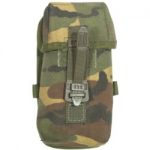
- Twin ammunition pouches — two × three-magazine cells (six magazines total), secured with “Spanish” buckles and hook-and-loop closures.
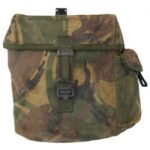
- Utility and Water-Bottle Pouches: Sized for personal gear and the one litre plastic canteen.
- Entrenching Tool Carrier: For a tri-shovel.
- Bergen System: A 100-litre nylon rucksack (80 L main + two 10 L zip-on side pouches). The side pouches could be joined with a separate yoke to form a Patrol Pack, providing modular scalability.
Hardware throughout was injection moulded acetal plastic, chosen for strength and corrosion resistance. Early trials identified UV degradation and cold brittleness as weaknesses, which were corrected in later production.
Unlike its cotton predecessors, the 90 Pattern was water-repellent, quick-drying, abrasion-resistant, and chemically non-absorbent. Its olive-green prototypes were later replaced with infrared-reflective DPM versions to meet NATO infrared signature standards. The system was also fully compatible with combat body armour, NBC gear, and arctic clothing—a first for British webbing.
Service Use:
The 90 Pattern Web Equipment entered official service in the late 1980s, following field evaluations beginning around 1985. Early examples appeared in training units and trials photographs alongside the new nylon ballistic combat helmet (replacing the Mk 4 steel pot). By 1989–1990, the system had been accepted for full production and issued across the British Army, initially to front-line infantry units.
Operational debut came during the 1991 Gulf War, where the 90 Pattern proved resilient in extreme desert conditions. It went on to see service in Bosnia, Kosovo, Sierra Leone, Iraq, and Afghanistan, demonstrating adaptability across climates and terrain.
Although the later DPM pattern issue is often referred to by collectors as the “95 Pattern Web Equipment,” the official designation remained 90 Pattern throughout its service life. The 90 Pattern remained Britain’s standard load-bearing system for over two decades, gradually phased out after 2015 with the introduction of the Virtus Integrated Soldier System.
Officers’ Equipment & Other Arms Configuration:
Unlike earlier British web equipment systems, the 90 Pattern was not issued in a rank-specific format. Officers, NCOs, and enlisted soldiers drew the same core components from unit stores and configured them according to role rather than social distinction. This continued the principle introduced with the Pattern 1958 system, promoting a more functional and professional approach to load carriage across all ranks.
Specialist carriage solutions were, however, developed for Other Arms whose duties differed from those of line infantry. Optional pouches and accessories for communications equipment, medical gear, and specialist tools allowed signallers, medics, drivers, and combat engineers to carry their role-specific equipment without compromising mobility or comfort.
The 90 Pattern also addressed a long-standing limitation of earlier designs: vehicle crews could now tailor their kit to allow safe seated operation. However, this did not entirely eliminate the widespread practice—seen since the Pattern 1958 era—of personnel privately purchasing chest rigs or non-issue equipment to work more effectively inside vehicles.
International Use:
Variants of the PLCE system were licensed, copied, or directly adopted by several Commonwealth and NATO countries. Examples include:
- Ireland: Chose to issue out the olive green 90 Pattern.
- Denmark – Adopted the M/96 Load-Carrying System, a derivative heavily based on the British 90 Pattern design with similar pouch configuration and materials.
- United Arab Emirates: Fielded a distinctive six-colour “chocolate-chip” desert variant, believed to originate from licensed regional manufacture or adaptation of UK-supplied stock.
- New Zealand – Produced its own DPM pattern web equipment in the late 1990s, directly influenced by the 90 Pattern.
Technical and Doctrinal Impact:
The 90 Pattern embodied the Army’s move toward modular personal systems, integrating webbing, bergen, and protective gear into a unified combat ensemble. Its development influenced not only British doctrine but also export and allied equipment design. It reintroduced the concept of a true fighting order and marching order, providing regulated load tiers (CEFO/CEMO) with defined weight limits—approximately 24 kg in assault order and 34 kg in marching order.
The 90 Pattern also reflected a shift in soldier ergonomics: improved padding, reduced galling, and better balance when worn with body armour or NBC smocks. Its nylon construction set the precedent for subsequent European load-carrying systems.
Summary:
The 90 Pattern Web Equipment was not simply a new webbing—it was the final evolution of Britain’s post-war load-carriage lineage, bridging the gap between the 1958 cotton era and the modular composite systems of the 21st century. Its combination of durability, comfort, and environmental adaptability made it the most successful and longest-serving web equipment design in modern British military history.
90 Pattern Web Equipment Objects:
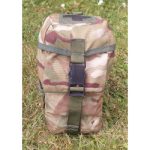
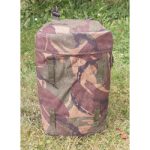
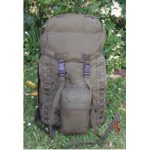
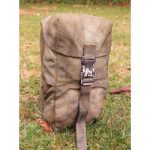
Click here to view the full list of objects attached to this tag.
