
Case, Map, G.S. No. 2 Mk. 1/1 (Emergency / Economy Pattern)
General Information
Name: Case, Map, G.S. No. 2 Mk. 1/1 (Emergency / Economy Pattern).
Country of Origin: The United Kingdom.
Date of Production: 1952.
Manufacturer: Yet to be identified.
Stores No: Yet to be identified.
Colour: Khaki.
Equipment Family: Yet to be identified.
Number Of compartments: Two.
Weight: 481g.
Dimensions (cm): 28 (H) × 23 (W) × 2.5 (D).
Shoulder strap: 1.5 (W) x 1.2m (L).
Insert: 21.5 (W) x 26.5 (H).
Waterproof: No.
History
By the early 1940s, the original Case, Map, G.S. No. 2 Mk. 1 was redesigned under wartime production pressures. The revised Mk. 1/1 (Emergency or Economy Pattern) eliminated the rigid plywood backing, reducing both material use and manufacturing complexity.
This redesign brought the case closer in form and function to the American M-1936 map case, favouring flexibility and simplified construction over rigidity. Rather than functioning as a webbing cover wrapped around a fibreboard insert, the case evolved into a soft, self-contained document holder.
The introduction of a removable internal board allowed maps to be mounted, folded, and inserted into a dedicated sleeve, while additional documents could be carried behind it. This reflected a shift toward practicality in field use, particularly under conditions where durability, weight, and ease of production were critical.
Production of the Mk. 1/1 continued beyond the Second World War, remaining in manufacture and service through to the mid-1950s, and was exported to a number of European countries.
Description
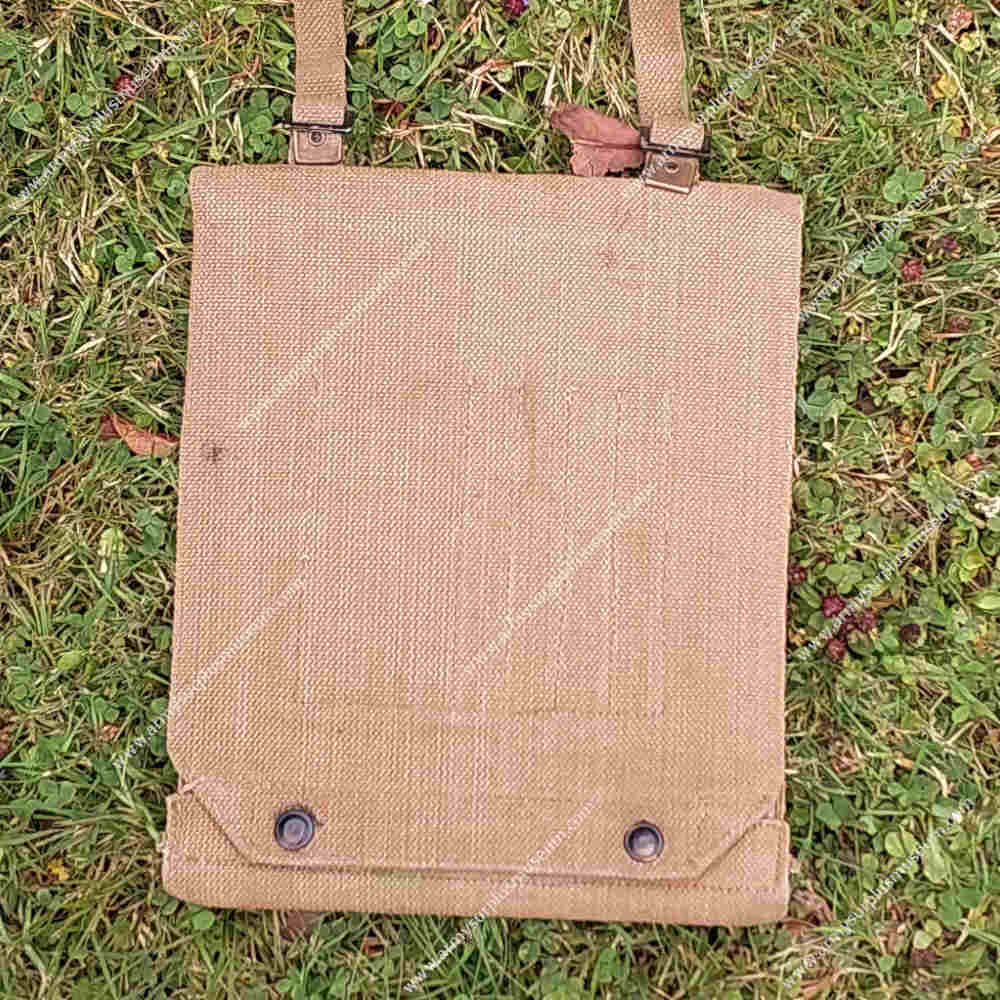
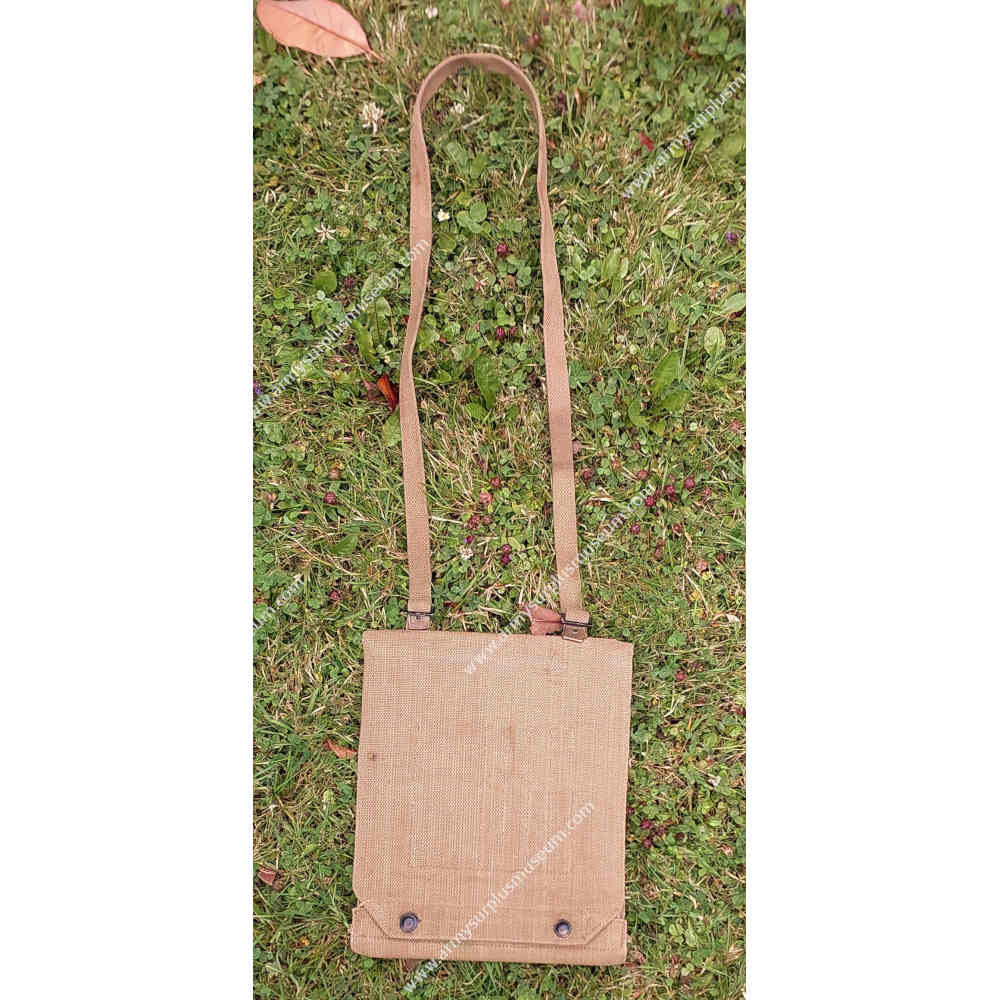
The case is fabricated from woven khaki webbing and forms a large rectangular pouch with an open-top internal compartment. The front of the pouch incorporates a full-width transparent celluloid window, allowing map details to be viewed and annotated externally without marking the map itself.
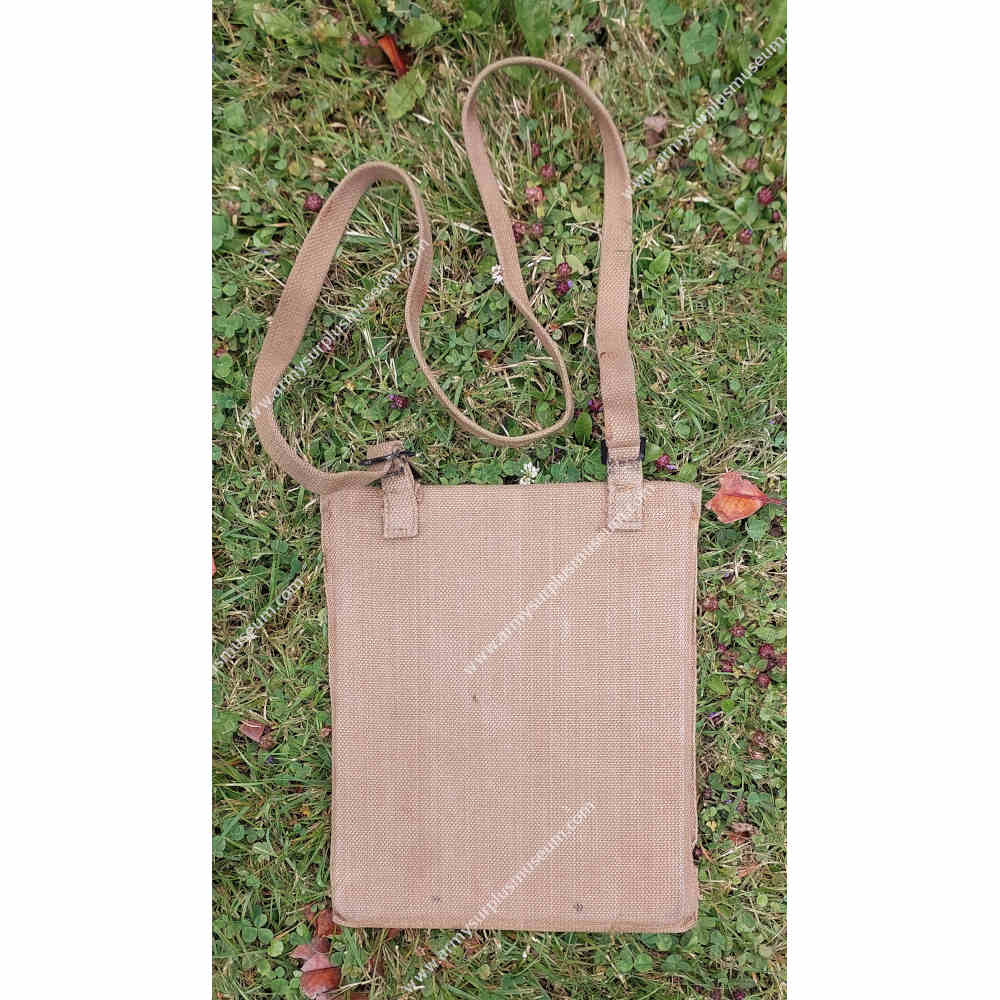
At the upper edge of the case, a brass ladder-lock buckle is fitted at each end, allowing for the attachment of an adjustable webbing shoulder strap.
A full-width fold-over flap is sewn to the top of the case and secures at the lower front using two brass press studs (snap-domes), protecting the contents from exposure.
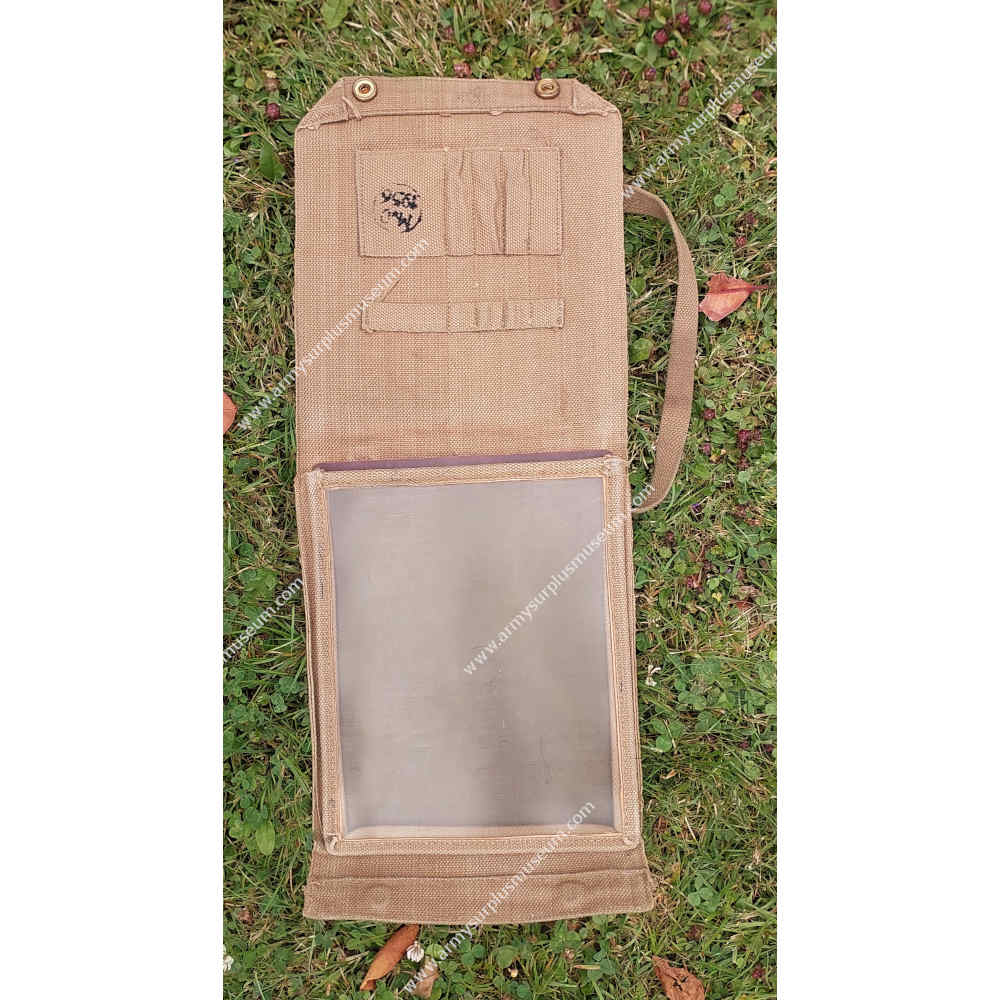
Sewn to the internal side of the cover is a set of webbing pen sleeves, consisting of four individual channels, along with a dedicated ruler sleeve. Above these are corresponding webbing retaining loops, allowing writing instruments and tools to be secured when the case is closed.
Internally, the case was issued with a removable Tufnol board—a hard, resin-bonded composite material made from layered paper or fabric—providing structure and support while allowing the board to be removed or replaced as required.
The sides and base of the pouch are constructed with bellows folds, enabling expansion to accommodate maps and associated paperwork.
Examples
Example One
This example was produced in the United Kingdom by an unknown manufacturer, as the original stamp has been washed out. The presence of an MvD (Ministerie van Defensie) stamp indicates it was later taken into Dutch service and reissued.
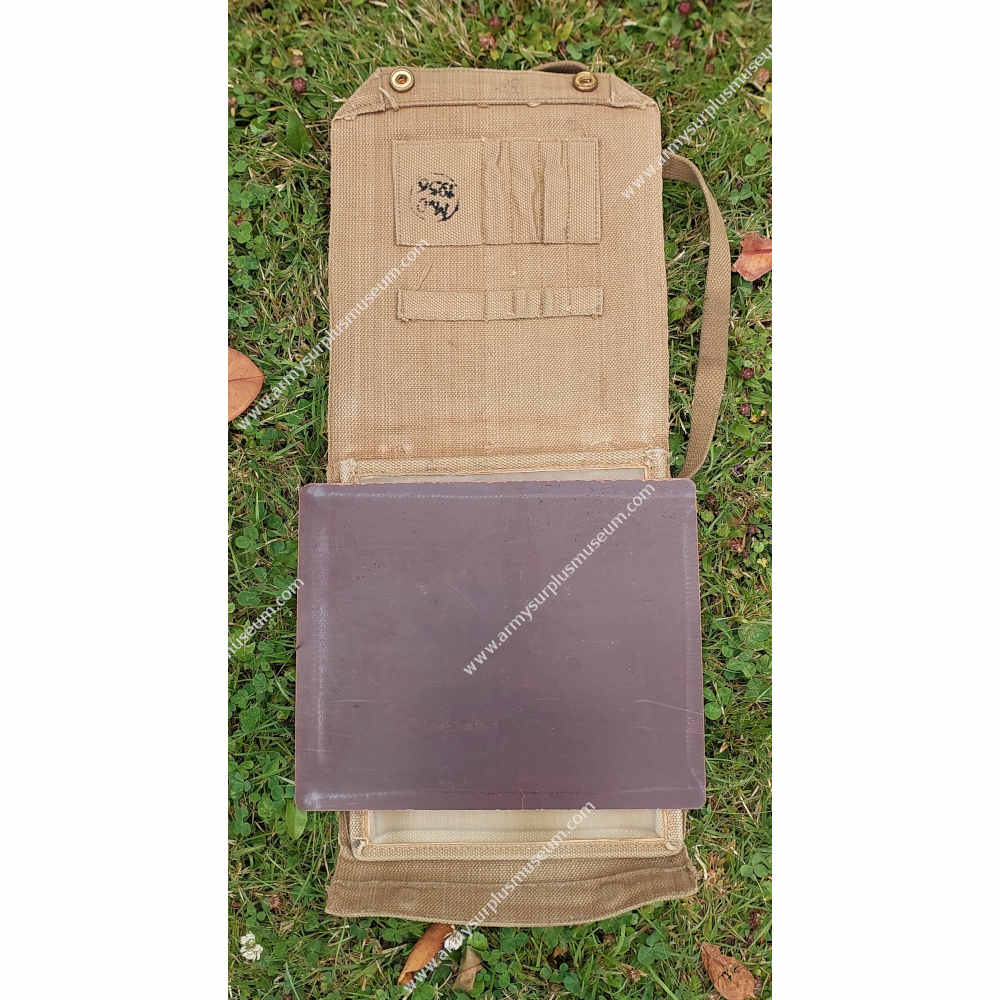
Object Number: 9110-826-46106.
