Frog, Cutter, Wire, Folding. (Mk I)
General Information
Name: Frog, Cutter, Wire, Folding. (Mark I).
Country of Origin: The United Kingdom.
Date of Manufacture: 1942.
Manufacturer: Yet to be identified.
Army Stores Code: Yet to be Identified.
Colour: Olive Drab (OD).
Equipment Family: None.
Number Of compartments: One.
Weight: 230g.
Dimensions (cm): 26 (H) × 7.5 (W).
Waterproof: No.
History
The Frog, Cutter, Wire, Folding is a webbing frog designed to carry a pair of folding wire cutters. Worn on the web belt, it provided soldiers with a convenient means of carrying wire cutters for breaching wire and barbed wire obstacles or entanglements.
First introduced during the First World War for the Pattern 1908 Web Equipment, the frog was produced for personnel tasked with carrying a pair of folding wire cutters, rather than as a standard-issued component of the equipment set. Its simple canvas construction proved highly effective, and it remained in production and service, with only minor changes, until the 1990s. The most significant modification was the replacement of the original snap fastener with a pull-tab closure, although this appears to have been driven more by manufacturing economy or material availability than by any functional improvement.
A metal ring fitted to the rear of the frog allowed the wire cutters’ retaining lanyard to be secured, reducing the risk of losing the cutters if they were dropped, particularly during night operations.
Although developed by Britain, the Frog, Cutter, Wire, Folding was also manufactured and used by many Commonwealth nations alongside their respective web equipment systems.
As a point of interest, a small number of Commonwealth soldiers are known to have used the frog as an improvised holster for carrying a M-1911A1 pistol, although this was never an official or intended use.
Description
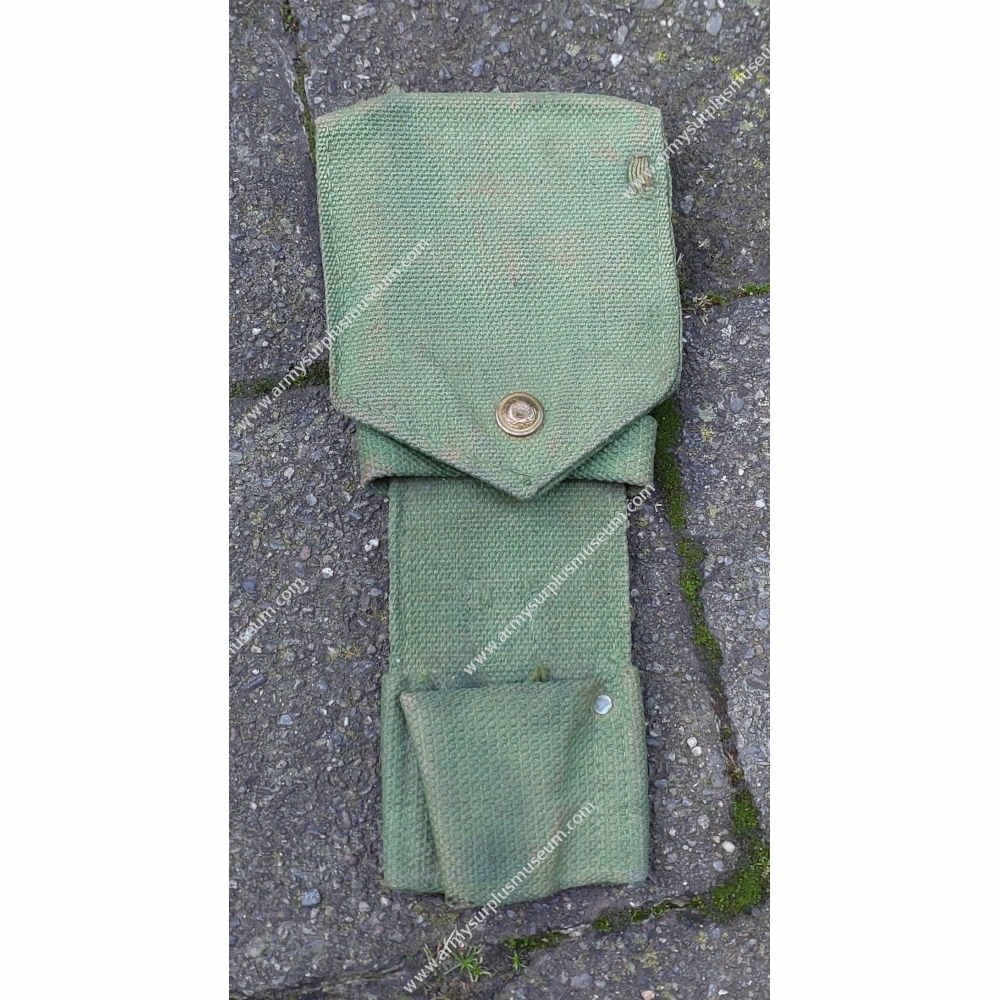
The frog is designed to carry the folding wire cutters with the cutting jaws facing downward. It is fabricated from woven cotton webbing and consists of a double-layered body to improve durability and resistance to wear.
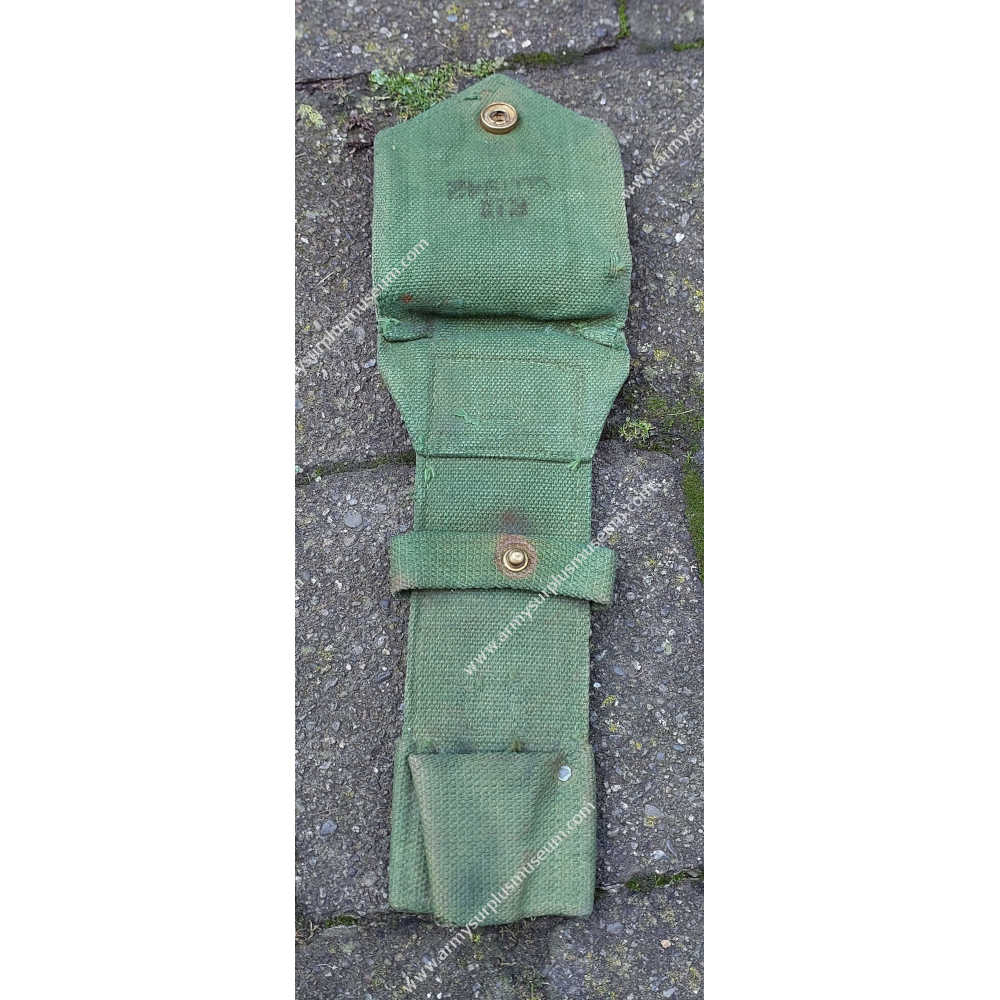
The lid is an extension of the front section of the frog and is sewn to the body. It is comparatively wide to accommodate the folded handles of the wire cutters and features a small recess at its upper edge that helps retain the ends of the handles when the lid is closed. The lid is secured by a brass snap fastener, which engages with a 25 mm horizontal woven webbing strap sewn across the centre of the frog.
Below the closure strap is a 50 mm wide woven cotton webbing strap that has been shaped to accommodate the cutting jaws of the folded wire cutters. The upper corners of this reinforcing strap are secured with brass rivets to provide additional strength in this high-wear area.
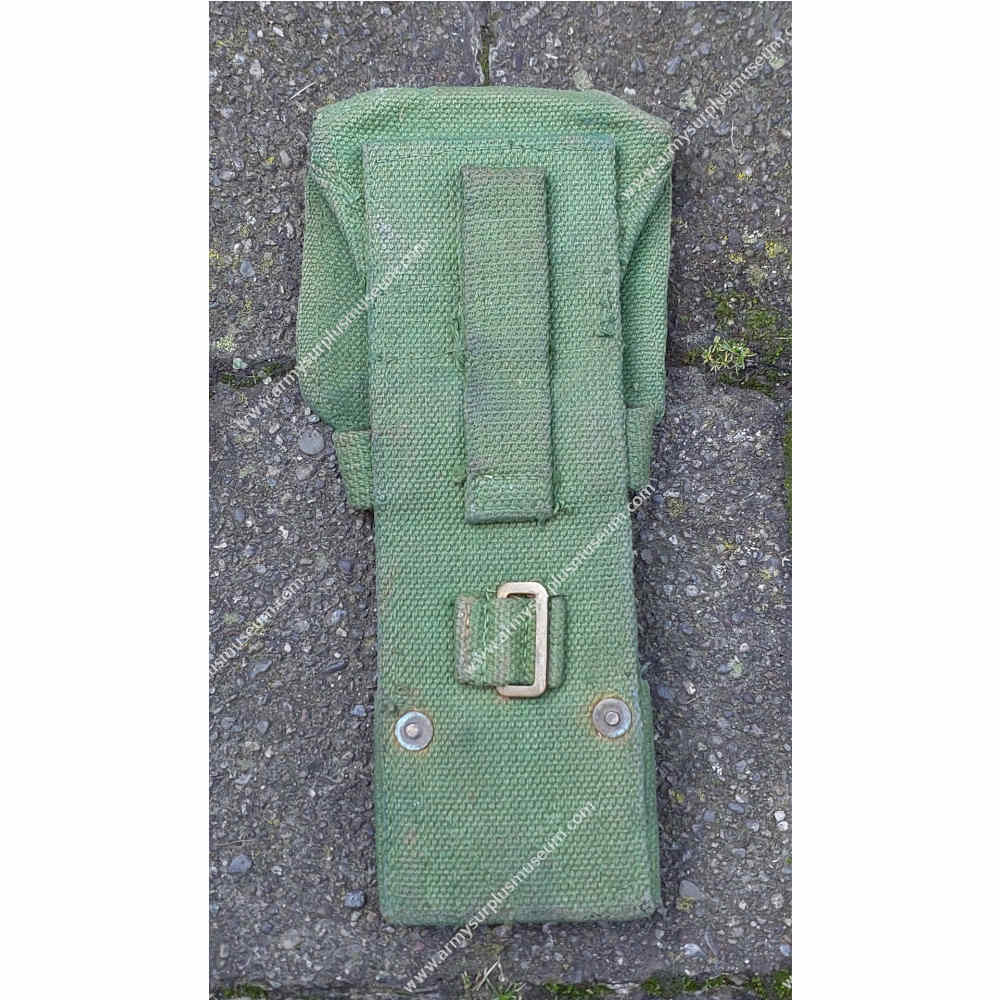
The rear of the frog is fitted with a 25 mm woven webbing belt loop for attachment to a waist belt. Below the belt loop is a brass square ring used to secure the retaining lanyard fitted to the wire cutters, preventing their loss if dropped during use.
Examples
Example One
This example of the Frog was manufactured in 1942 and was later dyed Jungle Green during its service life for use in tropical environments.