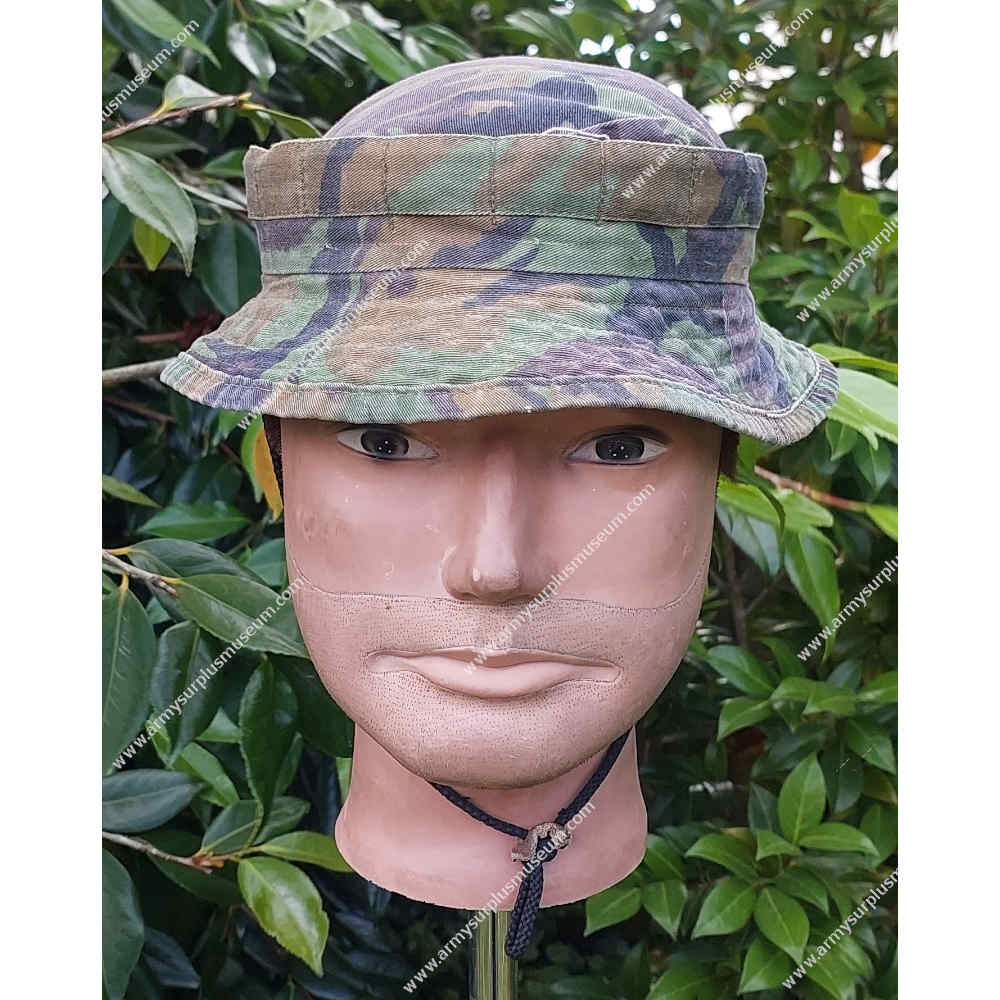
Hat Utility, DPM
General Information
Name: Hat Utility, DPM 1.
Country of Origin: New Zealand.
Date of Production: See examples.
Manufacturer: See examples.
NATO Stock Number (NSN): Yet to be identified.
Camouflage Pattern: Temperature Disruptive Pattern Material (DPM).
Uniform Family: Yet to be identified.
Size: See examples.
Weight: See examples.
Windproof: Yes.
Waterproof: No.
Similar Objects
History
With the initial issue of the New Zealand-produced 68 Pattern combat uniform in the early 1980s, no matching jungle or boonie hat was issued, leaving soldiers to continue wearing the olive drab jungle hat alongside the new camouflage uniform. However, with the third iteration of the DPM combat uniform, New Zealand began producing quantities of the Hat, Utility in DPM camouflage. Production continued as camouflage patterns evolved, resulting in the hat being manufactured in a wide range of New Zealand DPM variations over its service life.
The hat became a well-liked and widely worn item of headwear. Due to its large crown, it was often worn with the sides crushed or folded down to give it a distinctive field-worn appearance preferred by many soldiers. Soldiers also commonly modified the hat for field use, often shortening the brim or sewing down sections of the crown to better suit personal preference and operational requirements.
Description
The jungle hat is fabricated from polyester and cotton blended cloth printed with a DPM camouflage pattern. The crown is 9 cm high and has foliage loops running around its base for the attachment of natural camouflage. The brim is fabricated from two semi-circular sections sewn together to form a circular peak and is 6 cm wide. It is multi-layered and secured with six rows of circular stitching to prevent internal movement while also providing strength and stiffness. The edges of the brim are bound with fabric binding tape to protect them from fraying.
The internal side of the hat is lined with the same cloth fabric. Each side of the crown has two brass grommet vent holes for ventilation. At the base of the hat on each side is a cloth tab fitted with a brass grommet for attaching a chin strap when required by the wearer. However, on some examples these were omitted, requiring the wearer to improvise a field-expedient solution.
Examples
Example One
This example is dated to the late 1980s and is printed with what was commonly referred to as the “stone wash” DPM pattern due to its resemblance to the finish used on stone wash jeans.
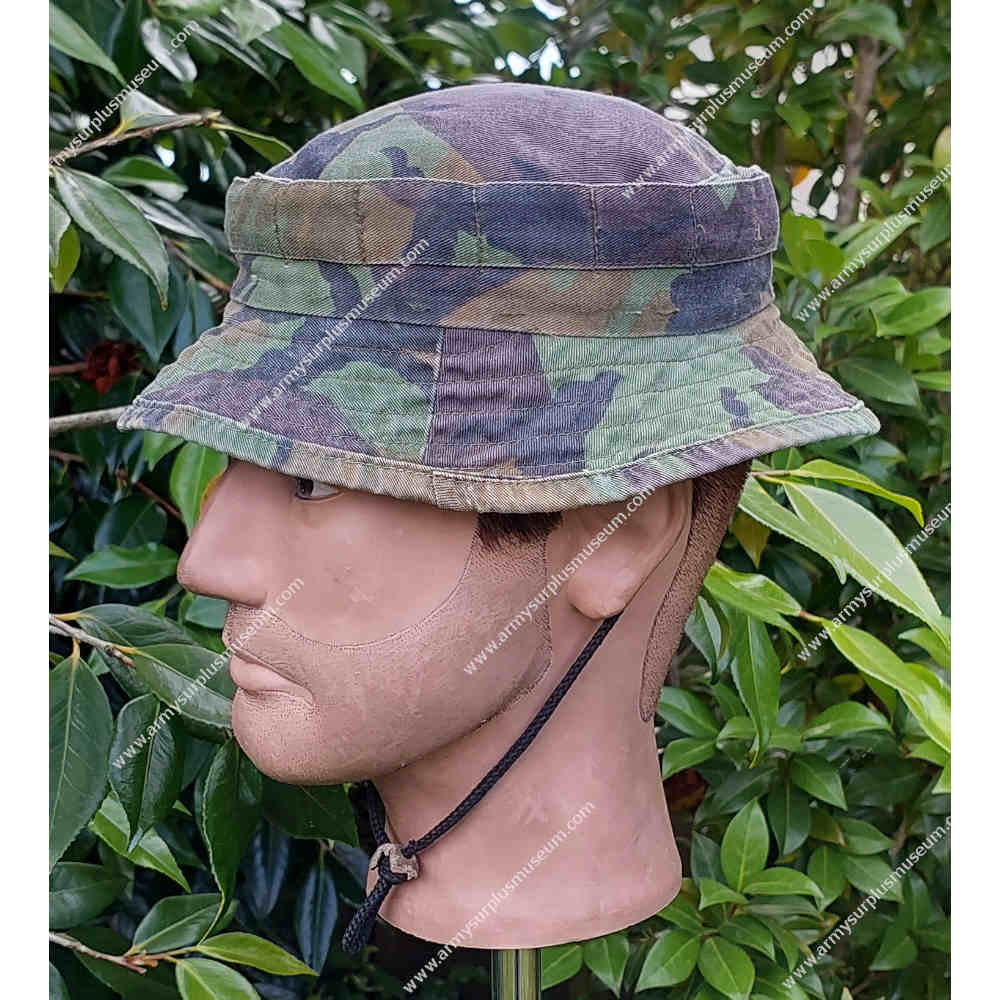
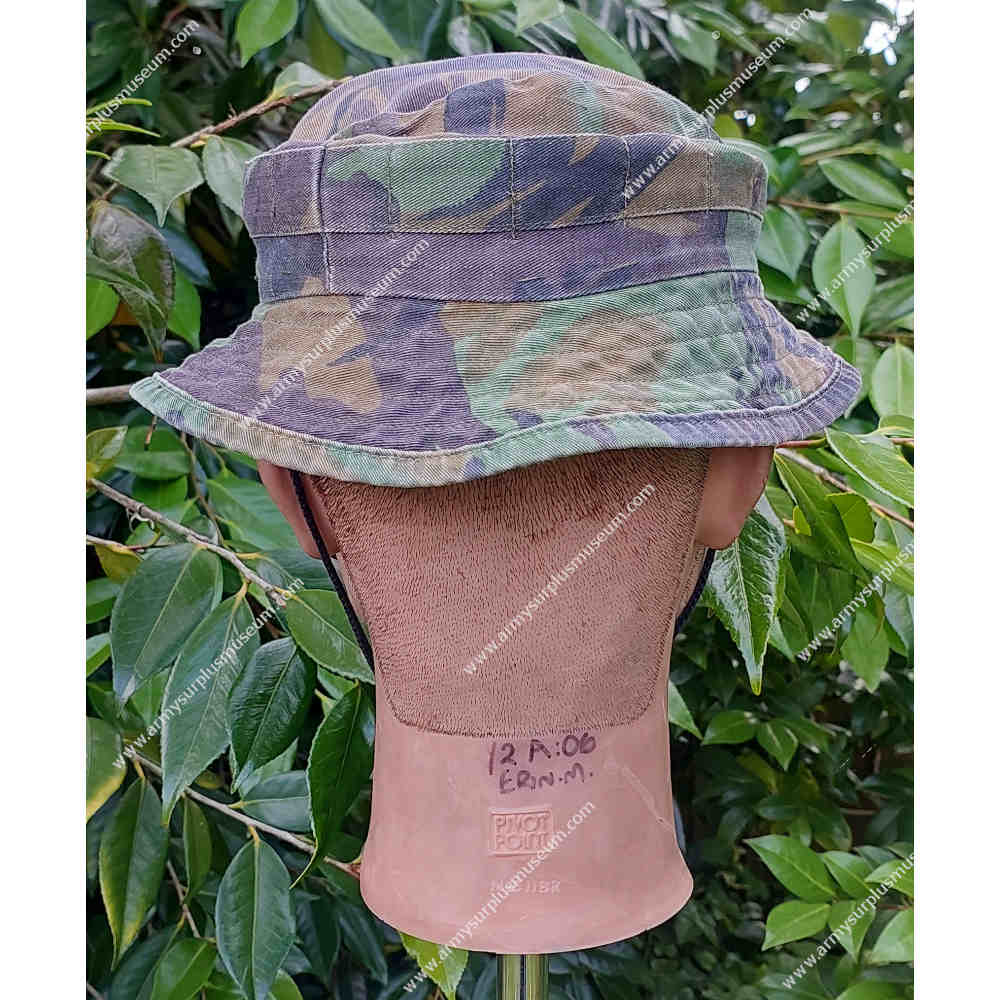
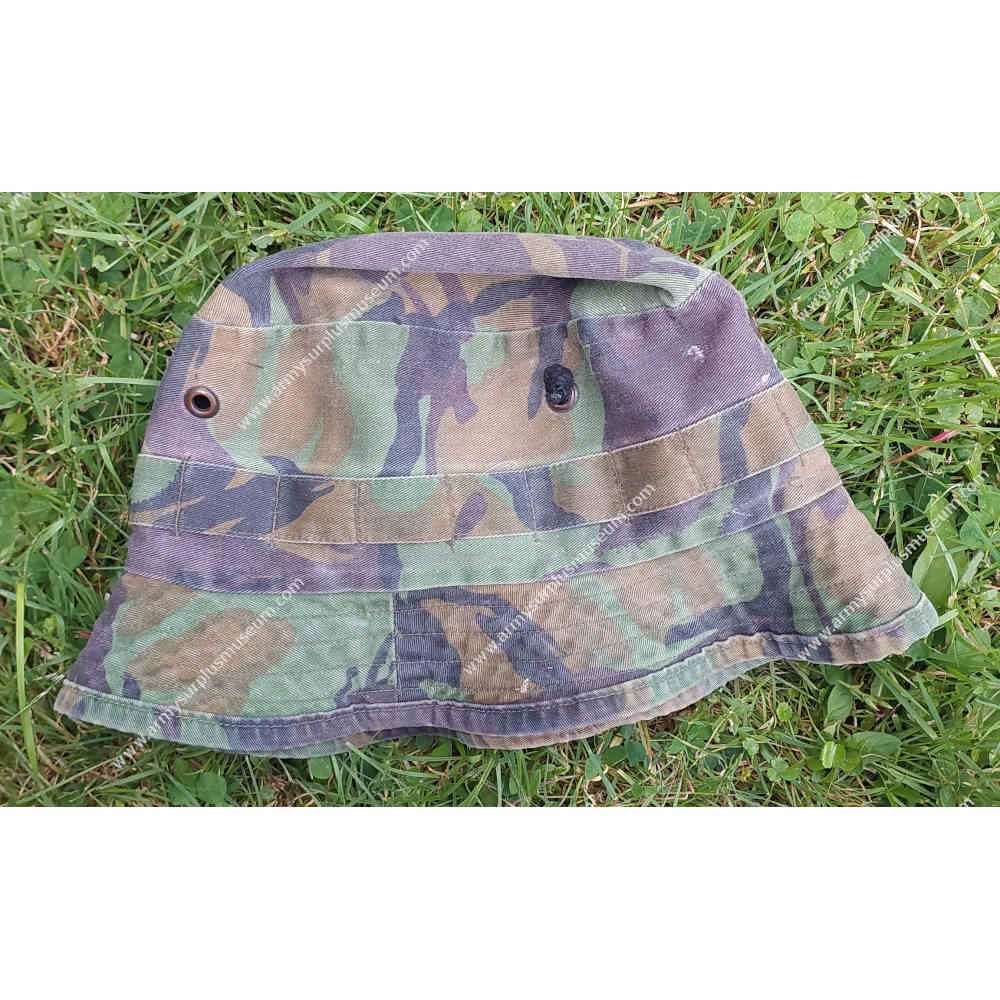
Weight: 90g.
Object Number: 8715-554-46100.
Example Two
Example two is dated in the late 1980s/ early 1990s.
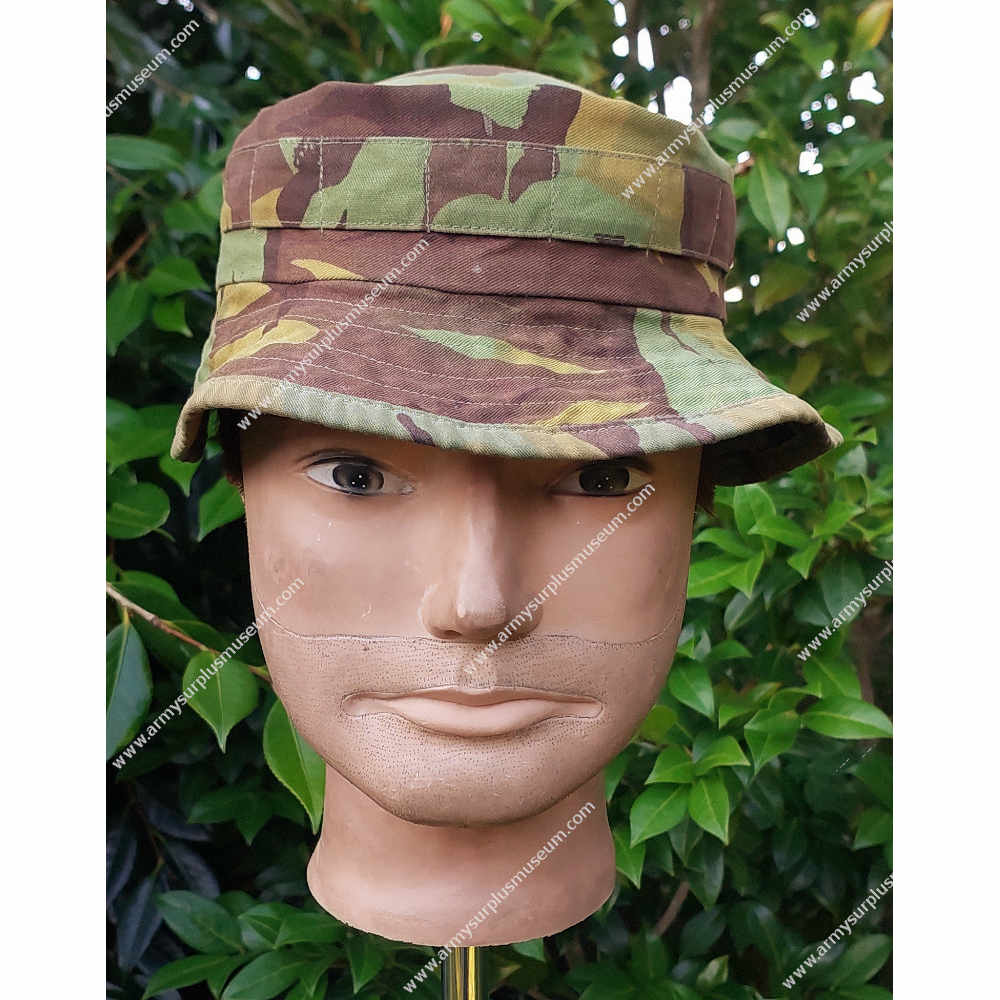
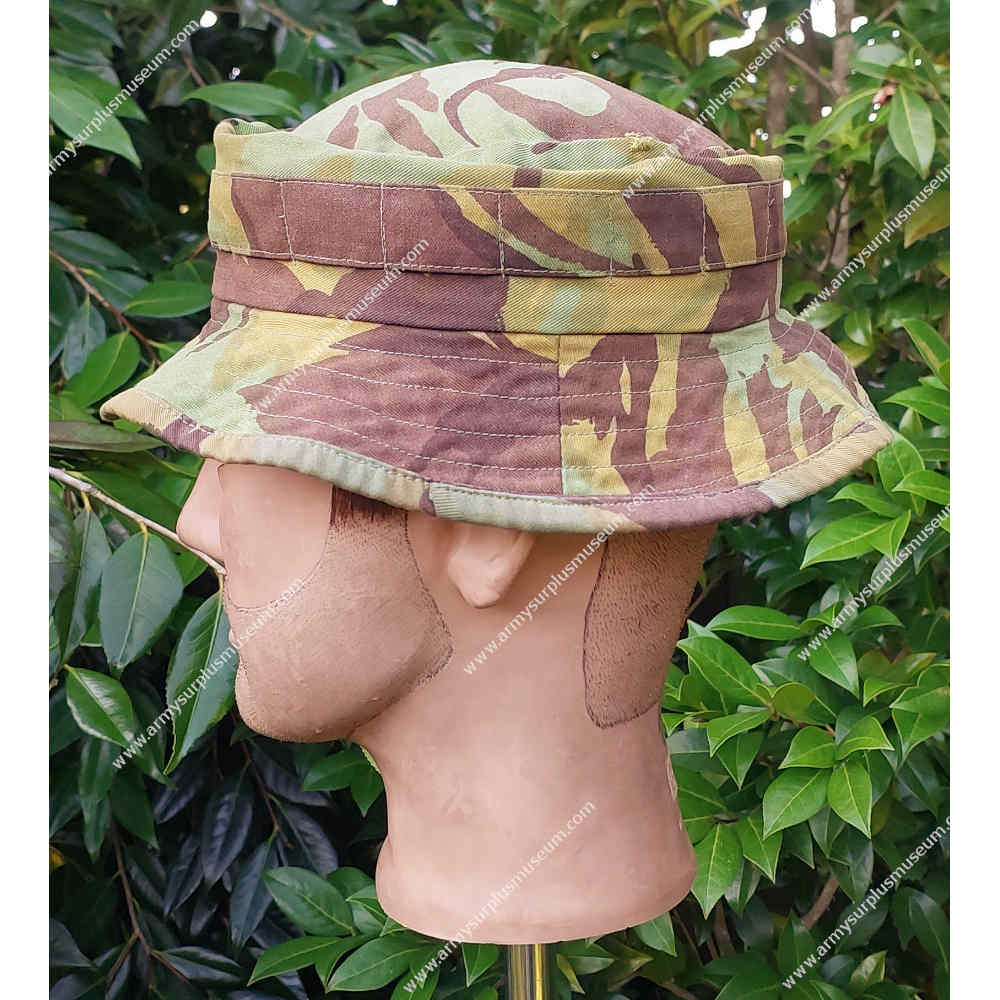
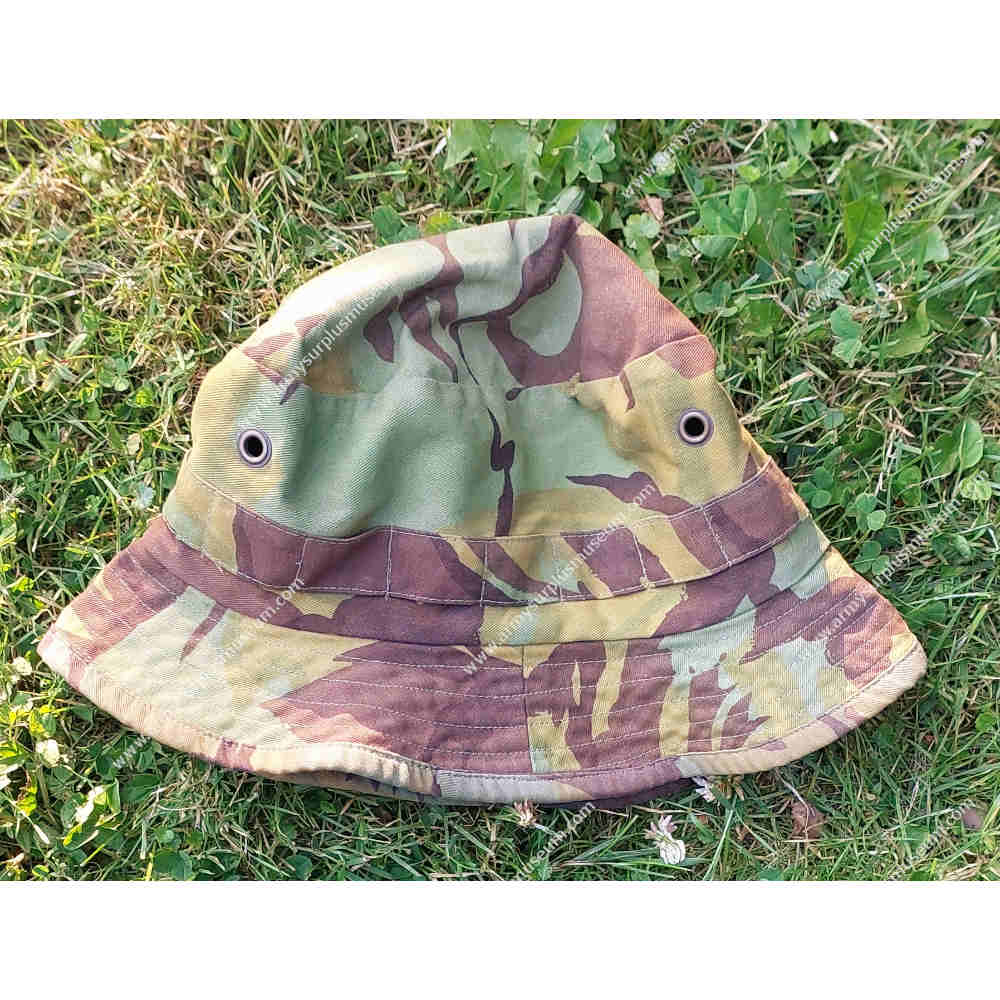
Object Number: 8715-554-46113.
Example Three
Example Three is dated to the late 1990s to early 2000s. During this same period, New Zealand also issued a jungle or utility hat with a much wider and stiffer brim that provided improved protection from the sun. However, due to its rigid construction, the hat could not easily be folded or stuffed into a pocket or pouch when not in use. As a result, many soldiers preferred to continue wearing earlier soft-brimmed hats such as Example Three whenever they were able to obtain them.
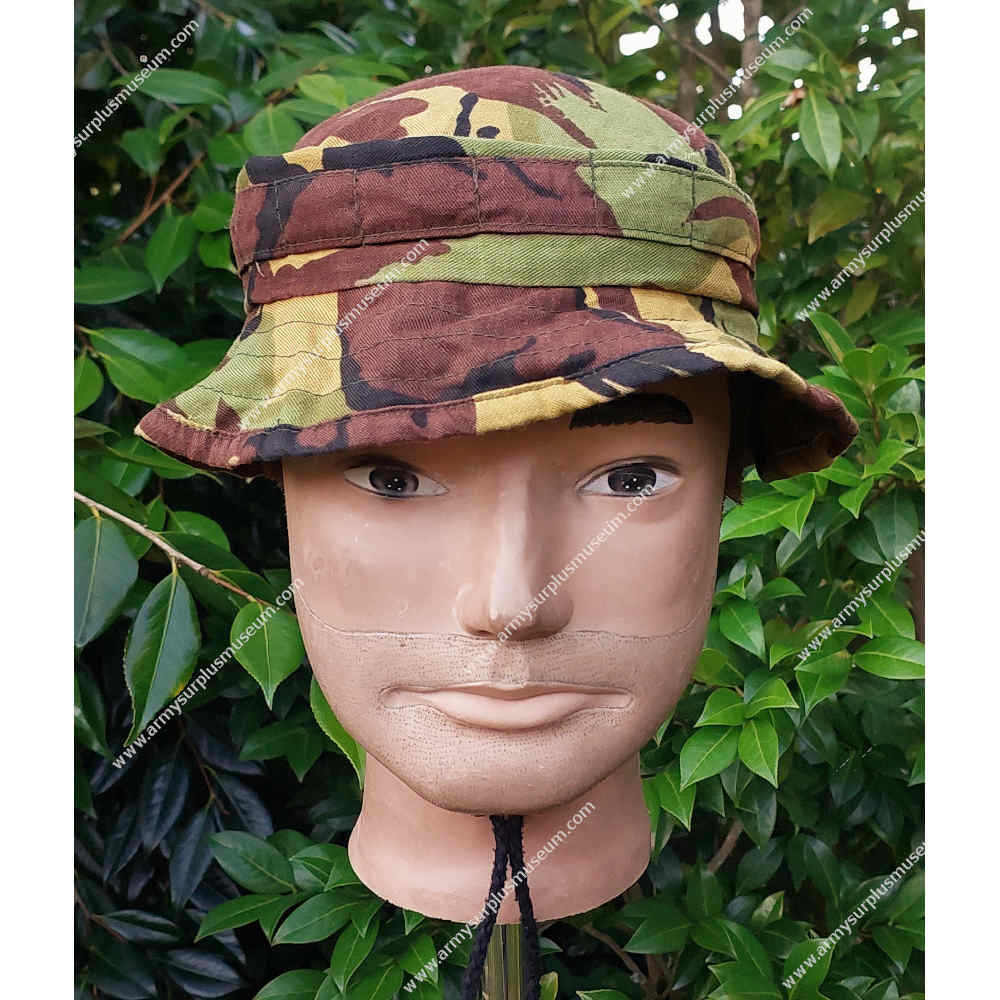
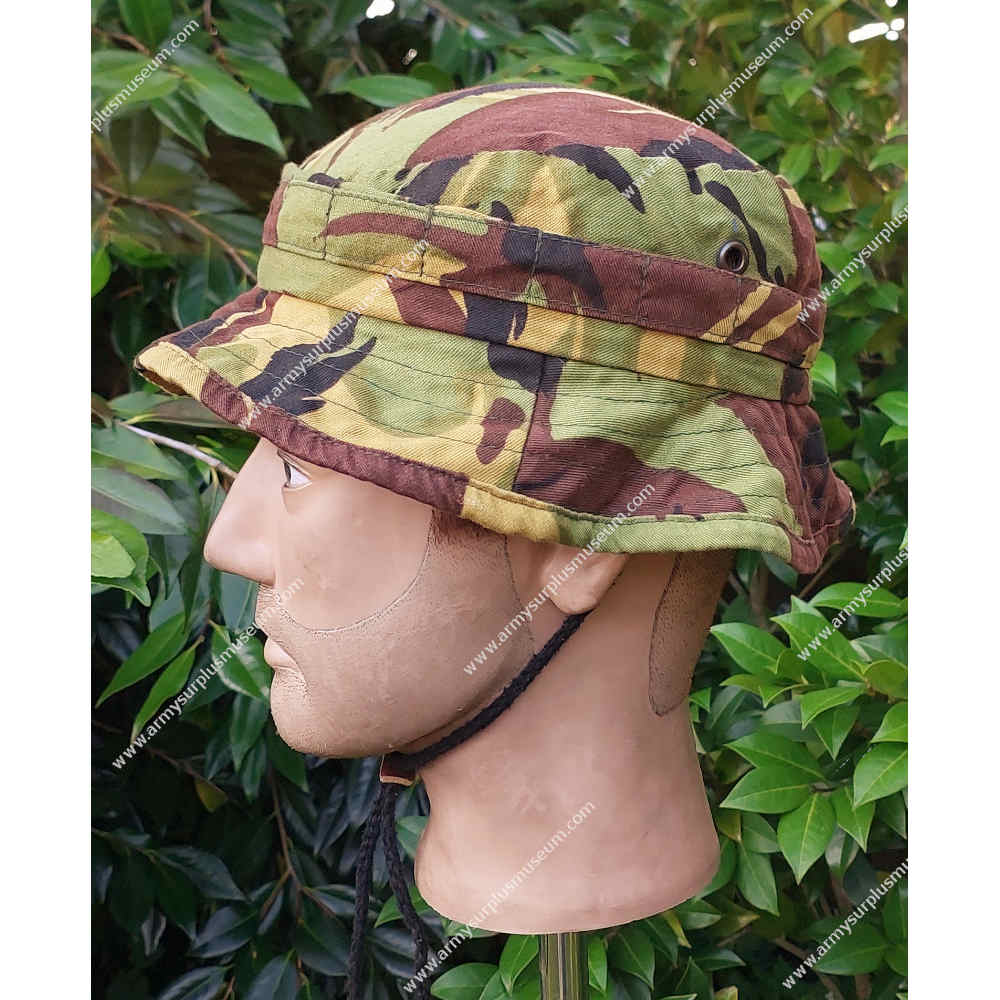
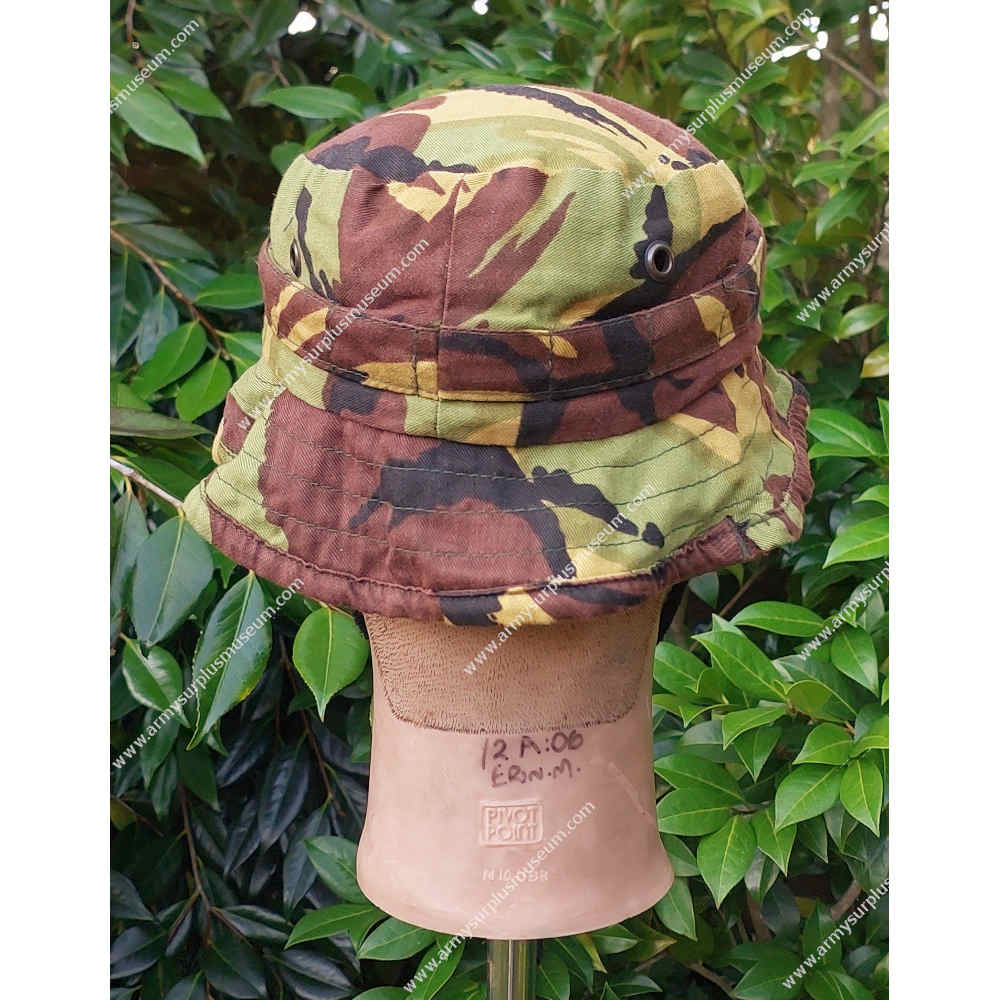
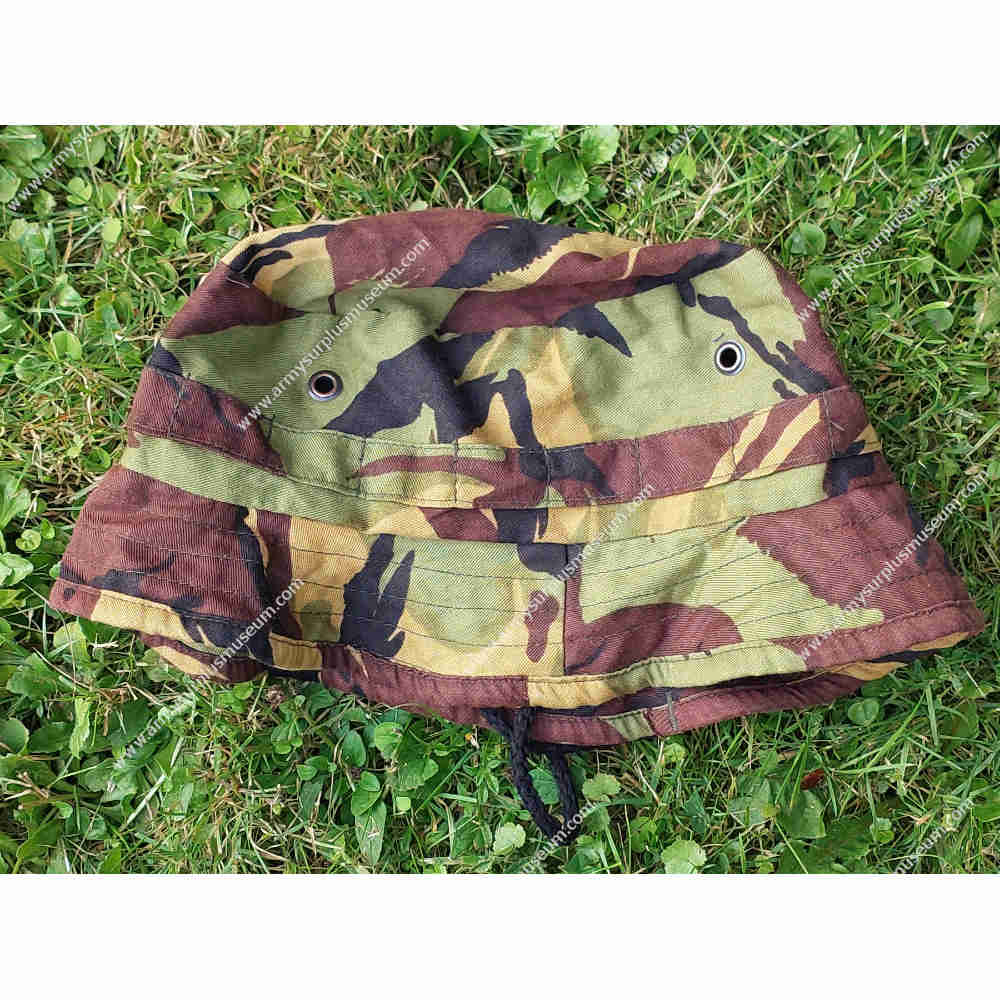
Object Number: 8715-554-37108.
1 Note 1: This is just a generic name, as we have yet to find its actual name.
