
Rucksack, Combat, Nylon
General Information
Name: Rucksack, Combat, Nylon 1.
Country of Origin: Malaysia.
Manufacturer: Yet to be identified.
Date of manufacture: See individual objects.
Camouflage Pattern: See individual objects.
Equipment Family: Yet to be identified.
Number Of Compartments: Five.
Volume Capacity: 45L.
Lid pocket- N/A.
Main compartment- 30L.
Front compartment- 5L.
Side pouches- 5L.
Weight: 1kg.
Waterproof: No.
Frame: Internal.
History
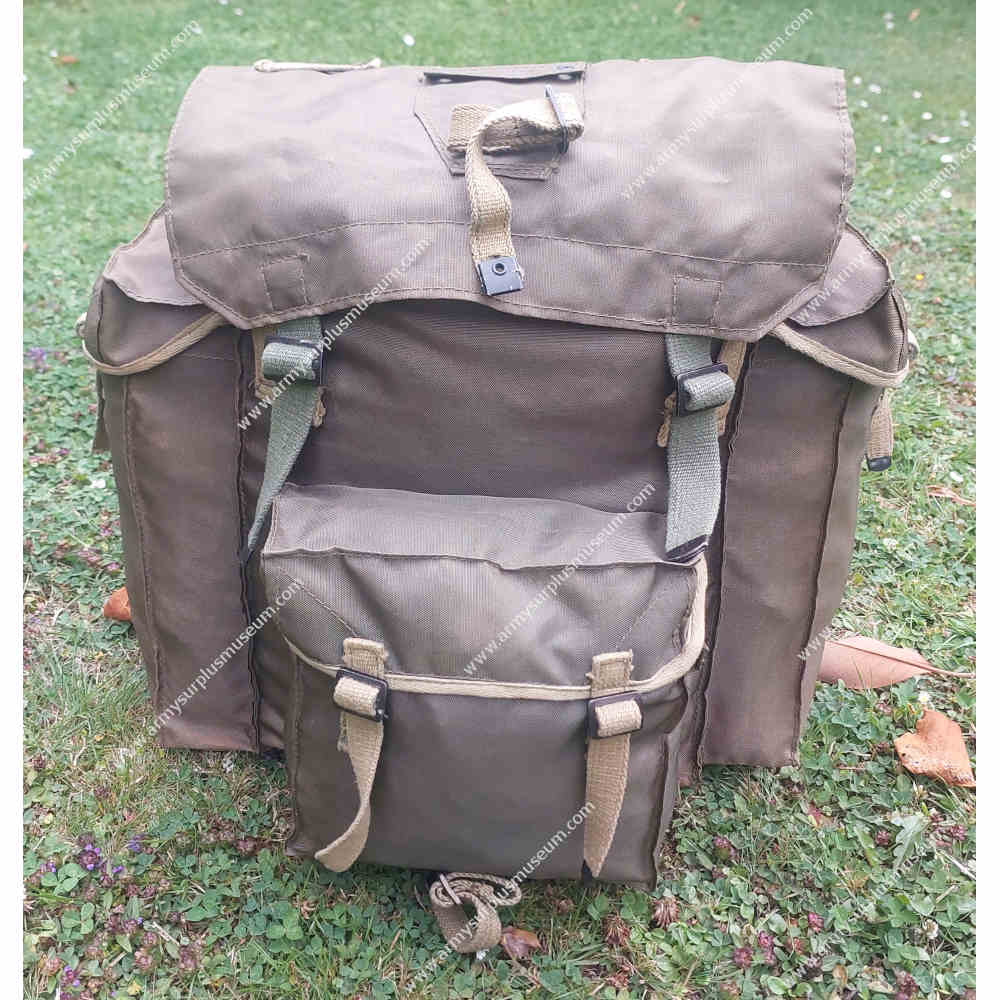
The Rucksack is believed to have been issued by the Malaysian army in the early 1970s. It is based on the British 44-pattern rucksack but features a completely different design from the standard field pack issued to soldiers. This variant was likely intended for special forces and other similar units.
Evidence suggests continued use of the design beyond Malaysia, including later camouflage variants issued by the Royal Hong Kong Regiment (RHKR) during the 1980s and 1990s.
Description
The rucksack’s lid is flat, shapeless, and waterproofed on the internal side. It features four webbing loops on the top, allowing for the secure attachment of a bed roll or similar item.
On the front, there are ‘M-10’ type hangers for attaching a shovel cover, along with a short adjustable webbing strap below to secure other types of entrenching tools. The handle of the shovel is further secured down the front. The underside of the lid includes a flat pocket with zip entry. The lid is fastened just below the rucksack’s mouth, limiting its ability to close completely.
The rucksack’s mouth is equipped with a large snow collar, tightened with a nylon draw-cord. Vertical webbing loops are present on each side above the front pouch. The front pouch is a large square compartment closed with two webbing straps. The sides feature large rectangular pouches running the full length of the rucksack, each secured with a single webbing strap.
Moving to the back, the rucksack provides comfort with two foam pads and airflow for the wearer. It features a plastic frame, and the shoulder straps are fixed to the top of the frame. These shoulder straps are heavily padded and equipped with webbing quick-releases.
Examples
Example One
Example One represents the early production style from the late 1960s and is fabricated from olive green nylon material.
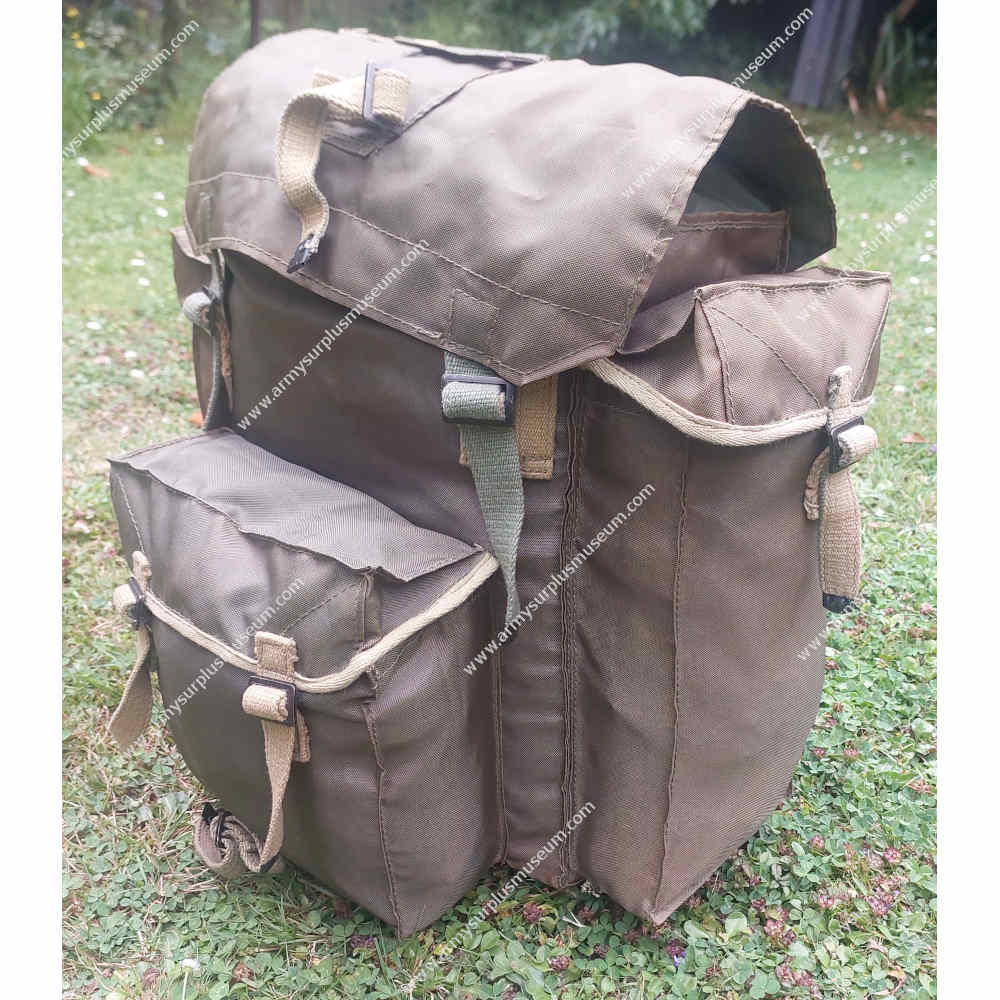
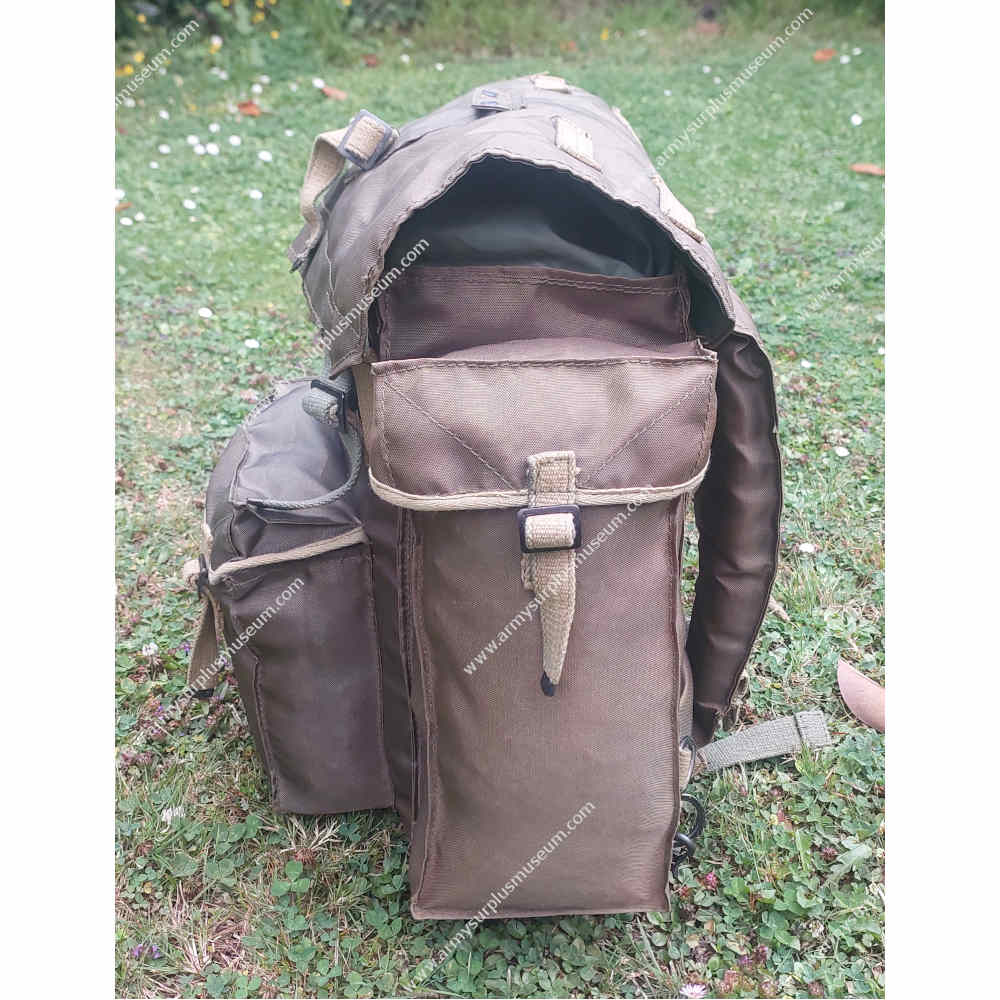
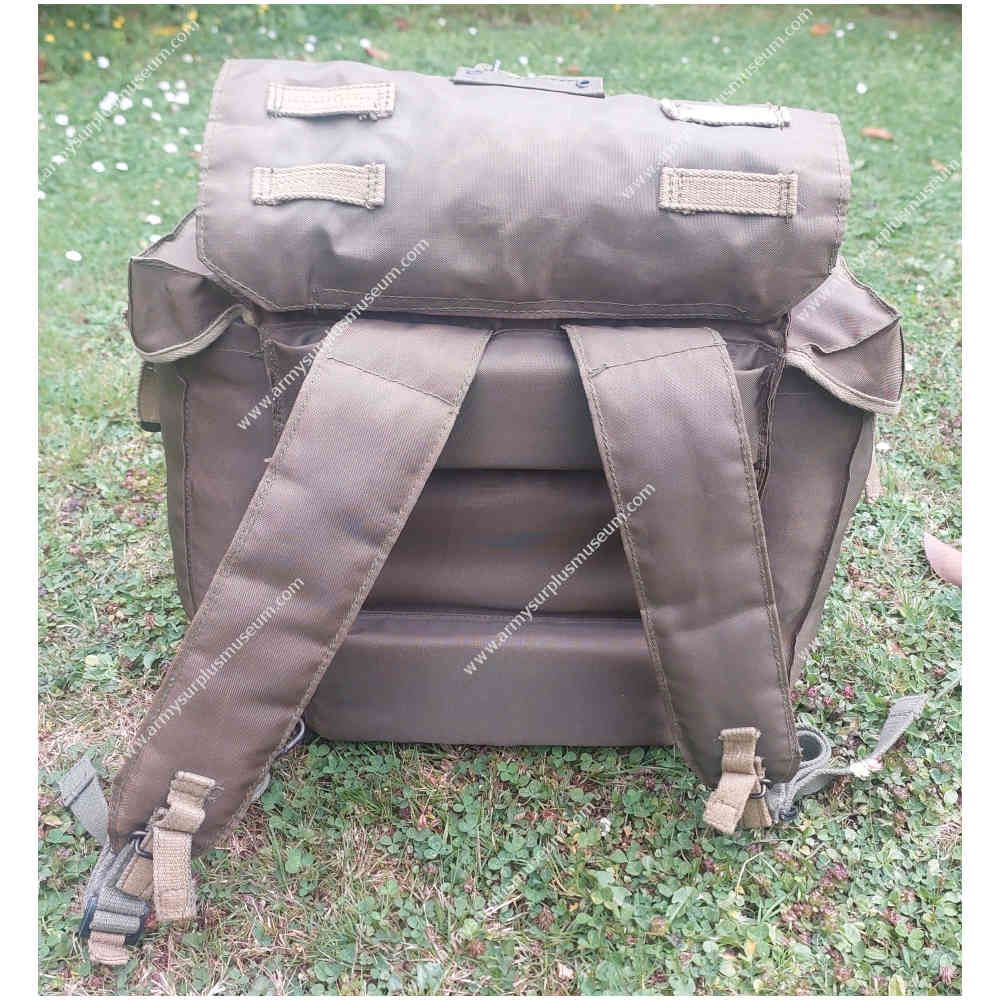
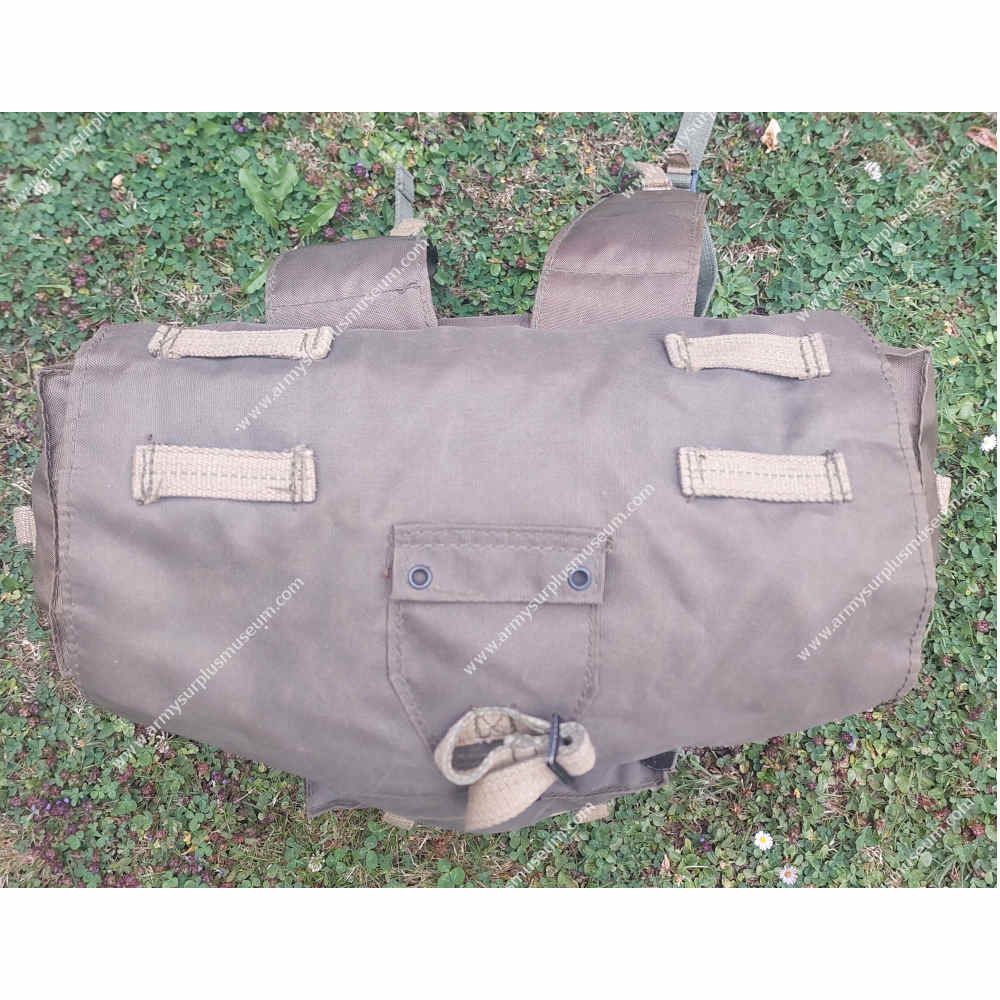
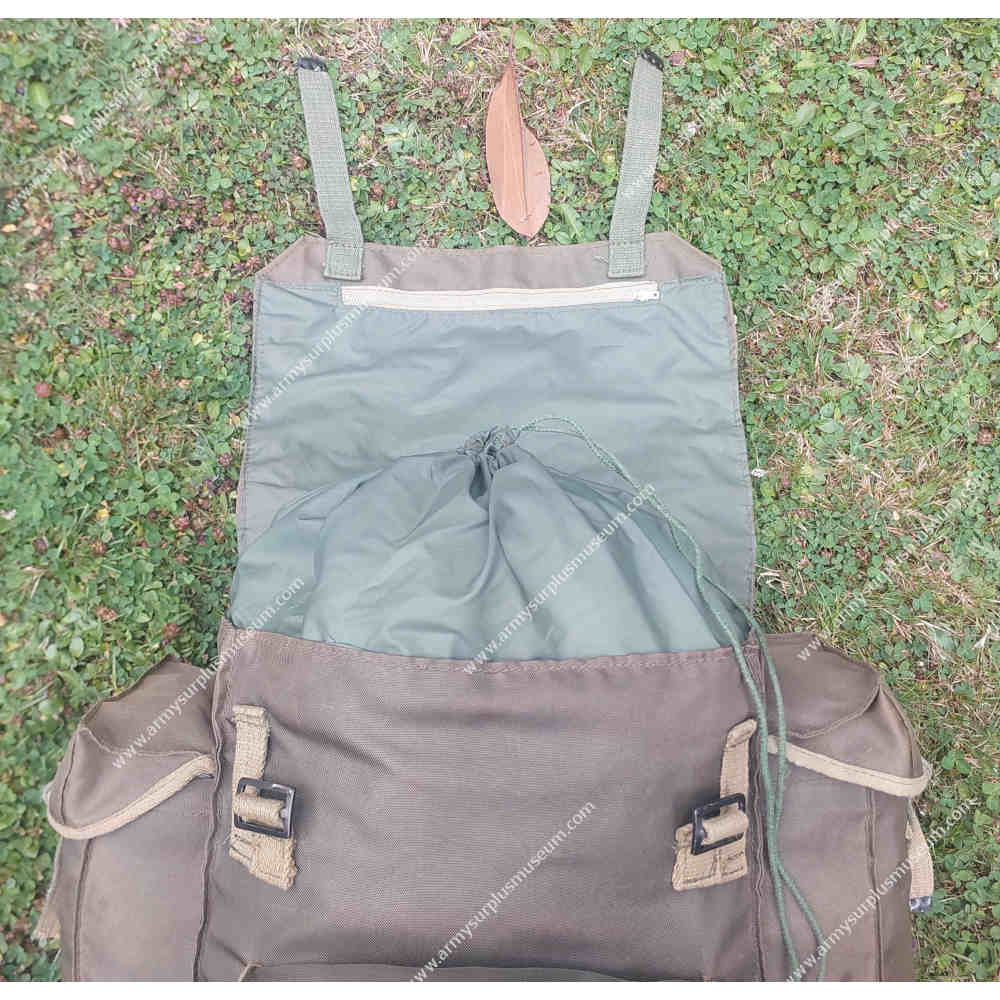
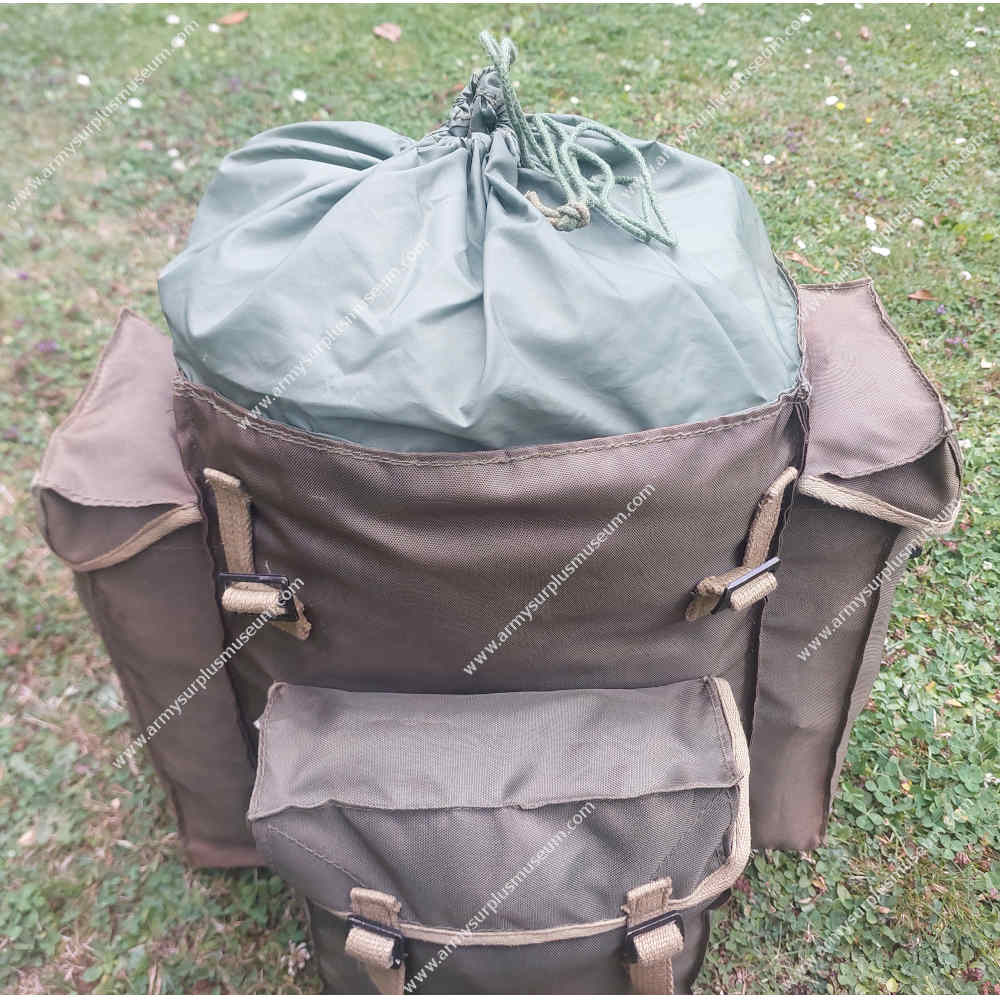
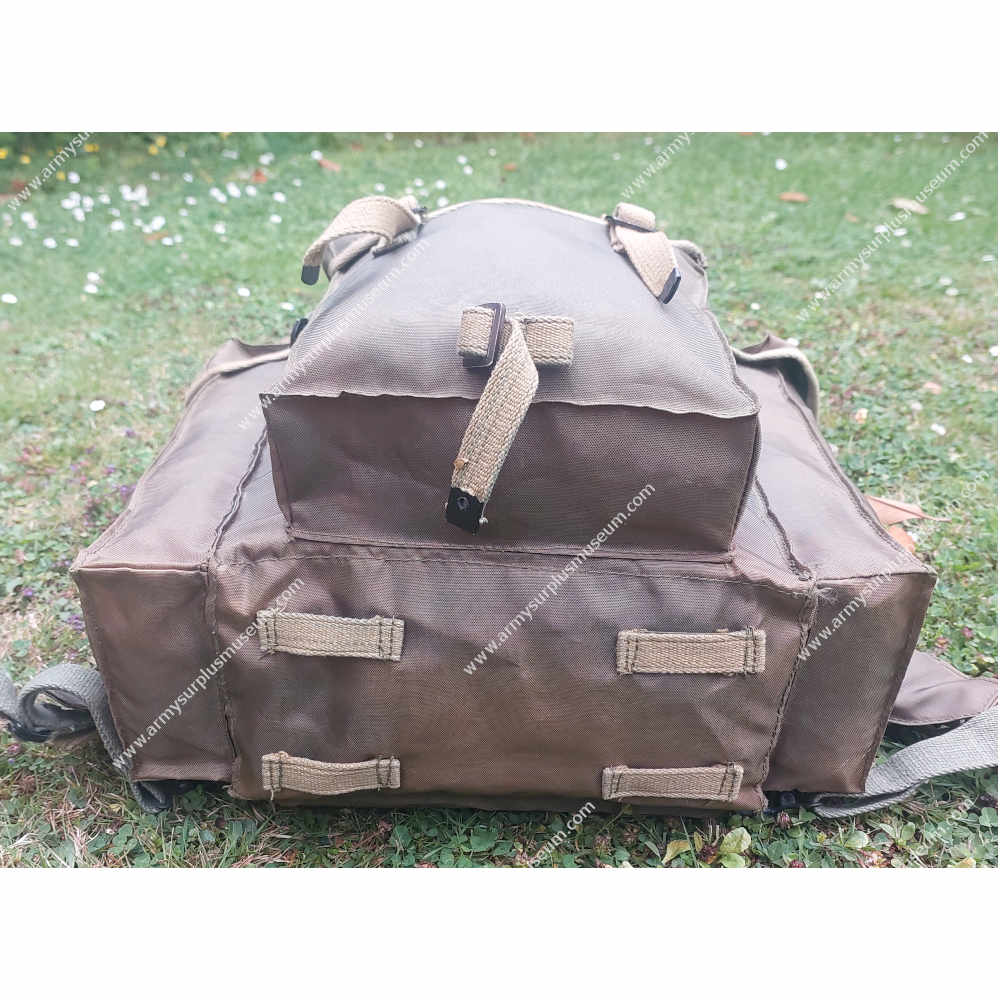
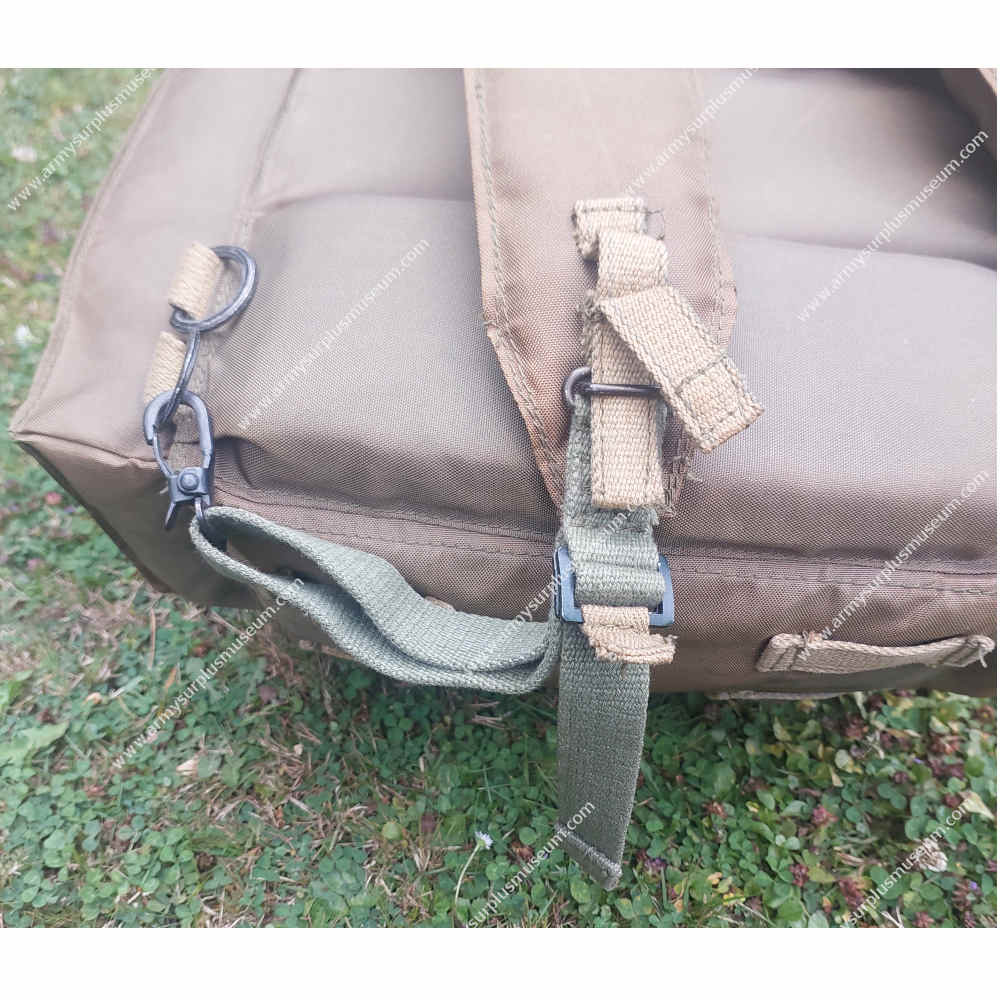
Object Number: 3120-458-37104.
Example Two
Example Two is dated to the early 1970s and reflects the transition to the newly adopted Brushstroke camouflage, replacing the earlier plain olive material.
Although the field pack design originated in Malaysia, there appears to have been variant produced in Hong Kong for the Royal Hong Kong Regiment (RHKR), using heavier-weight nylon, a brushstroke camouflage pattern, nylon webbing straps, and US-style ladder-lock buckles.
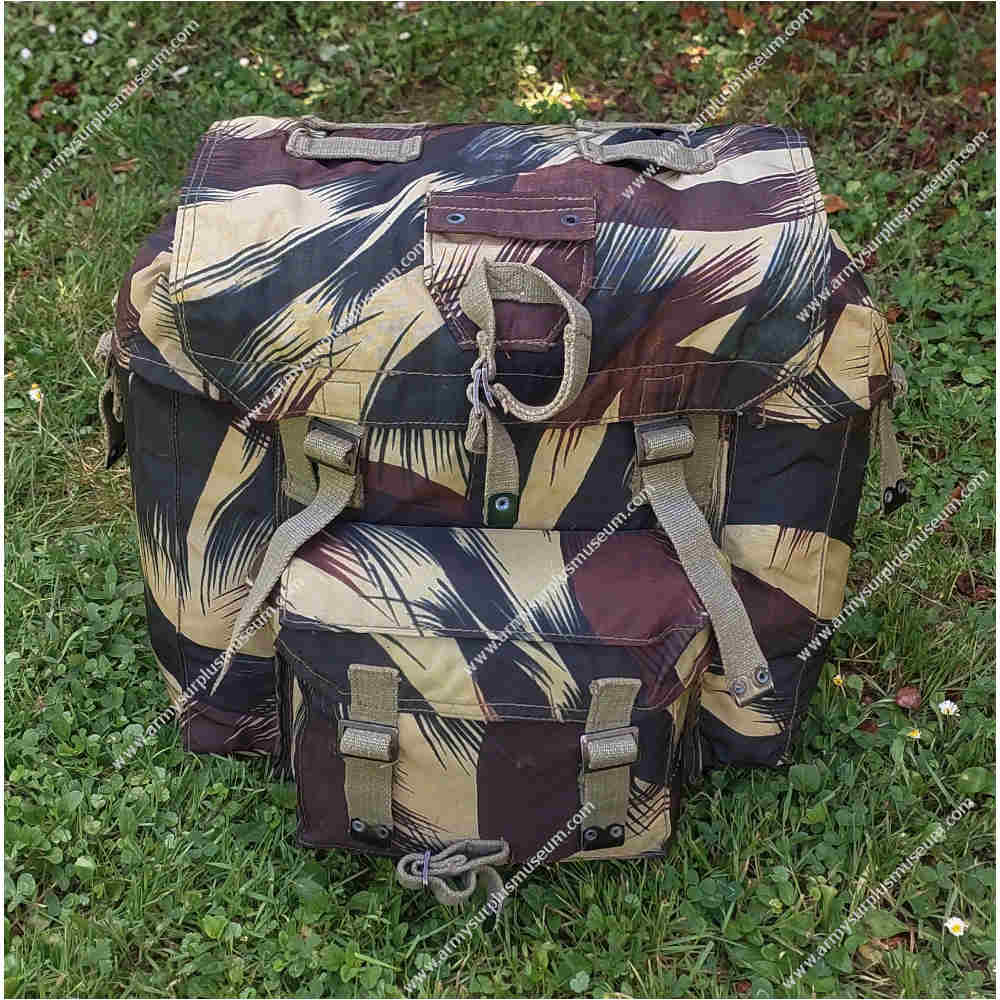
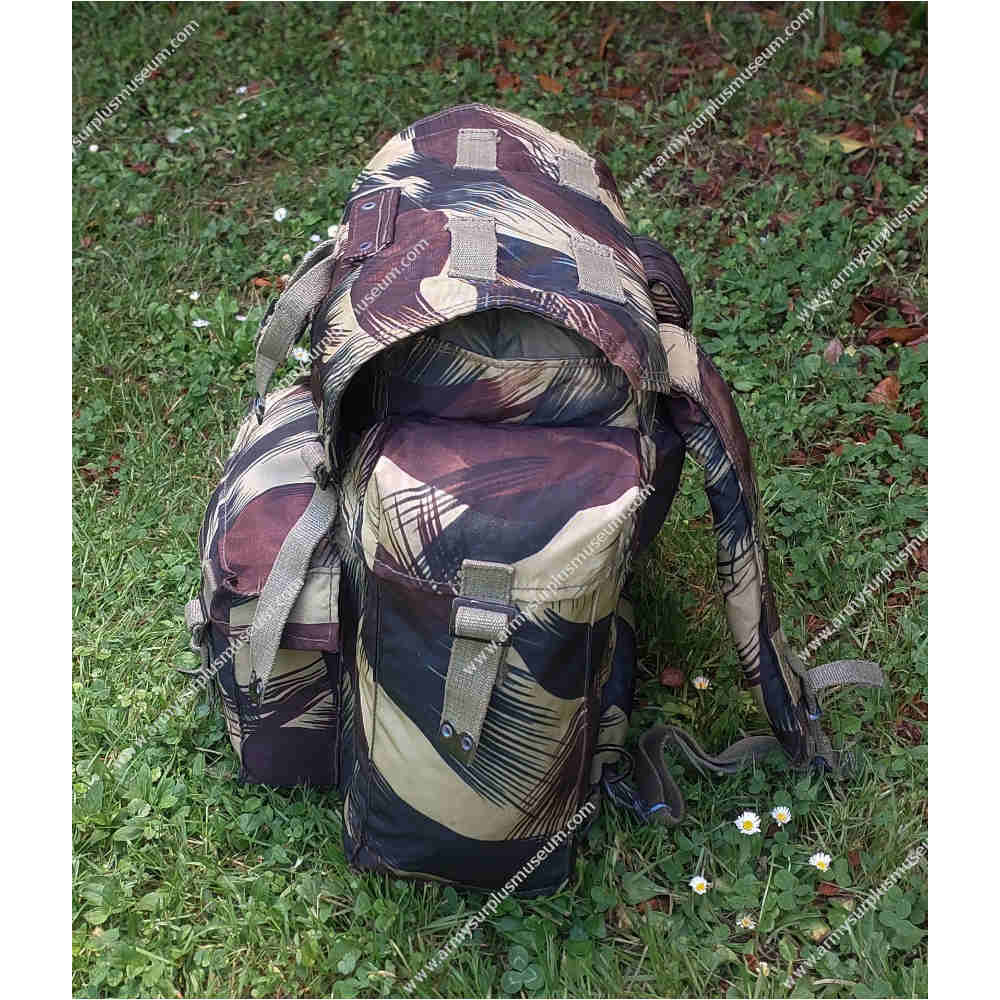
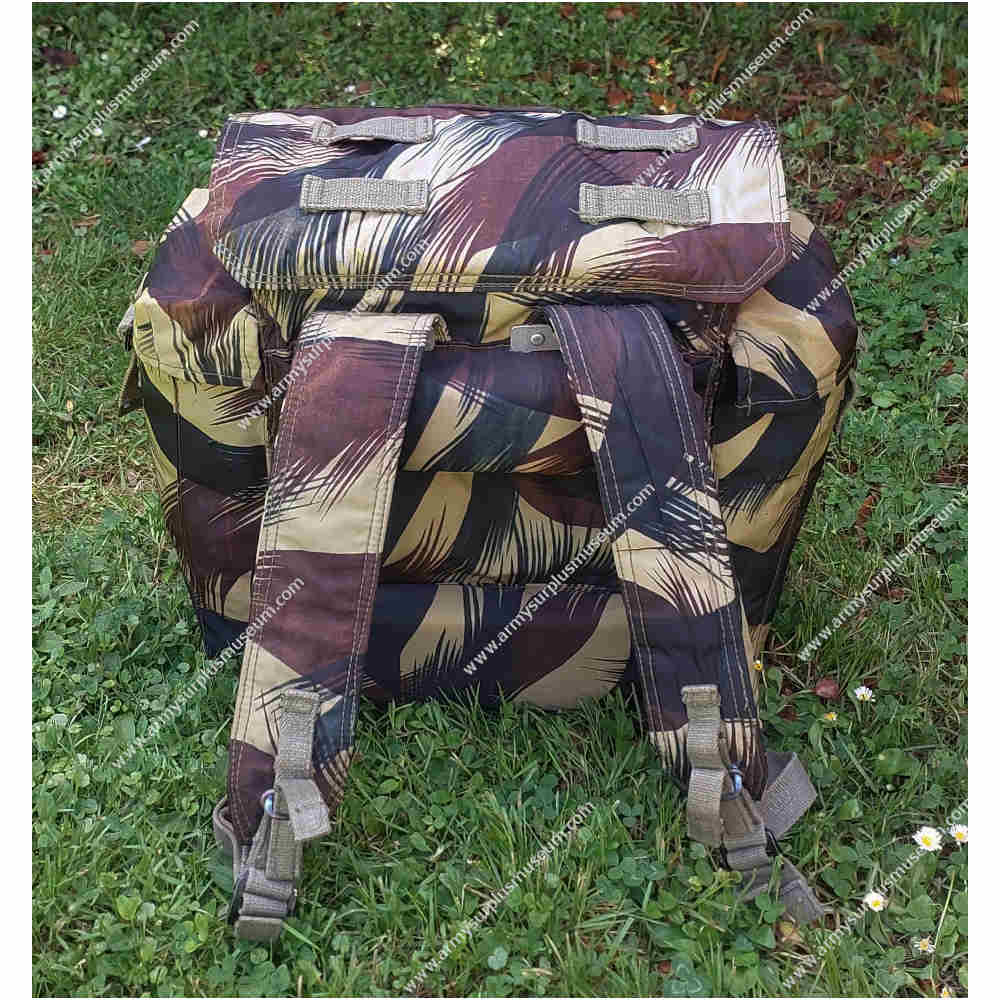
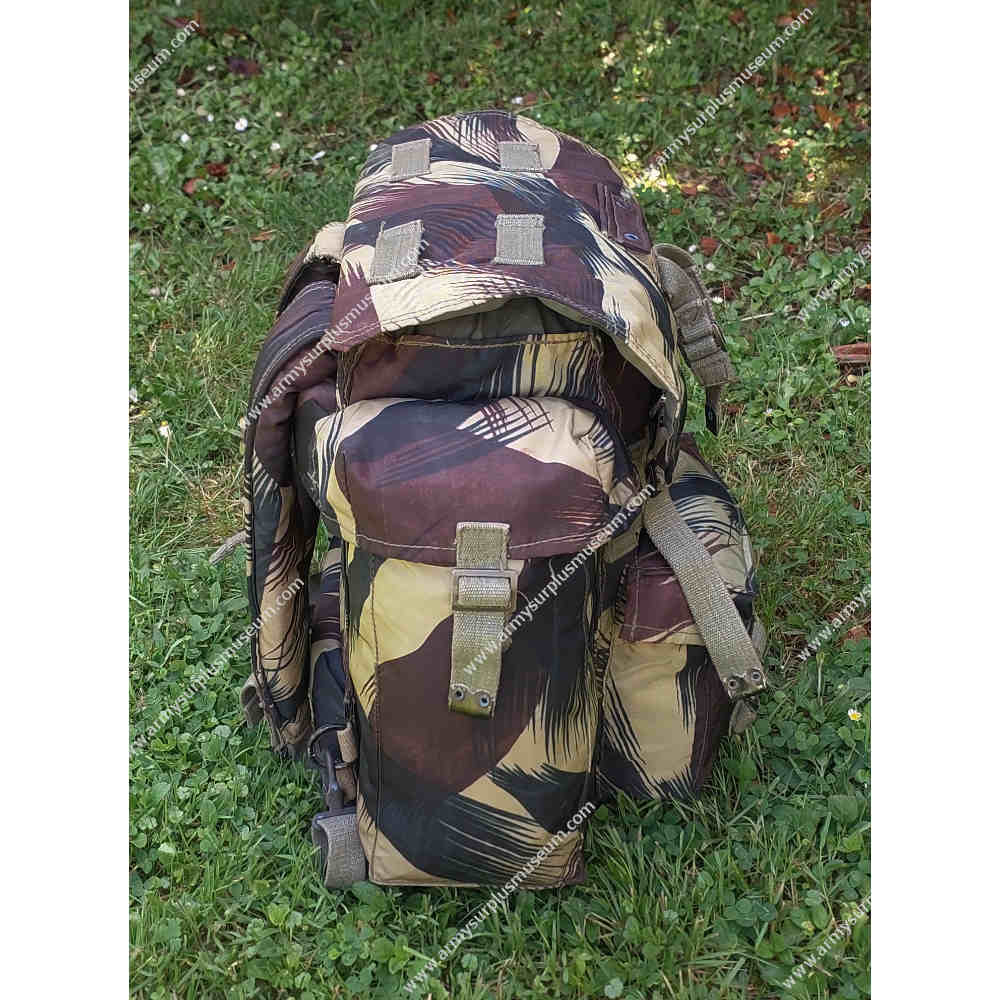
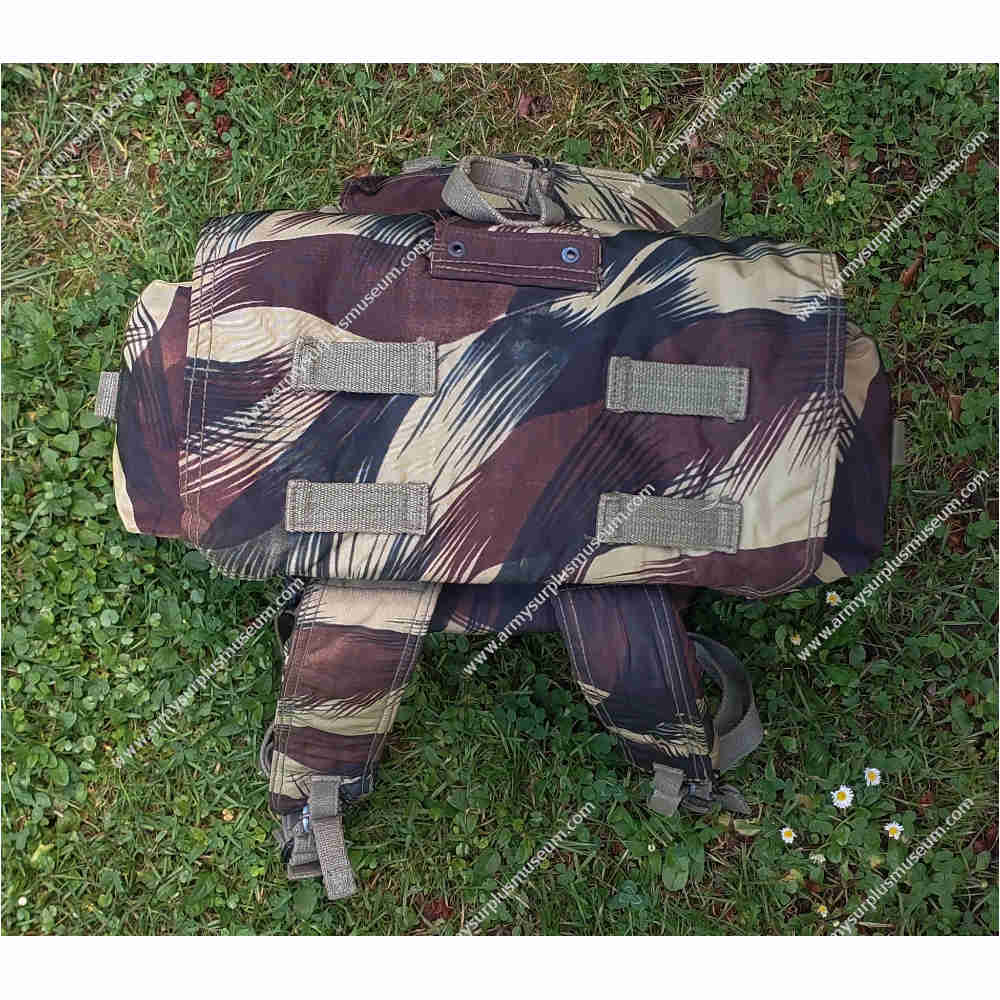
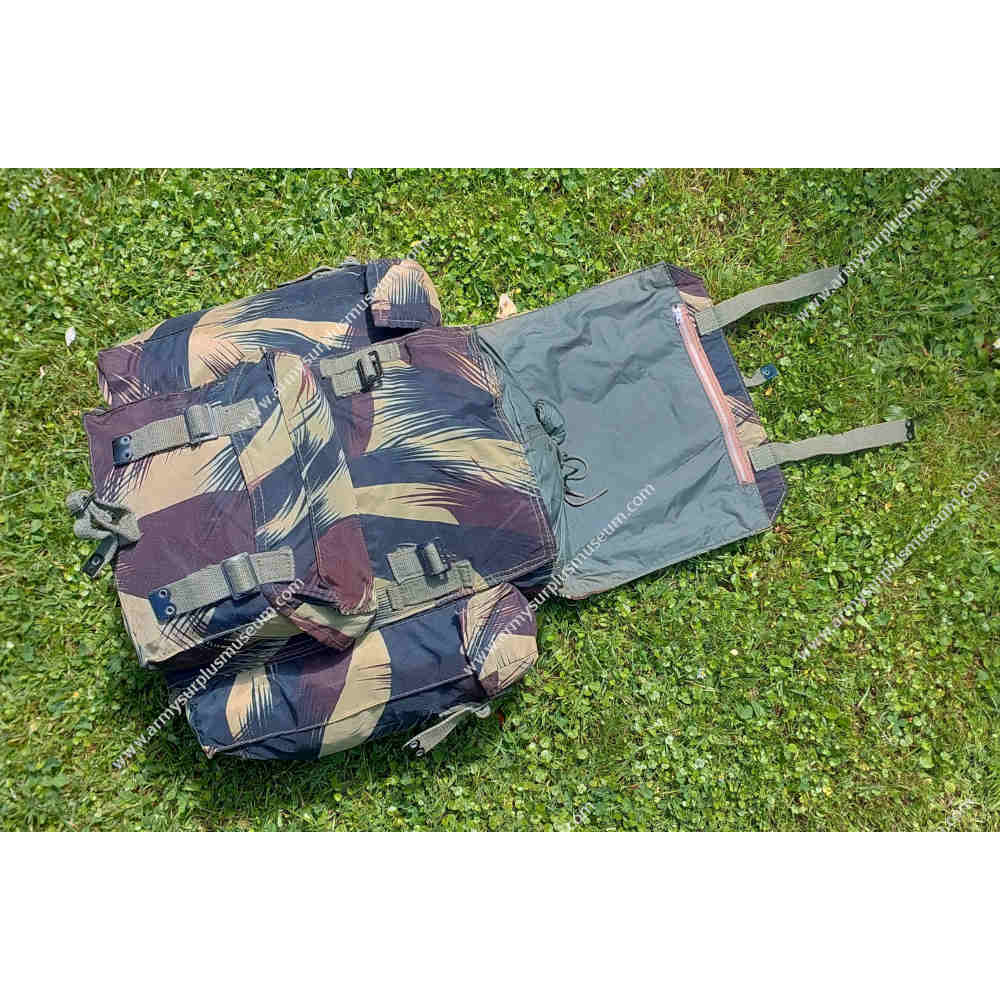
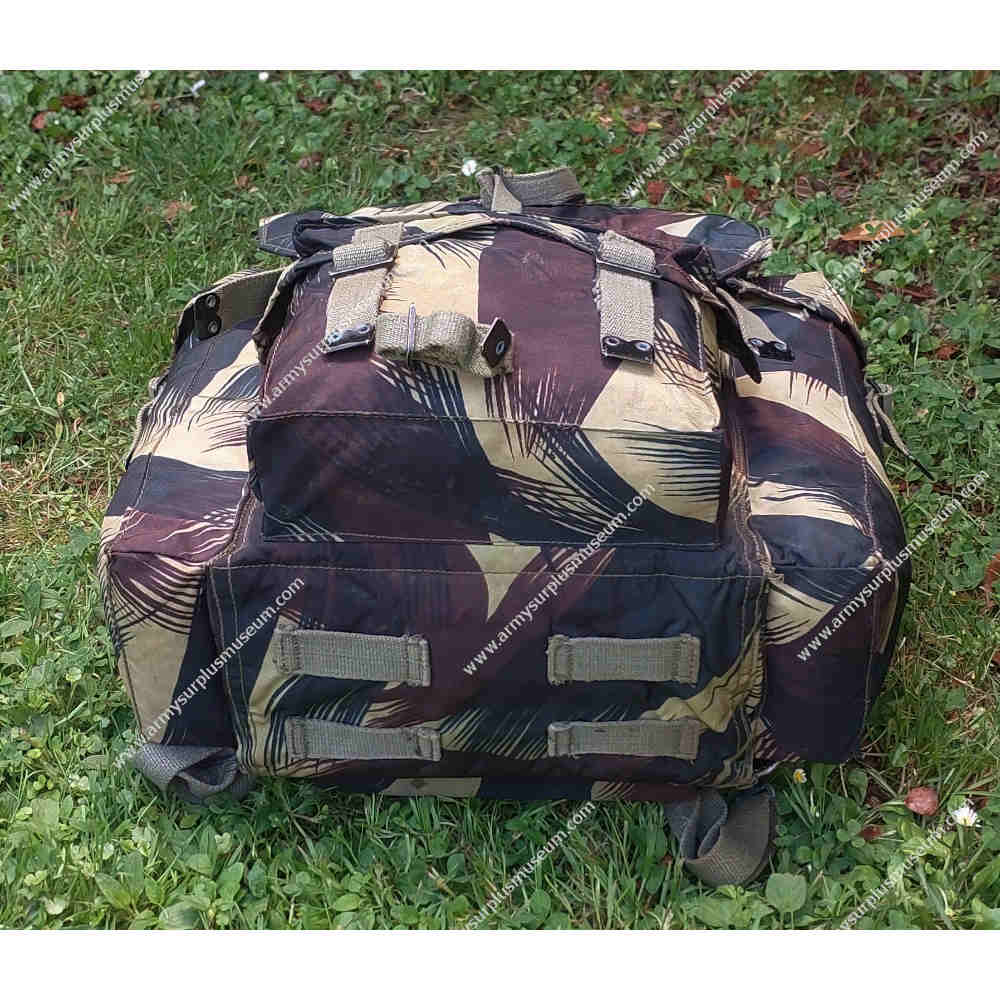
Object Number: 3120-458-45104.
1 Note 1: This is just a generic name, as we have yet to find its actual name.
