Pouch, Side, Rucksack
General Information
Name: Pouch, Side, Rucksack.
Country of Origin: The United Kingdom.
Date of Production: See examples.
Manufacturer: See examples.
NATO Stock Number (NSN): See examples.
Contract Number: See examples.
Camouflage Pattern: See examples.
Equipment Family: 90 Pattern Web Equipment.
Number Of compartments: One.
Volume Capacity: 10L.
Weight: 350g.
Dimensions (cm): 35 (H) × 20 (W) × 15 (D).
Waterproof: Yes, but depends on the condition of the fabric.
History
The Pouch, Side, Rucksack, unofficially known as Rocket Pouches, were issued in pairs and were fitted to the sides of the Rucksack, Inf (Infantry), Long and Short Back, Rucksack, O/A (Other Arms), and later the Field Pack, Air Support Back. In addition to being worn on the rucksack or field pack, the Pouches, Side could be fitted to the Yoke, Side Pouch, Rucksack, which allowed the pair to be worn as a small patrol-type pack, unfortunately making the wearer look like they are wearing a “Jet Pack”. With minor re-threading, the yoke could also be configured to carry a single pouch instead of a pair.
The pouches were introduced as part of a modular load system and were designed to function as an integral component of the rucksack, rather than simply acting as additional storage. When fitted, they increased the rucksack’s capacity and allowed equipment to be distributed externally while remaining part of the overall load carriage system.
When removed, they could be worn separately as a small patrol pack. When worn in this configuration with the web equipment, this formed part of assault order, enabling a soldier to operate for up to 24 hours without resupply. This allowed the same system to be scaled between different load states using the same components, rather than relying on separate packs.
One notable point is that one of the side pouches was designated for the carriage of Nuclear, Biological and Chemical (NBC) protective clothing. This typically consisted of the over-jacket, over-trousers, and overboots. This provided a dedicated and accessible location for NBC clothing, something British soldiers had wanted for a number of years.
Prior to this, the over clothing had no dedicated carriage method and was commonly carried on the web equipment using ad hoc solutions, most often in a basic bag made from a sleeve cut from a smock or in a second Carrier, Cape (Suit/Poncho Roll), strapped to the top or bottom of the Pouches, Kidney on the rear of the Pattern 1958 web equipment.
Description
The side pouch is a box-shaped rucksack pouch fabricated from nylon Cordura with a triple-layer polyurethane (PU) laminate for enhanced waterproofing. Access to the main compartment is through a front-top opening secured by a three-quarter-length heavy-duty zip.
The zip is protected by a folding nylon storm cover designed to shield the entry from dirt and abrasion. Sewn to the underside of this cover are nylon webbing loops on each side, allowing the lid to be secured with paracord in the event of zip failure.
The front face of the pouch features four nylon webbing loops arranged in two pairs, one pair at the top and one at the bottom. These loops allow external items to be secured using paracord or bungee cord and, in the case of the upper pair, provide an additional method of securing the lid in conjunction with the zip-cover loops.
The rear of the pouch is fitted with two side-release buckle attachment points at the top, mirrored by a second set at the bottom. These allow the pouch to be clipped directly to the rucksack, side-pouch yoke, or other compatible attachment points. Also on the rear panel are two additional nylon webbing loops positioned at the top and bottom. These act as fail-safe attachment points should the side zip connections fail and also allow the pouch to be threaded onto the rucksack’s side compression straps.
At the base of the pouch is an adjustable nylon webbing strap with a side-release buckle, enabling the pouch to be secured around a web belt if required. The sides of the pouch are fitted with heavy-duty plastic zip sections, allowing the pouch to be directly zipped onto the main rucksack body.
Examples
Example One
By 1995 the 90 Pattern web equipment was produced in Temperature Disruptive Pattern (DPM), and the Pouch, Side, Rucksack was renamed Pouch, Side, Rucksack, DPM, IRR.
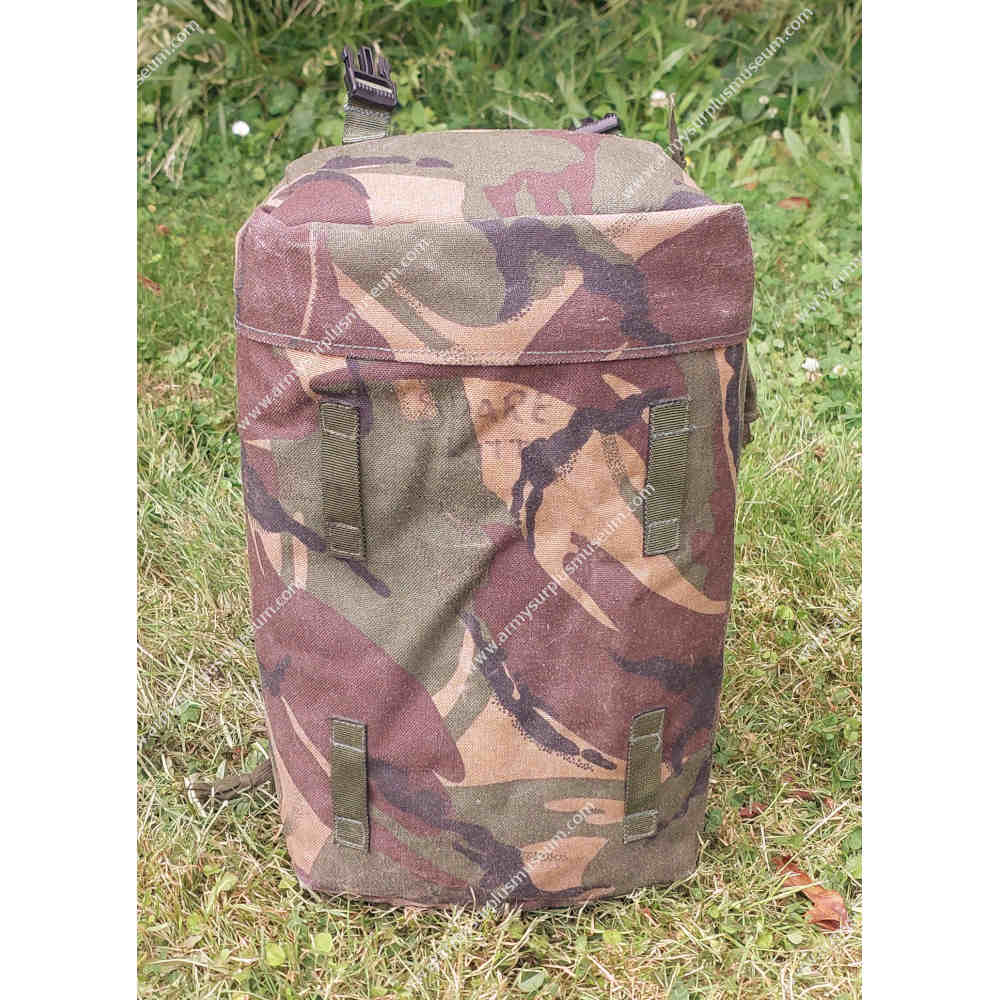
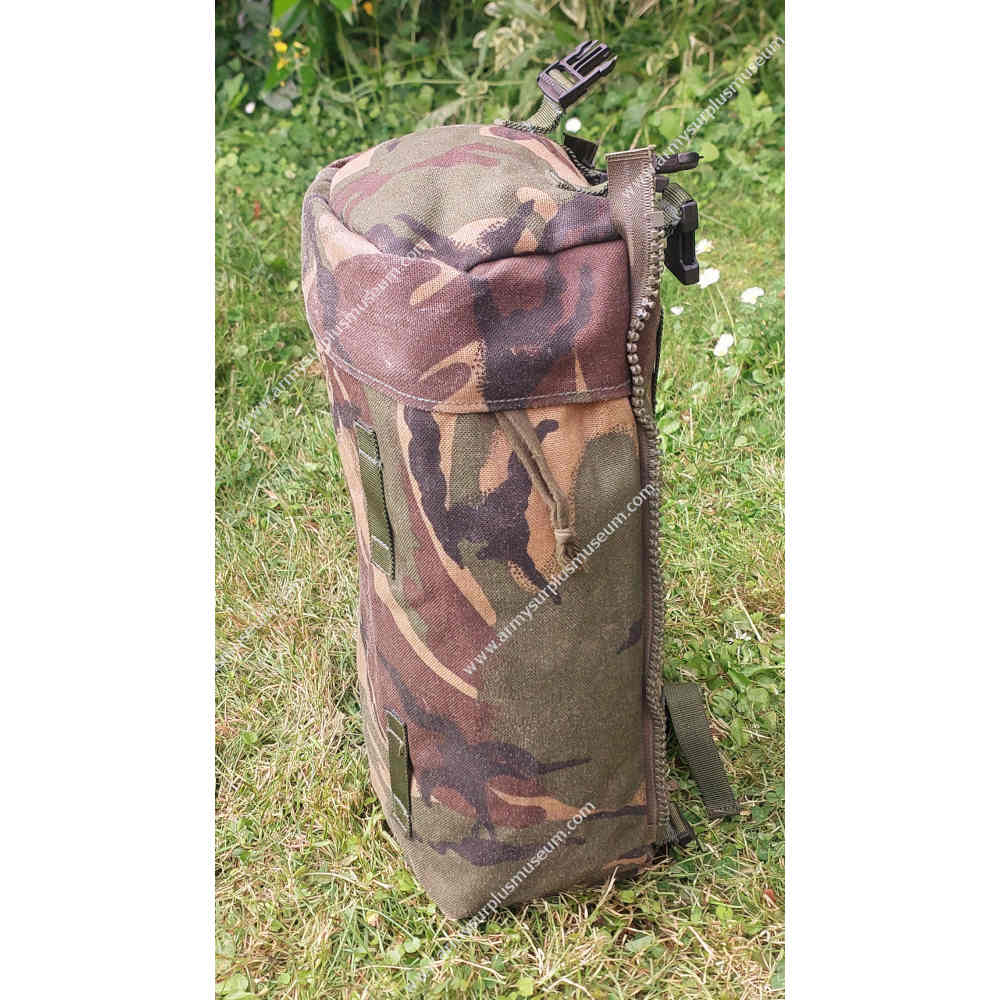
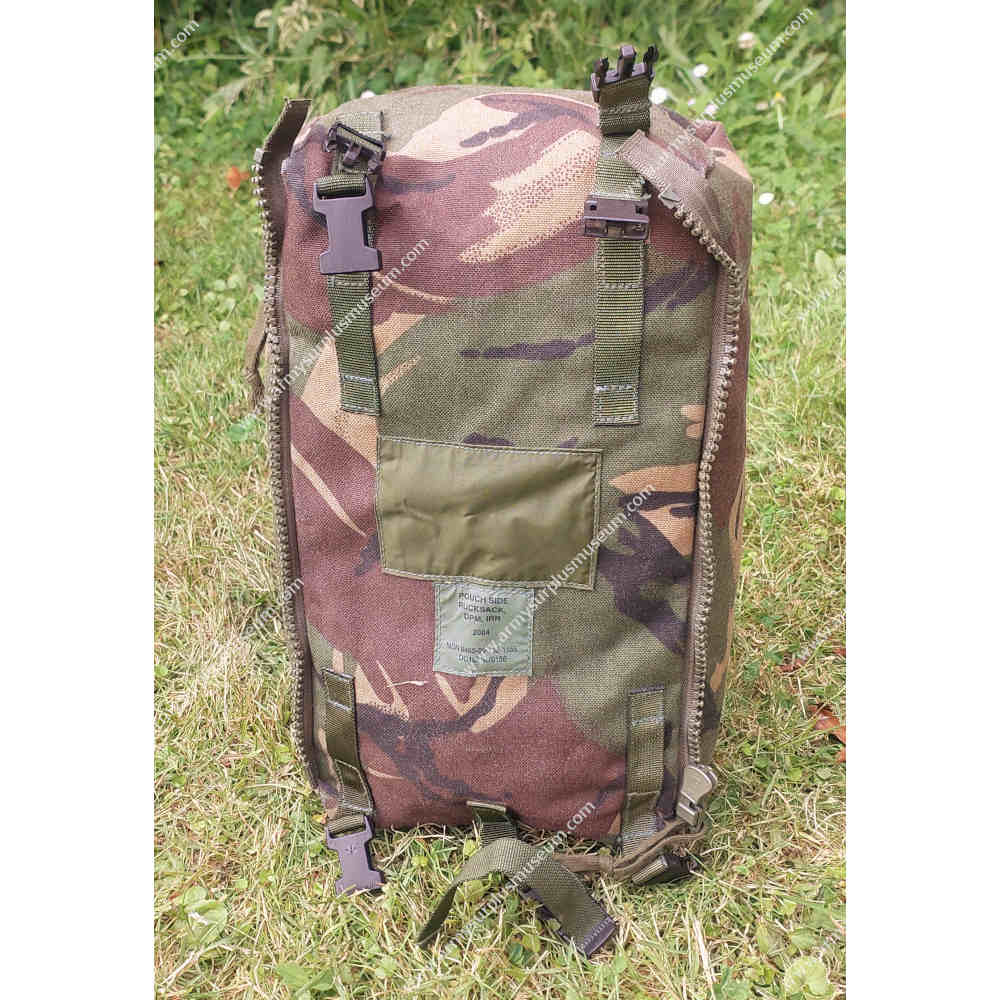
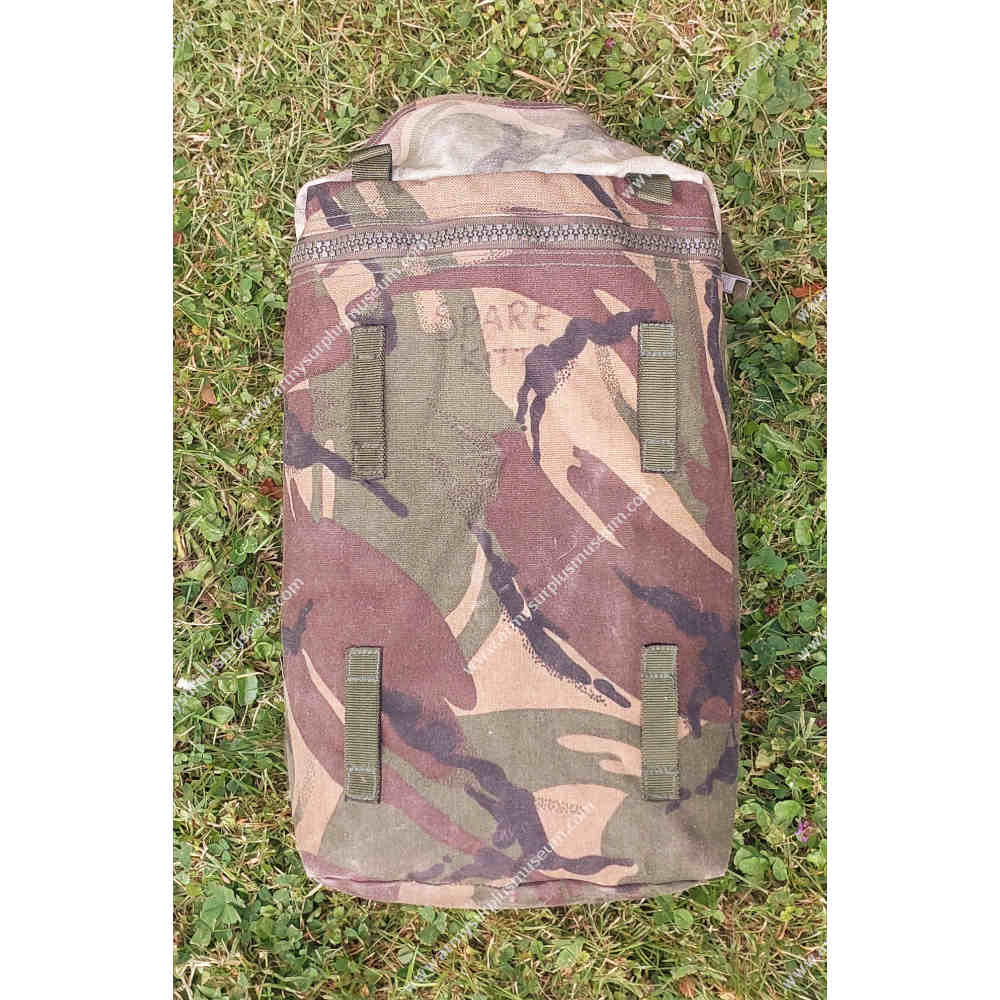
Date of Production: 2004.
Manufacturer: Yet to be identified.
NATO Stock Number (NSN): 8465-99-132-1555.
Example Two
With the adoption of Multi Terrain Pattern (MTP) in 2010, the Pouch, Side, Rucksack, MTP, IRR was renamed Pouch, Side, Rucksack, MTP, IRR.
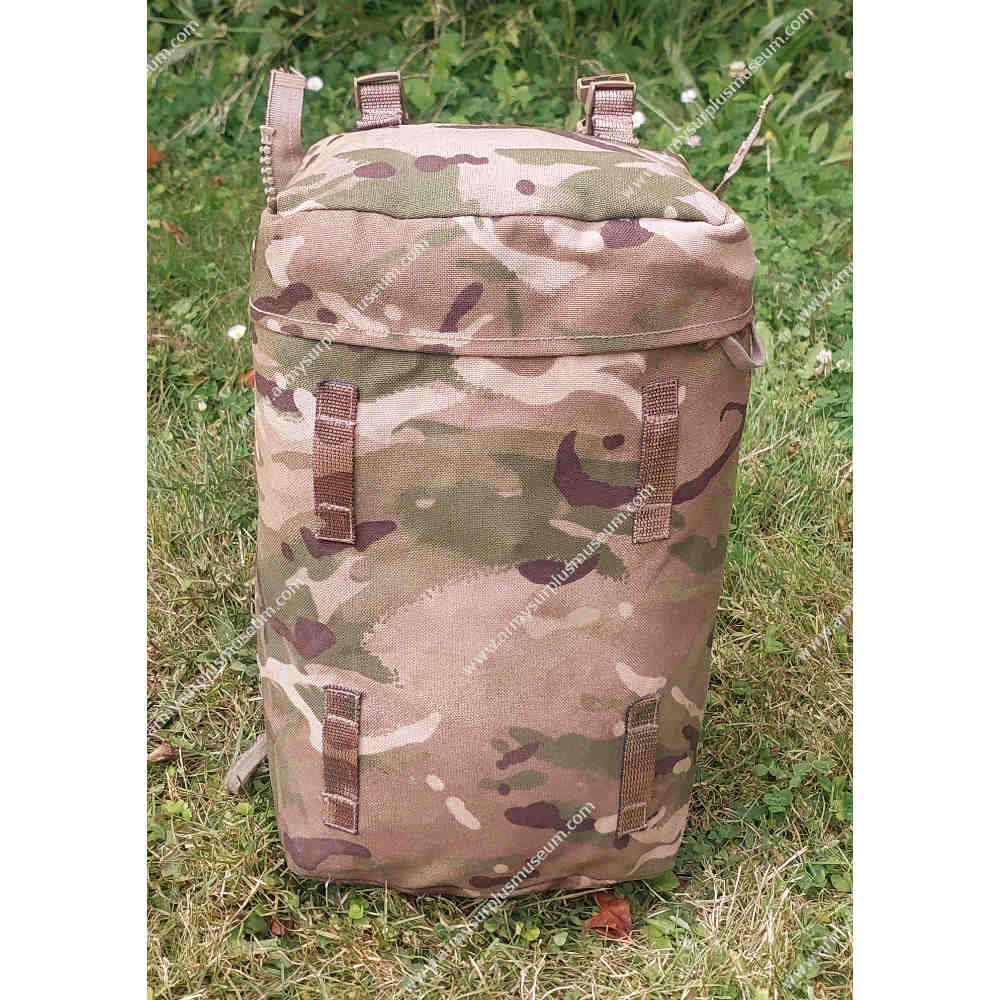
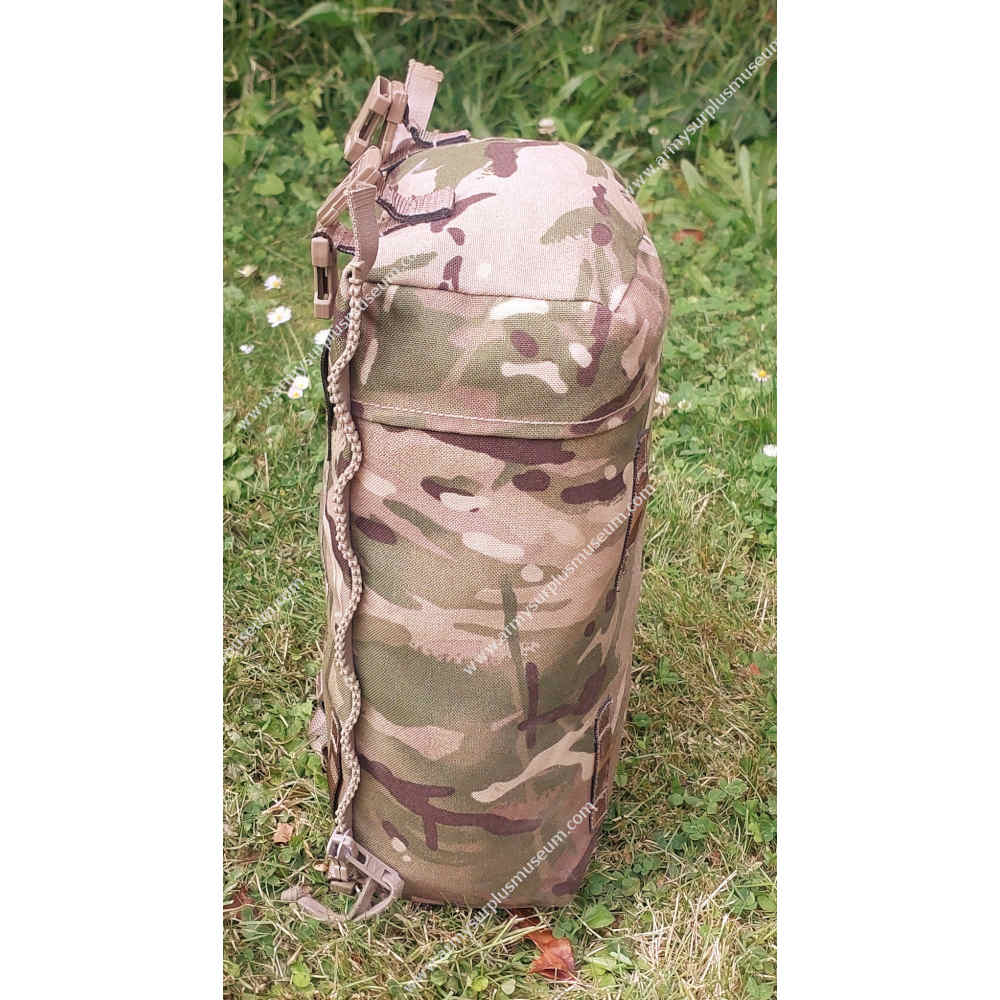
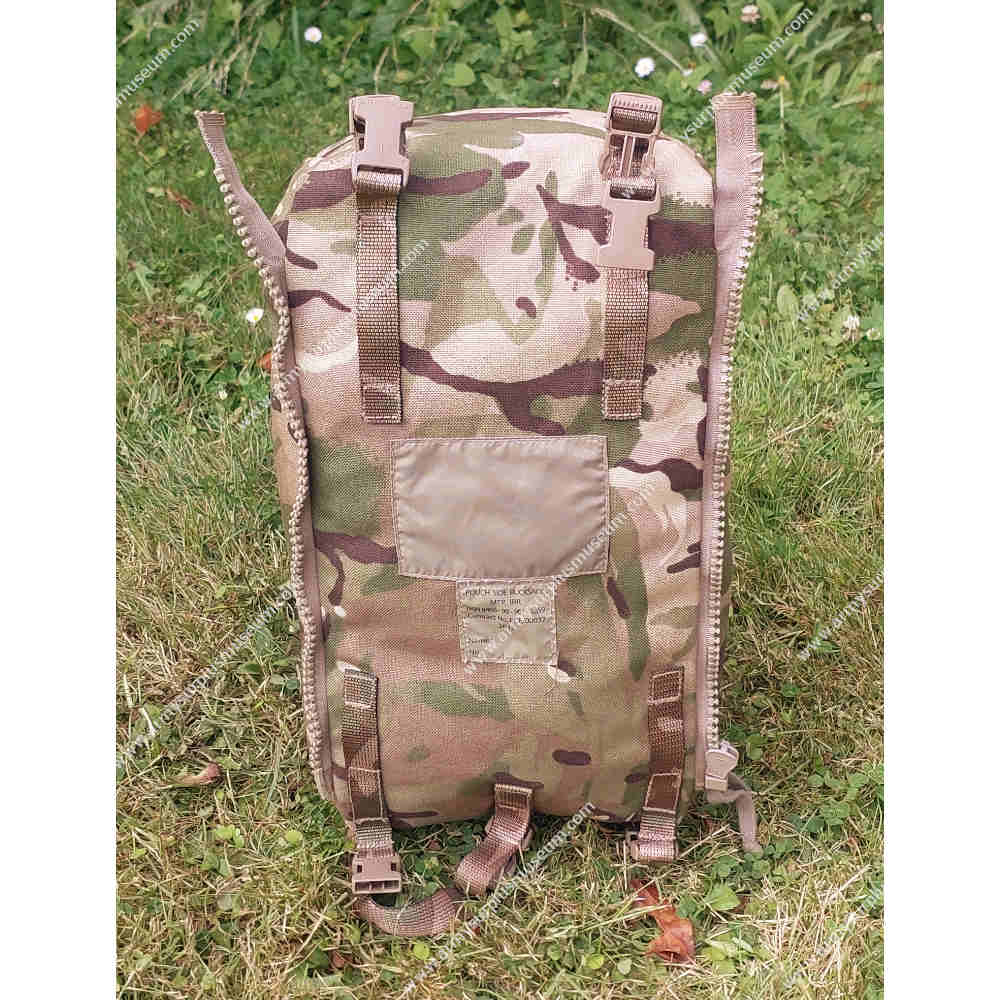
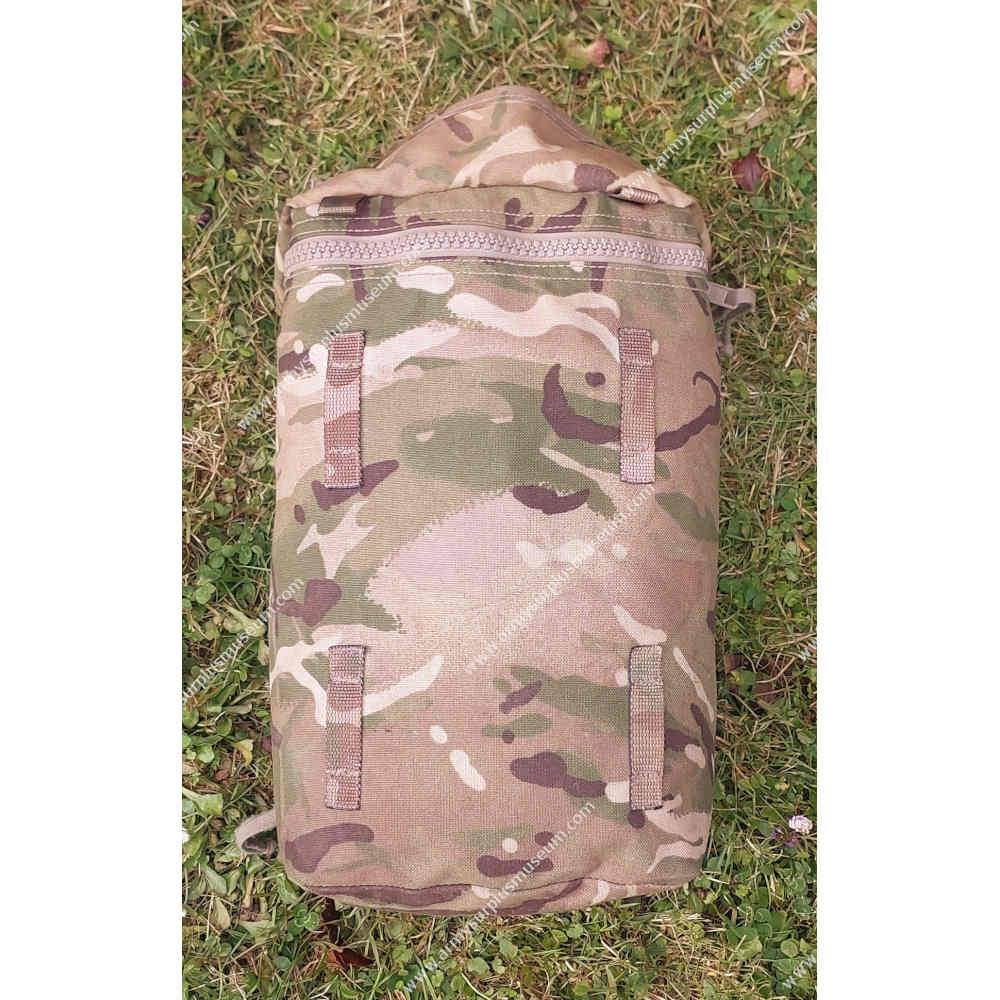
Date of Production: 2014.
Manufacturer: Yet to be identified.
NATO Stock Number (NSN): 8465-99-961-3859.