
Case, Small Arms, Ammunition, 200 RD Magazine
General Information
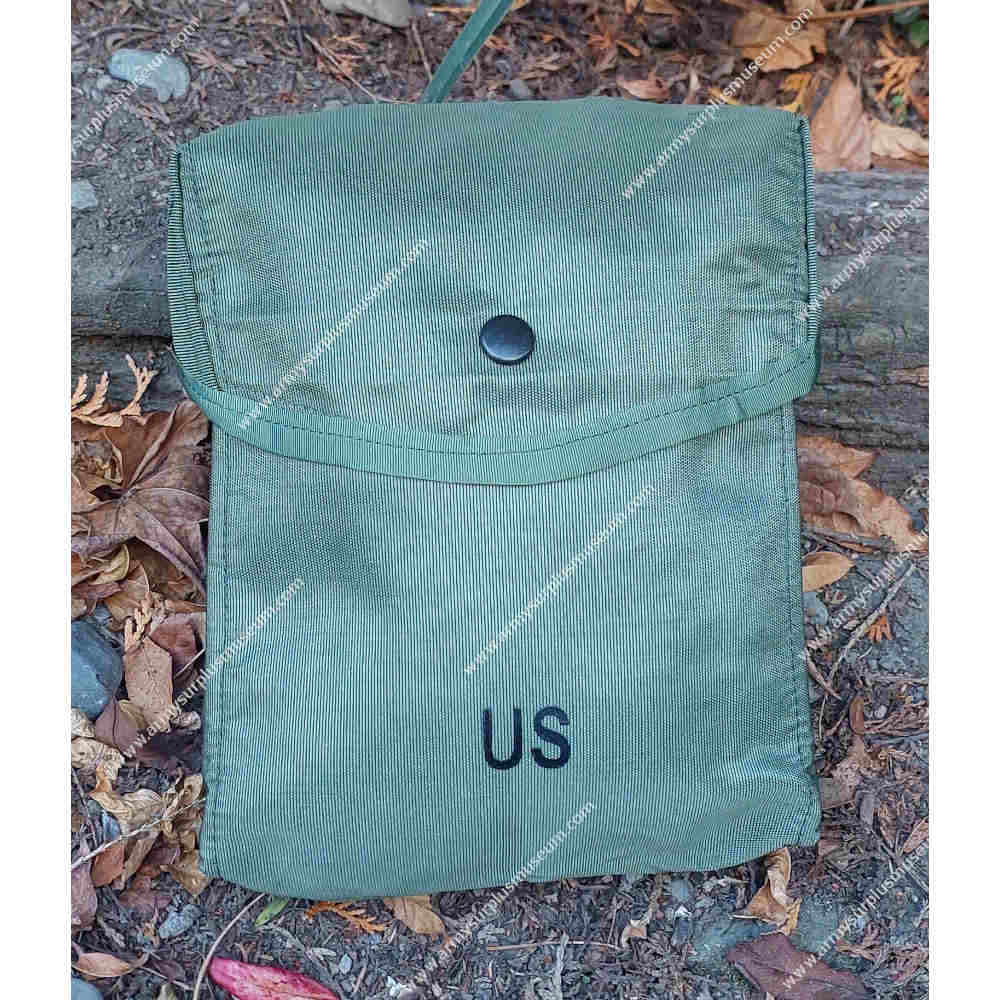
Name: Case, Small Arms, Ammunition, 200 RD Magazine.
Country of Origin: The United States.
Date of Manufacture: 2007.
Manufacturer: SPM-1C1-07-D-F049.
Contract Number: Unicor.
Mil Spec: Mil-C-44082.
NATO Stock Number (NSN): 8465-01-157-4834.
Colour: Olive Drab (OD).
Equipment Family: All-Purpose Light-Weight Individual Carrying Equipment (ALICE).
Number Of compartments: One.
Volume Capacity: 4L.
Weight: 200g.
Dimensions (cm): 22 (H) × 18 (W) × 6 (D).
Waterproof: No.
Similar Objects
History
The Case, Small Arms Ammunition, 200 RD Magazine was first produced in 1982 and entered service in 1983. It was specifically designed to carry the 200-round, 5.56mm plastic hard-pack magazine used by the M-249 Squad Automatic Weapon (SAW) and M-249 gunners were issued with two pouches each.
With the U.S. Army having introduced the ALICE load-carrying system during the early 1970s and adopted the M-249 in 1982, there was no pouch within the ALICE system capable of carrying the large 200-round magazine. This required the development of a dedicated ammunition pouch, allowing the M-249 gunner to carry a ready-use magazine on the Individual Equipment Belt rather than relying solely on the issued cloth bandolier.
A typical M-249 gunner carried two or three 200-round magazines, including one fitted to the weapon. Although the introduction of the pouch reduced reliance on the cloth bandolier, it never completely replaced it. During the late 1980s and early 1990s, many units continued to rely on bandoliers to supplement the pouch or because the new pouches had not yet become widely available. Even when issued, additional ammunition was commonly carried in bandoliers during operations.
One unintended consequence of the pouch’s design was its versatility. Occupying the space between the smaller Case, Small Arms Ammunition, 30 RD Magazine and the larger Field Pack, Combat (Butt Pack), it effectively filled the role of a utility pouch, an item that had never formed part of the standard ALICE system. As a result, soldiers who had no connection with the M-249 frequently used the pouch to carry MREs, spare M-16 magazines, grenades, field manuals, medical supplies, batteries and other mission-essential equipment.
The pouch remained in production for more than two decades and underwent a number of minor design refinements during its service life. Early production examples were fitted with a nylon webbing pull tab to assist in opening the lid. By the 1990s this feature had been removed from the design, suggesting it was no longer considered necessary.
Description
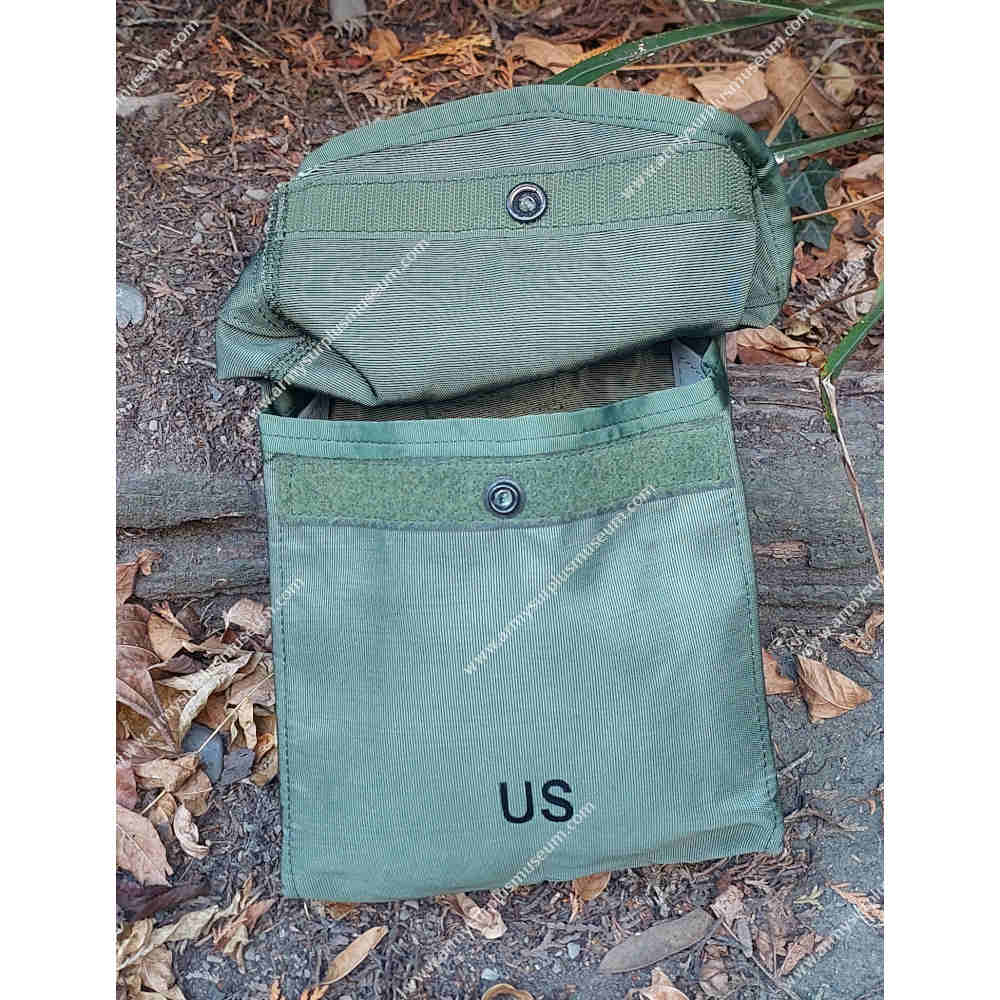
The Case/Pouch is fabricated from a double ply of olive drab nylon duck cloth and has a square-shaped design.
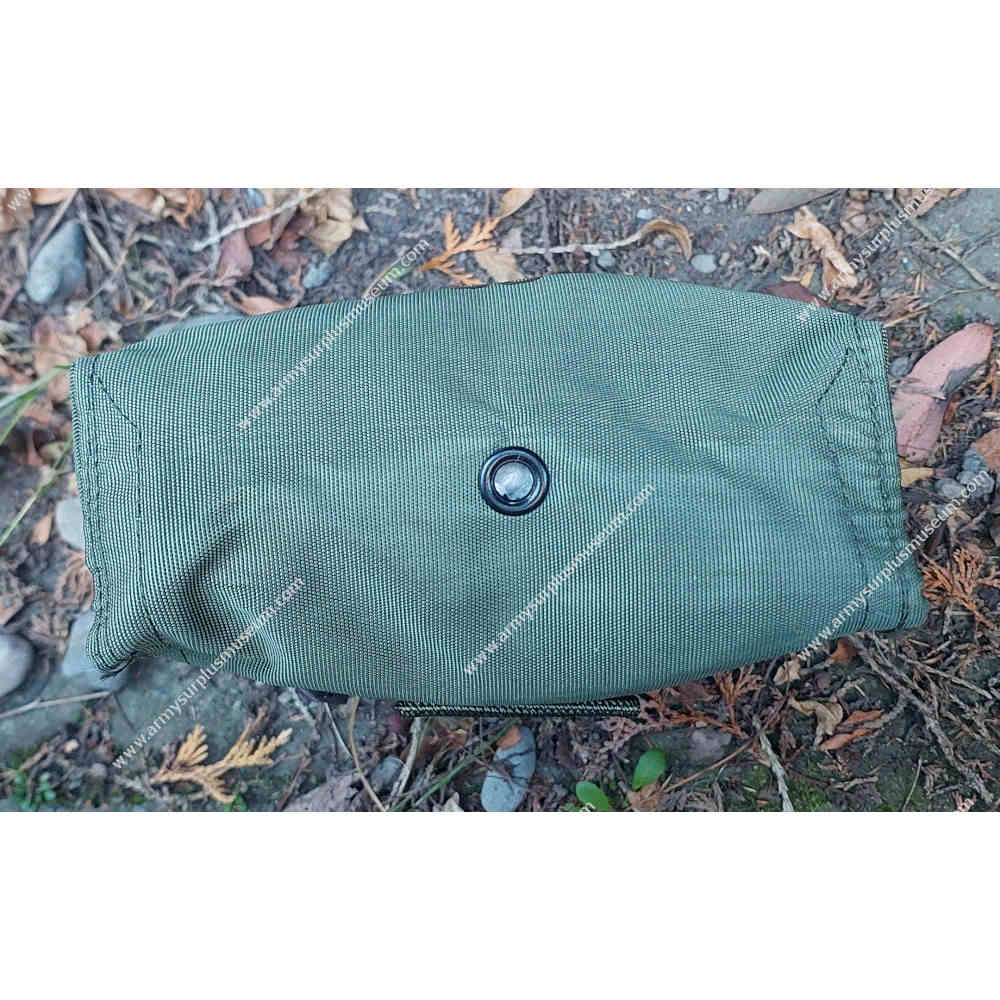
The lid is formed as an extension of the rear panel, with the front and sides extending down over the pouch opening. It closes at the front using a metal dome fastener and a horizontal strip of hook-and-loop fastening. The corresponding metal dome and hook-and-loop strip are fitted to the upper front of the pouch. A metal drainage grommet is fitted to the base, allowing water to drain freely after river crossings.
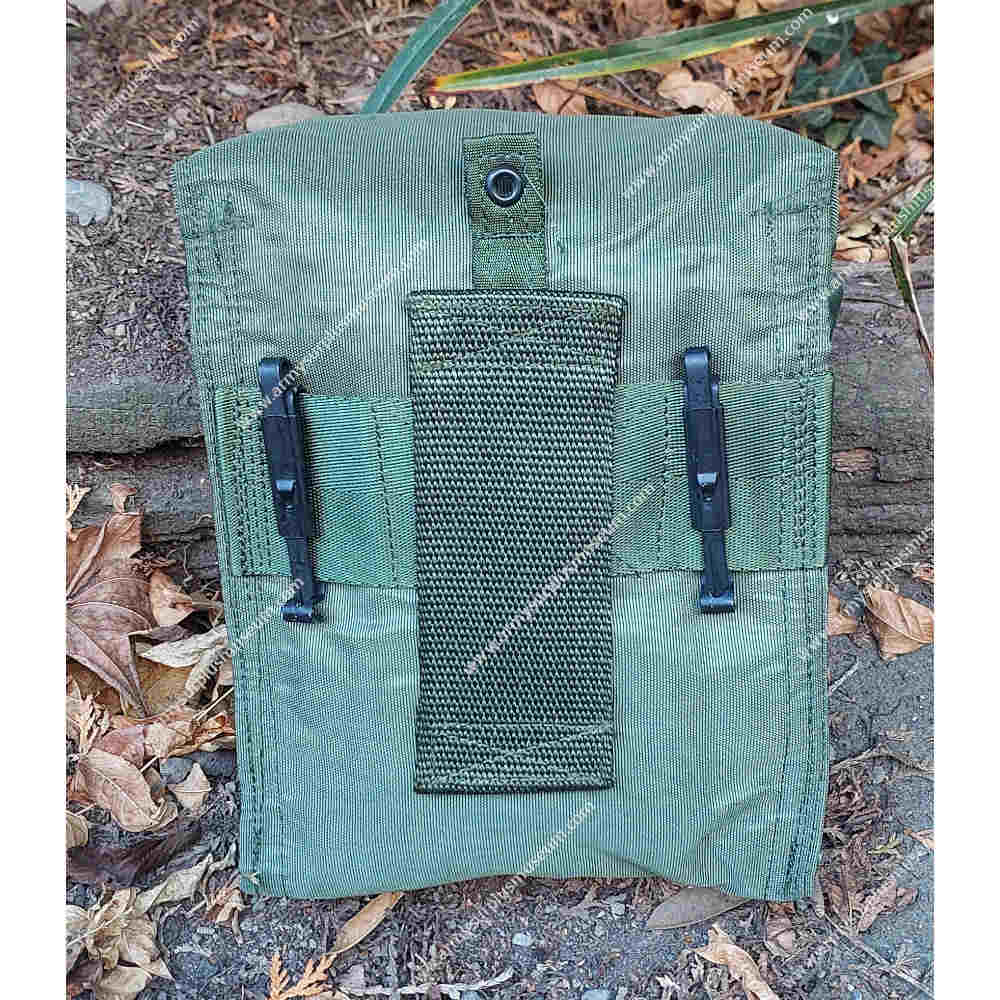
The rear of the pouch has a short nylon webbing suspension tab sewn to the top, fitted with a metal grommet that allows the snap hook from the Suspenders, Individual Equipment to be attached, providing additional support when the pouch is carrying a full magazine.
Below the suspension tab, a 5 cm wide nylon webbing strap is sewn across the rear of the pouch. The strap is stitched at both ends and at two central points, forming a channel on each side to accommodate two metal Slider, Keeper fittings, allowing the pouch to be attached to the Belt, Individual Equipment. Sewn between these two Slider, Keeper channels is a second 5 cm wide nylon webbing belt loop, which provides additional support by securing the fully loaded pouch directly to the web belt.
The internal sides of the pouch are reinforced with 5 cm wide plastic stiffening strips, which help the pouch retain its shape and make inserting and removing magazine easier.
Examples
Example One
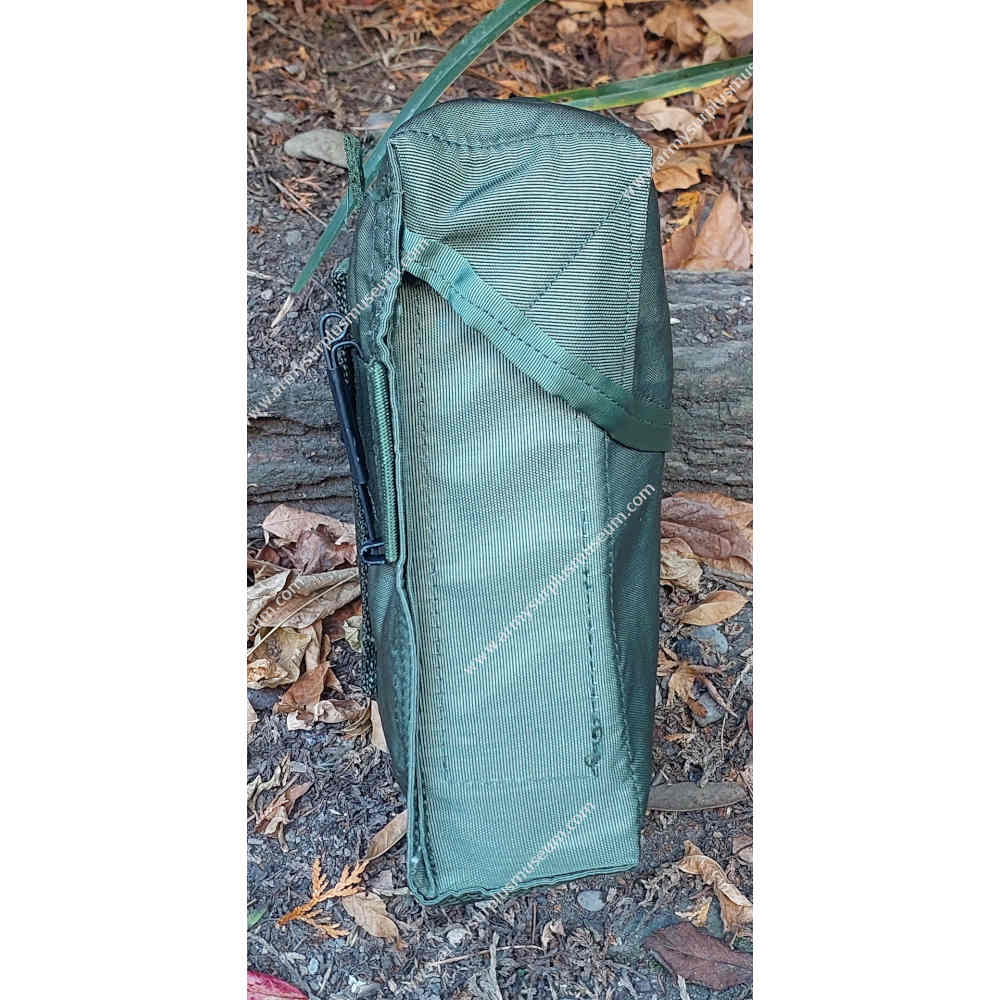
ASMO Number: 2421-840-46105.
