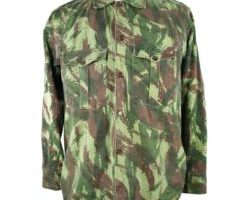
Shirt, Field, Camouflage, HBT (Herringbone Twill)
The Shirt, Field, Camouflage, HBT (Herringbone Twill) was a standard field garment worn by Portuguese soldiers from the 1960s through the 1980s.
Read More »
Portugal


The Shirt, Field, Camouflage, HBT (Herringbone Twill) was a standard field garment worn by Portuguese soldiers from the 1960s through the 1980s.
Read More »
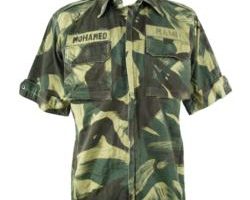
The locally tailored camouflage Shirt, likely a private purchase, is fabricated from heavyweight cotton with the M-1970 ‘Brushstroke’ pattern. Reinforced shoulders, short sleeves with adjustable tabs, and channels on the left upper arm for pens provide a distinct touch. Fastened with a brass zipper, the shirt features bellows pockets with concealed lids and metal snap-domes.
Read More »

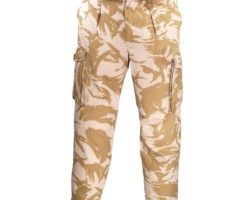
The Trouser, Combat FR were integral to a flame-resistant uniform aimed at safeguarding British aircrew personnel in the military. This uniform was issued from the early 2000s until its replacement in the late 2010s with a new design of flame-resistant uniform in Multi-Terrain Pattern (MTP).
Read More »

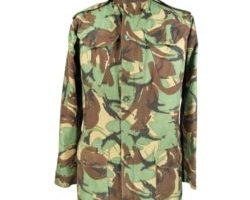
In the late 1970s, the New Zealand army adopted the British 68-pattern uniform and altered colors for to suit New Zealand’s terrain better. The Smock, like the 68-pattern, had a Temperate DPM pattern and olive Sateen lining and featured various pockets, a foldable collar, and draw-cords.
Read More »


The Trousers, Man’s, Utility, Nylon/Cotton, Durable Press, Woodland are a modified version of the Nylon/Cotton, Durable Press trousers, featuring thigh pockets. These trousers were likely created to test the Woodland camouflage pattern’s effectiveness. They are made of polyester-cotton blend fabric with a M-1981 Woodland pattern, featuring button and zip closures, multiple pockets, and adjustable cuffs.
Read More »

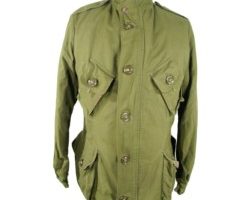
The Coat Combat, G.S is a Canadian military jacket from 1963. It’s part of the General Service Uniform with six pockets, a detachable hood, windproof and water repellent features. The collar is lined with olive green corduroy, and the cuffs have button-down cloth tabs. The internal side has buttons for a removable liner.
Read More »

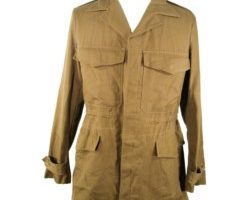
The Jacket, Field Dress a key part of the South African Field Dress Uniform from the 1970s to the 1980s, is showcased here. This unlined jacket, in Nutria brown, offers reliable wind proofing. However, it lacks waterproofing capabilities.
Read More »


The Wind Resistant Sateen Trousers were designed for soldiers to wear in cold climates and standardized in 1951 after being developed during the Korean War. They have multiple features including thermal lining, cargo pockets, and draw-cord cuffs. They were eventually replaced with a new style in the early 2000s.
Read More »
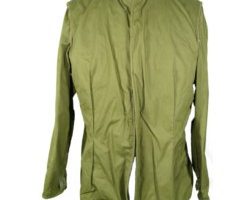
The Liner, Man’s, Coat, Combat (Liner) was a thermal button-in liner that was provided with the Canadian Coat, Combat, G.S during the 1960s.
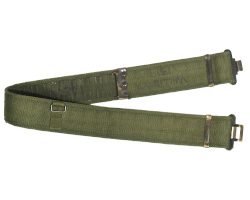
The Belt, 58-Pattern & Working Dress, OD was a belt that was worn by soldiers for work details or in situations where the PLCE web belt or Corp belt was impractical. It closes around the waist with a metal claw buckle, the same type used on the British Pattern-37, 44, and 58 Equipment systems.
Read More »
