
Field Pack, Combat (Geonari Botjim)
When U.S. M-1945 field packs ran short, the Republic of Korea developed its own version, modeled on the American design but adapted to local requirements.
Read More »
South Korea


When U.S. M-1945 field packs ran short, the Republic of Korea developed its own version, modeled on the American design but adapted to local requirements.
Read More »

The Jäger Rucksack was first introduced by the Bundeswehr in the early 1960s as a more compact alternative to the large rucksack. Unlike its predecessor, it could be worn independently of the web suspenders and frame, reducing bulk while still offering enough capacity for extended periods in the field.

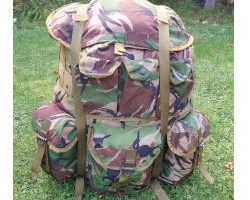
In the early 1990s, the New Zealand Defence Force began producing the large ALICE pack in temperate DPM (Disruptive Pattern Material) as a replacement for the earlier green version. Aside from the camouflage fabric, the overall design remained consistent with previous iterations.
Read More »

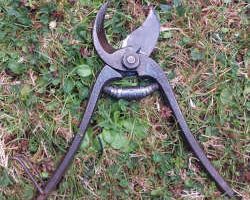
Secateurs—a hand tool more commonly found in the garden shed and often wielded by old ladies trimming rose bushes—are not something most people associate with soldiers. Yet, these heavy-duty shears, designed for cutting and pruning bushes and small trees, found their way into the kit of Australian and New Zealand troops operating in dense jungle environments.
Read More »
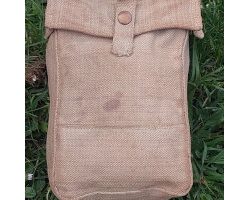
In early 1942, Australia recognized the need to redesign the Pattern 37 web equipment based on combat experience in the Pacific against Japanese forces. The standard Basic Pouches were found to be too small to carry sufficient amounts of ammunition and munitions for the challenging conditions of jungle warfare.
Read More »


In 1970, Malaysia adopted a brushstroke camouflage pattern for its military uniforms and equipment. This decision led to the exclusive production of field packs in this distinct design. Naturally, commercial manufacturers followed suit, producing webbing and accessories in the same pattern to meet market demands.
Read More »

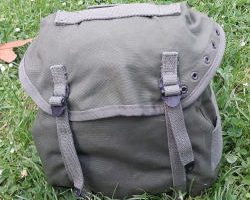
With New Zealand severing ties with the United States and Australia over its decision to become nuclear-free in the mid-1980s, it faced challenges in sourcing individual equipment to replace stock that was needed but no longer accessible through usual channels.
Read More »
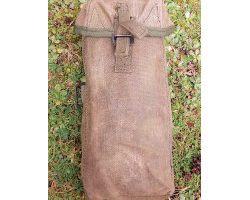
Introduced in 1974, the pouch used the Large Ammunition Pouch as its design base and could hold two 30-round magazines. Instead of belt clips, it used belt loops with press studs, while steel D rings on the back allowed for attaching other items. These pouches saw limited use due to the short service life of the L4A4.
Read More »
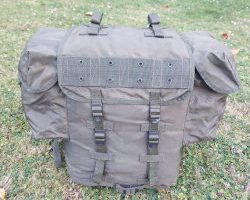
Introduced in the early 1980s by the Singapore Armed Forces, the Field Pack, Nylon, served for combat and training, resembling the Malaysian field pack. Remaining in service until the early 2000s, it featured a waterproofed lid, webbing straps, spacious side pouches.
Read More »


The Field Pack, Combat, Nylon was introduced into Malaysian service in the late 1960s, based on the Australian Army-issued Field Pack, Combat, Canvas design. This version featured added bedroll straps, an adjustable chest strap with a quick-release, a nylon collar on the main compartment, and an adjustable waistband.
Read More »
